

The Operation Process and Working Principle of Lithium Battery Mineral Powder Pneumatic Conveying
For the efficient handling of lithium battery mineral powders, pneumatic conveying systems have become a critical technology in the industry. These systems are designed to transport fine powders like lithium ore, cobalt, and other raw materials used in lithium battery production with precision and reliability. Understanding the operation process and working principle of such systems is essential for optimizing production efficiency and ensuring product quality. This article provides a detailed overview of how pneumatic conveying works in the context of lithium battery mineral processing, highlighting the key components, operational steps, and the role of specialized engineering solutions from Shandong HeadPowder Engineering Co., Ltd., a leading provider in the field.
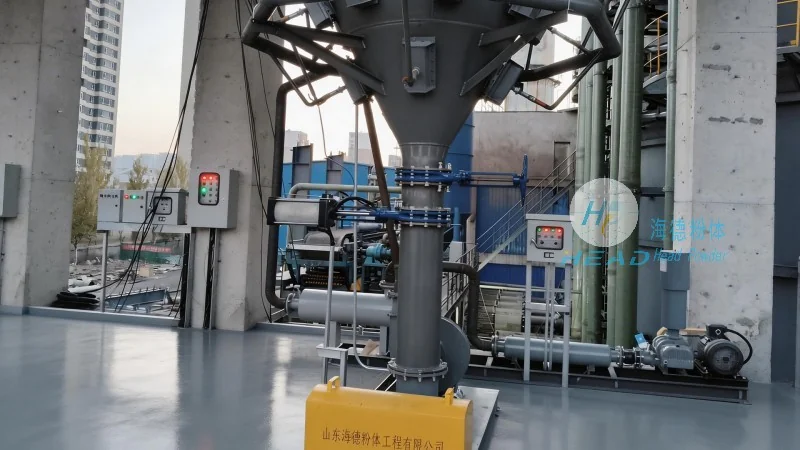
Key Components of Pneumatic Conveying Systems for Lithium Battery Minerals
The pneumatic conveying system for lithium battery mineral powders typically consists of several core components that work in tandem to achieve efficient material transport. The primary components include a material hopper or feeder, a conveying pipeline, a fan or blower to generate the air flow, a separation or filtration system to collect the powder, and a discharge outlet. The material hopper is responsible for storing and feeding the mineral powder into the system, ensuring a consistent flow rate. The conveying pipeline, often made of stainless steel or other corrosion-resistant materials, is designed to withstand the abrasive nature of the minerals and maintain airtight integrity. The fan or blower provides the necessary pressure or vacuum to move the powder particles through the pipeline. The separation system, such as cyclones or filters, captures the powder from the air stream, preventing dust emissions and ensuring environmental compliance. Each component is engineered to handle the specific characteristics of lithium battery minerals, which may include high abrasiveness, moisture content, or fine particle size.
Working Principle of Pneumatic Conveying for Lithium Battery Minerals
The working principle of pneumatic conveying involves the use of air to transport solid particles. There are two main types of pneumatic conveying systems: pressure and vacuum. In pressure systems, the fan or blower operates at high pressure, pushing air and powder through the pipeline from the discharge end to the receiving end. This method is suitable for short to medium distances and can handle abrasive materials effectively. In vacuum systems, the fan creates a negative pressure, drawing air and powder from the material hopper and pulling them through the pipeline to the discharge point. Vacuum systems are often used for longer distances or when the material needs to be transported from multiple sources to a central location. The key to efficient conveying is the balance between air velocity and particle size. The air velocity must be sufficient to keep the particles suspended but not so high as to cause excessive wear on the pipeline or equipment. For lithium battery minerals, which often have fine particle sizes (typically 10-200 microns), the system must be designed to maintain stable suspension and prevent particle aggregation or blockages.
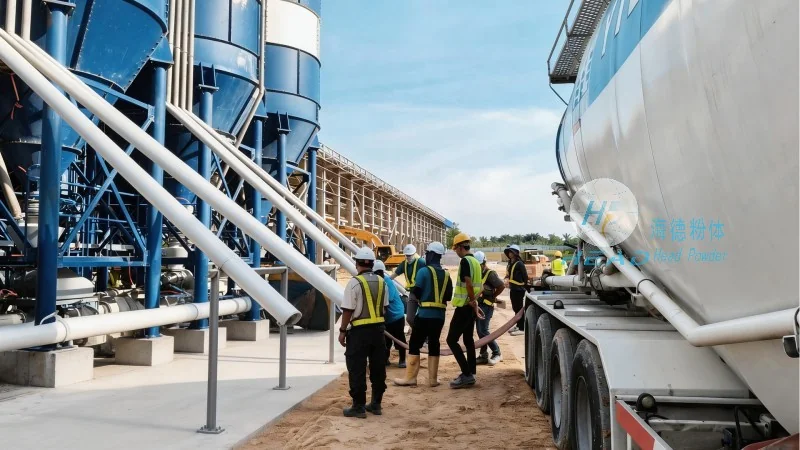
The Operation Process: From Hopper to Discharge
The operation process of a pneumatic conveying system for lithium battery minerals begins with the loading of the material into the hopper. The feeder, which may be a rotary valve or a screw feeder, controls the flow rate of the powder into the system. As the feeder opens, the material falls into the hopper, where it is stored until needed. The fan or blower then starts, creating the necessary air flow. The powder is then drawn from the hopper and mixed with the air stream. The mixture travels through the conveying pipeline, with the air velocity maintaining the particles in suspension. At the discharge end, the air and powder mixture enters a separation system, such as a cyclone separator. The cyclone uses centrifugal force to separate the powder from the air. The powder is collected in a collection bin, while the air is discharged through a filter to remove any remaining dust. The collected powder is then transferred to the next stage of the production process, such as mixing or compounding. Throughout the operation, the system monitors parameters like pressure, flow rate, and temperature to ensure optimal performance. Any deviations are automatically adjusted by the control system to maintain consistent conveying efficiency. This continuous process allows for a seamless flow of lithium battery minerals from the raw material stage to the final production stage, minimizing downtime and maximizing productivity.
Role of Shandong HeadPowder Engineering Co., Ltd. in Pneumatic Conveying Solutions
Shandong HeadPowder Engineering Co., Ltd., commonly known as HeadPowder, is a specialized engineering company that designs, manufactures, and installs pneumatic conveying systems tailored to the unique needs of lithium battery mineral processing. With years of experience in the industry, HeadPowder has developed expertise in handling the specific challenges associated with lithium battery minerals, including their abrasive nature, fine particle size, and varying moisture content. The company's engineers work closely with clients to understand their production requirements and design customized systems that meet their operational and environmental standards. HeadPowder's solutions include both standard and custom-designed pneumatic conveying systems, ensuring that each system is optimized for the specific mineral being processed. The company also provides maintenance and support services to ensure the long-term reliability and efficiency of the systems. By leveraging advanced engineering techniques and high-quality materials, HeadPowder delivers pneumatic conveying systems that enhance production efficiency, reduce operational costs, and improve product quality for lithium battery manufacturers. The company's commitment to innovation and customer satisfaction has made it a trusted partner in the lithium battery mineral processing industry.
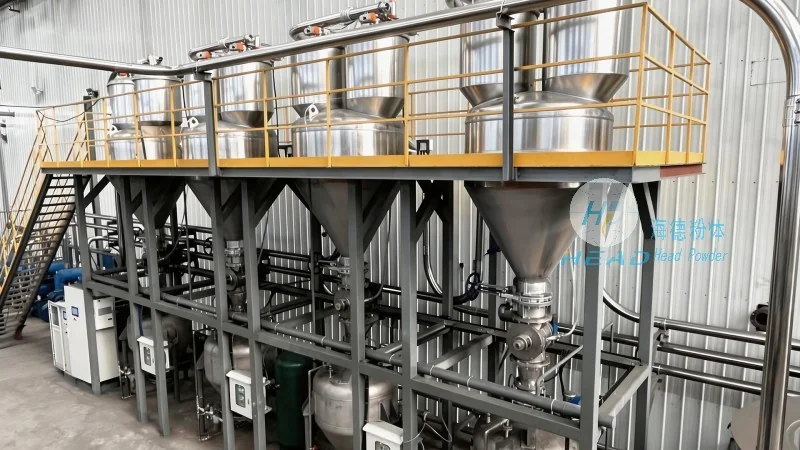
Benefits of Pneumatic Conveying for Lithium Battery Mineral Handling
Implementing pneumatic conveying systems for lithium battery minerals offers several significant benefits that contribute to overall operational efficiency and product quality. One of the primary advantages is the ability to transport fine powders over long distances without the need for mechanical components like belts or buckets, which can cause wear and maintenance issues. Pneumatic systems also provide a dust-free environment, which is crucial for maintaining product purity and ensuring compliance with environmental regulations. The continuous flow of material in pneumatic systems reduces downtime and improves production throughput compared to traditional methods like bucket elevators or screw conveyors. Additionally, the systems can be easily integrated with other production equipment, such as mixers or reactors, to create a seamless production line. The use of stainless steel and other corrosion-resistant materials in the construction of the conveying pipeline helps to prevent contamination of the mineral powder, which is critical for lithium battery production where purity is paramount. Overall, pneumatic conveying systems offer a reliable, efficient, and cost-effective solution for handling lithium battery minerals, enabling manufacturers to meet the increasing demand for high-quality lithium batteries while maintaining operational excellence.
Conclusion: Optimizing Lithium Battery Mineral Processing with Pneumatic Conveying
In conclusion, pneumatic conveying systems play a vital role in the efficient processing of lithium battery minerals. By understanding the operation process and working principle of these systems, manufacturers can optimize their production lines, improve product quality, and reduce operational costs. The key to successful implementation lies in the design and maintenance of a well-engineered system that is tailored to the specific characteristics of the minerals being handled. Shandong HeadPowder Engineering Co., Ltd. stands as a leading provider of such specialized systems, offering customized solutions that enhance the performance and reliability of lithium battery mineral processing operations. As the demand for lithium batteries continues to grow, the importance of efficient mineral handling will only increase, making pneumatic conveying an essential technology for the industry. With the right system and expertise, manufacturers can achieve higher productivity, better product consistency, and a competitive edge in the market.