

Principle and Working Scene Characteristics of Lithium Oxide Powder Conveying System Equipment
HeadPowder, a leading manufacturer in the field of powder handling technology, specializes in providing advanced conveying systems for lithium oxide powder. The company, based in Shandong, China, has developed a comprehensive solution that ensures efficient and safe transportation of lithium oxide, a critical material in modern battery production and chemical industries.
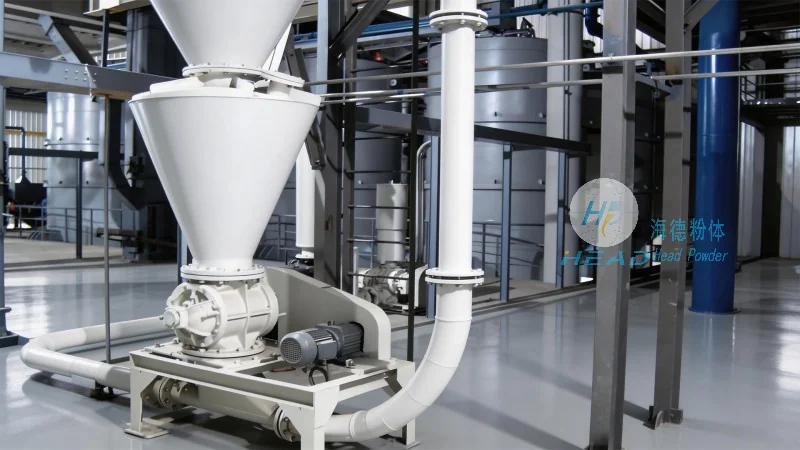
Overview of the Lithium Oxide Powder Conveying System
The lithium oxide powder conveying system is engineered to handle the unique properties of lithium oxide, such as its fine particle size and reactivity. The system integrates advanced pneumatic conveying technology, which utilizes air flow to transport the powder from the source to the destination without the need for mechanical components that could cause contamination or damage to the material. This design ensures high purity and minimal loss during the conveying process, which is essential for applications in battery manufacturing where material quality directly impacts product performance.
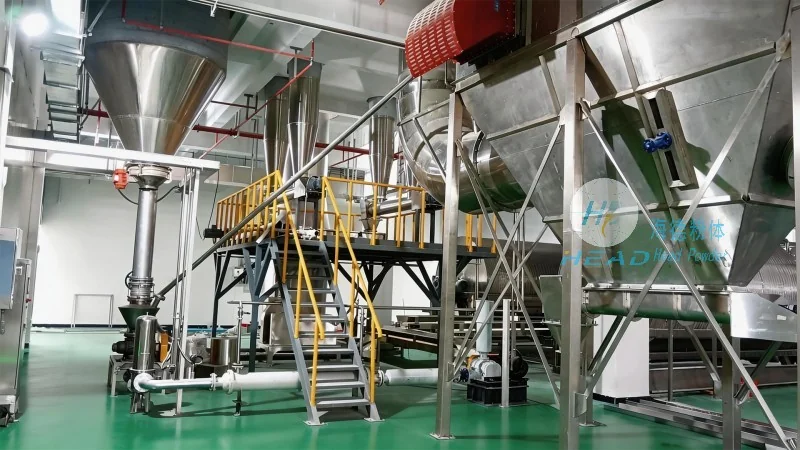
Working Principle of the Conveying System
The core of the system operates on the principle of air-assisted transport. The equipment includes a hopper for material storage, a rotary valve for controlled discharge, and a series of pipelines equipped with pressure regulators and filters. As the powder is released from the hopper, it is drawn into the pipeline by the suction created by a fan or blower. The air-powder mixture travels through the system, with the air providing the necessary force to move the particles while maintaining a consistent flow rate. The system also incorporates dust collection and filtration components to ensure environmental compliance and product safety. The control system, often integrated with sensors, allows for real-time monitoring of pressure, flow, and temperature, enabling operators to adjust the process parameters for optimal performance and material integrity.
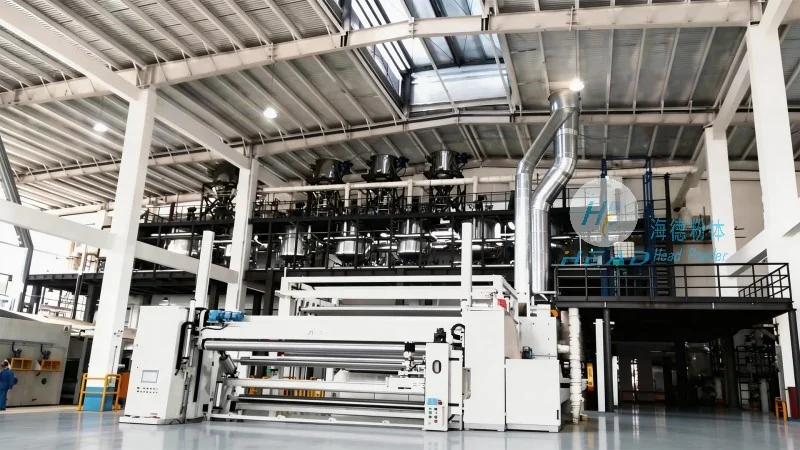
Key Features and Technical Specifications
HeadPowder's lithium oxide powder conveying system is equipped with several features that enhance its functionality and reliability. The system uses high-efficiency filters to prevent dust emissions, ensuring compliance with environmental regulations and maintaining a clean working environment. The material of construction, typically stainless steel or corrosion-resistant alloys, is chosen to withstand the chemical properties of lithium oxide and prevent contamination. The design also includes explosion-proof options for applications where flammable materials might be present, adding an extra layer of safety. The system's modular design allows for easy integration into existing production lines and can be customized to accommodate varying production volumes and material characteristics.
Working Scene Characteristics
The lithium oxide powder conveying system is particularly suited for industrial applications where large volumes of fine powder need to be transported efficiently and safely. Common working scenes include battery manufacturing facilities, where lithium oxide is used as a key component in lithium-ion batteries. In these settings, the system ensures that the powder is delivered to mixing and coating lines without any degradation or contamination. Another application is in chemical processing plants, where lithium oxide is used in the production of various chemicals and materials. The system's ability to handle high temperatures and corrosive environments makes it ideal for these demanding applications. Additionally, the system is suitable for research and development laboratories that require precise and controlled delivery of lithium oxide for experimental purposes.

Benefits and Applications
The implementation of HeadPowder's lithium oxide powder conveying system offers several benefits to industrial users. The primary advantage is the improvement in material handling efficiency, as the system reduces downtime and increases production throughput. By minimizing material loss and contamination, the system also enhances product quality and reduces waste, leading to cost savings for the end-user. The system's flexibility allows it to be adapted to different production scales, from small-scale laboratory use to large-scale industrial manufacturing. Furthermore, the advanced control features provide operators with better process visibility and control, enabling them to optimize the conveying process for maximum efficiency and safety. The system's reliability and low maintenance requirements contribute to its long-term cost-effectiveness, making it a valuable investment for companies in the battery and chemical industries.