

Principle and Working Scene Characteristics of Dust Collection Powder Material Conveying System Equi
Shandong HeadPowder Engineering Co., Ltd., based in Shandong, China, specializes in the design and manufacturing of advanced dust collection powder material conveying systems. These systems are engineered to efficiently handle the transportation of fine powders and dust particles, which are commonly generated in industrial processes such as cement production, chemical manufacturing, and mineral processing. The core objective of these systems is to ensure safe, reliable, and efficient material transfer while minimizing environmental impact and operational risks.
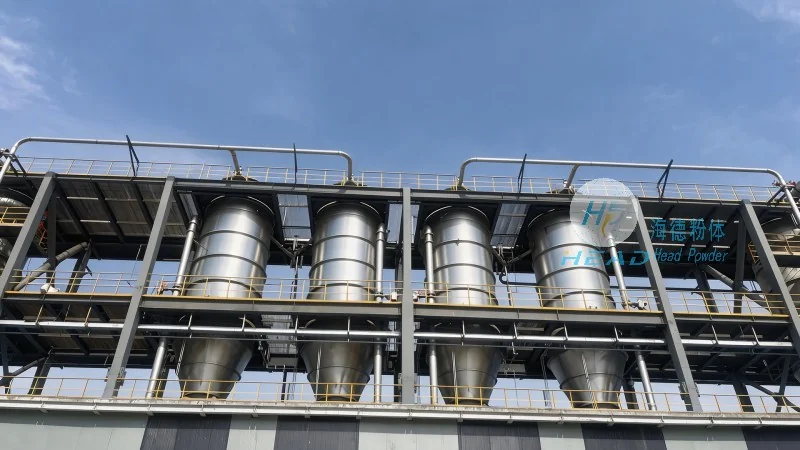
Principle of Operation for the Conveying System
The dust collection powder material conveying system operates on a principle that integrates several key components to achieve seamless material handling. At its heart is a network of sealed pipelines that transport the powder from the collection point to the destination. A primary driver, typically a high-pressure blower or a positive displacement pump, generates the necessary air or gas flow to move the material through the system. The system may also incorporate various control valves, such as rotary airlock valves and check valves, to regulate the flow and prevent backflow. Additionally, the design often includes a dust filtration unit to capture any particles that might escape, ensuring compliance with environmental regulations and maintaining air quality. The overall mechanism is designed to maintain a consistent pressure and flow rate, which is critical for preventing clogging and ensuring the system’s longevity.
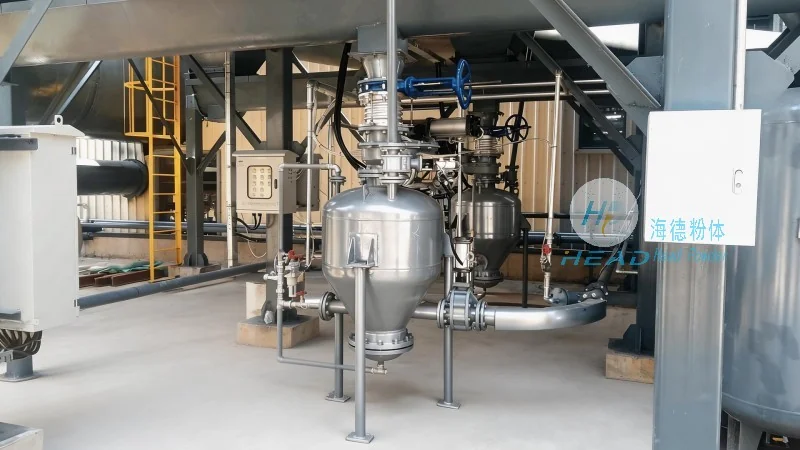
Key Working Scene Characteristics
The working scene characteristics of the dust collection powder material conveying system are tailored to meet the diverse demands of industrial applications. In cement plants, for instance, the system efficiently conveys raw materials and finished products, such as clinker and cement, over long distances with minimal loss. The system’s ability to handle high-volume, low-density materials makes it ideal for this sector. In chemical manufacturing, the equipment is adapted to handle corrosive or abrasive powders, with materials like stainless steel or special alloys used for the pipelines and components to resist degradation. The system’s flexibility also allows it to operate in varying environmental conditions, including high temperatures and humidity, making it suitable for outdoor or indoor installations. Furthermore, the system’s modular design enables easy integration into existing production lines, reducing downtime and installation costs. This adaptability ensures that the equipment can be customized to fit the specific requirements of each client, whether it is a small-scale operation or a large industrial facility.
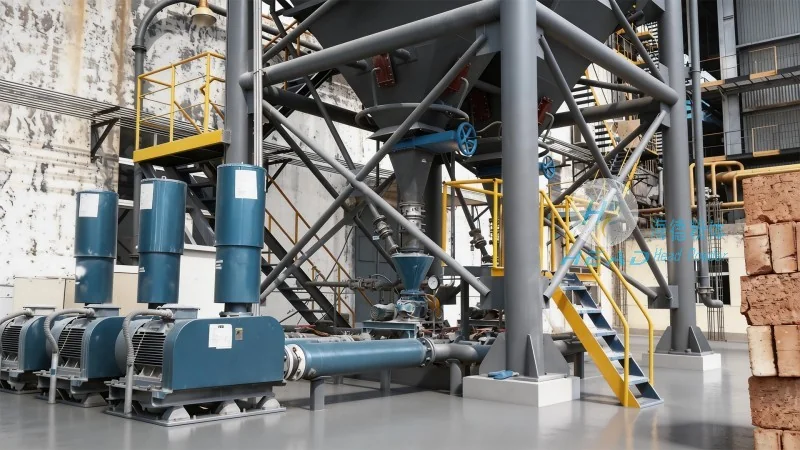
Advantages and Applications in Different Industries
The dust collection powder material conveying system offers several advantages that make it a preferred choice in various industries. One of the primary benefits is its ability to handle fine powders without causing dust dispersion, which is crucial for maintaining a safe working environment and complying with occupational health and safety standards. The sealed system design minimizes the risk of dust leakage, protecting both personnel and the surrounding environment. Another advantage is the system’s energy efficiency, as it optimizes the use of air or gas to move the material, reducing operational costs over time. The system’s reliability is also a significant factor, with components designed for long-term durability and minimal maintenance requirements. In terms of applications, the system is widely used in the cement industry for material handling, in the chemical industry for transporting reactive powders, and in the mineral processing sector for handling ore and other raw materials. The versatility of the system allows it to be applied in a wide range of scenarios, from small-scale batch processing to large-scale continuous production.