

Principle and Working Scene Characteristics of Ammonium Chloride Powder Conveying System Equipment
Ammonium chloride is a widely used chemical compound in various industrial applications, and the efficient handling and transportation of its powder form are crucial for maintaining production efficiency and safety. The Ammonium Chloride Powder Conveying System Equipment, developed by Shandong HeadPowder Engineering Co., Ltd., is a specialized solution designed to address the unique challenges associated with transporting this material. This article explores the underlying principles of the system, its operational characteristics, and the specific scenarios where it excels in industrial settings.
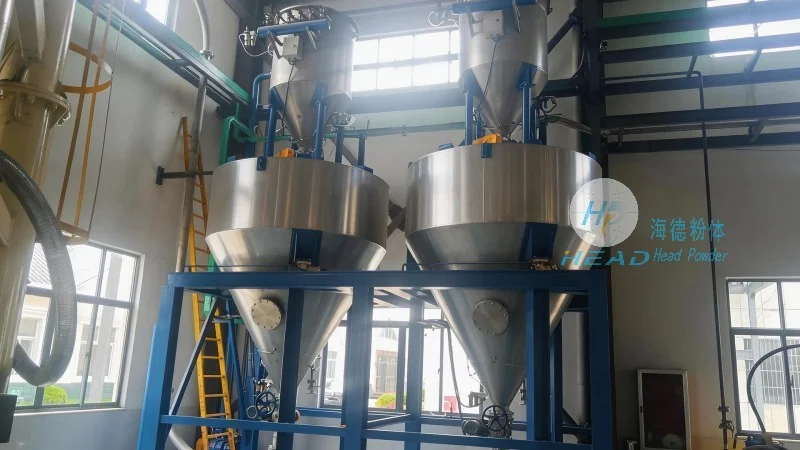
Overview of the Ammonium Chloride Powder Conveying System
The Ammonium Chloride Powder Conveying System is engineered to provide a reliable and efficient method for moving bulk ammonium chloride powder from storage to processing units or other destinations within a facility. At the core of this system is a combination of advanced components that work in tandem to ensure smooth material flow, minimize dust generation, and maintain consistent performance under varying operational conditions. The system is designed to handle the physical properties of ammonium chloride, such as its fine particle size and potential hygroscopic nature, which can impact traditional conveying methods.
Principle of Operation
The system operates on the principle of pneumatic conveying, which uses compressed air to transport dry powders through a network of pipes. This method is particularly effective for ammonium chloride due to its low bulk density and the need to avoid mechanical contact that could cause particle degradation or agglomeration. The conveying process typically involves a hopper or storage silo where the powder is fed into a venturi or a rotary airlock valve. Compressed air is then introduced into the system, creating a low-pressure zone that draws the powder particles into the air stream. The mixture of air and powder travels through the pipeline to the discharge point, where the powder is separated from the air using a cyclone or a filter system. This separation process ensures that the powder is delivered to the target location while the air is either recirculated or vented to the atmosphere, depending on the system design.
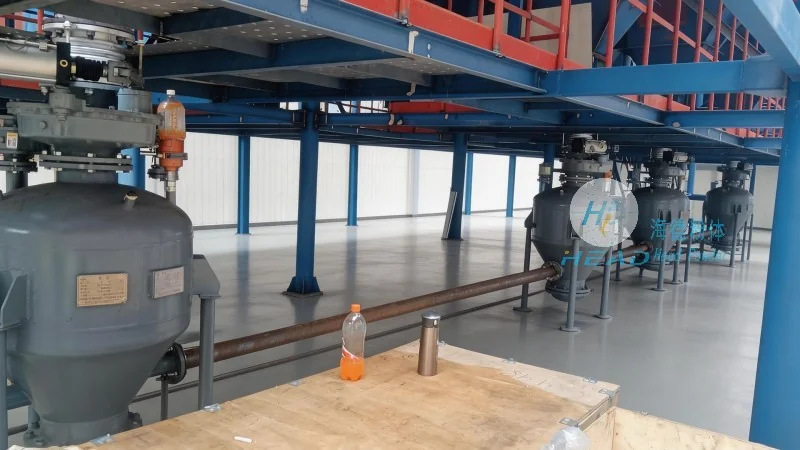
Key Components and Their Functions
Several critical components make up the Ammonium Chloride Powder Conveying System, each playing a vital role in the overall operation. The primary components include the hopper or silo for material storage, a rotary airlock valve to control the flow of powder into the conveying line, a venturi or pressure drop device to generate the necessary air flow, a pipeline network for transporting the material, and a dust collection or separation system at the discharge end. The hopper is equipped with a level indicator to monitor the material inventory, ensuring that the system operates at optimal capacity. The rotary airlock valve acts as a seal between the hopper and the conveying line, preventing air leakage and maintaining the pressure differential required for effective conveying. The venturi or pressure drop device creates a localized low pressure that pulls the powder into the air stream, while the pipeline network distributes the material to the desired destination. The dust collection system, often a cyclone separator or a bag filter, removes any fine particles from the air stream, preventing contamination and ensuring compliance with environmental regulations.
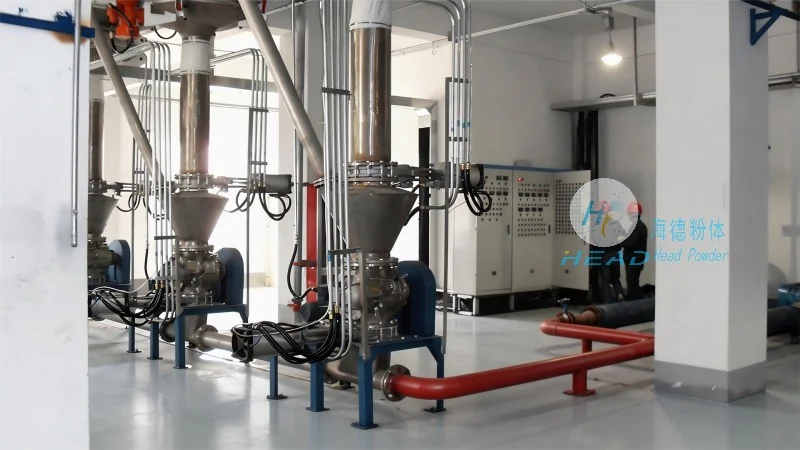
Working Scene Characteristics and Applications
The Ammonium Chloride Powder Conveying System is particularly well-suited for industrial environments where large quantities of ammonium chloride need to be transported efficiently and safely. Common applications include fertilizer production, chemical manufacturing, and food processing industries. In fertilizer plants, the system is used to move ammonium chloride from storage silos to mixing and granulation units, ensuring a continuous supply of raw material. In chemical manufacturing, it facilitates the transfer of the powder to reactors or other processing equipment, where it is used as a raw material in the production of other chemicals. The system's ability to handle fine powders and maintain low dust levels makes it ideal for applications where product purity and environmental compliance are critical. Additionally, the system's flexibility allows it to be integrated into existing production lines, minimizing downtime and disruption during installation and operation.
Advantages and Benefits
Implementing the Ammonium Chloride Powder Conveying System offers several advantages over traditional mechanical conveying methods. One of the key benefits is the reduction in labor costs associated with manual handling of bulk materials. The system automates the entire conveying process, from material feeding to discharge, reducing the need for manual intervention and minimizing the risk of human error. Another significant advantage is the improvement in safety and environmental performance. By using pneumatic conveying, the system eliminates the need for mechanical components that can cause particle breakage or generate dust, which can be hazardous to workers and the environment. The dust collection system also ensures that no airborne particles are released into the workplace, complying with occupational health and safety regulations. Furthermore, the system's efficiency in terms of energy consumption and material handling reduces operational costs over time, making it a cost-effective solution for long-term use.