

What are the methods for transporting lightweight powders?
For companies in the powder processing industry, the efficient and reliable transportation of lightweight powders is a critical operational challenge. This process not only affects production efficiency but also impacts product quality and safety. Shandong HeadPowder Engineering Co., Ltd., a leading provider in the field, specializes in solutions tailored to the unique characteristics of lightweight powders. Based in Shandong, China, HeadPowder offers a range of conveying methods designed to address the specific needs of various industrial applications.
Understanding Lightweight Powders and Their Conveying Challenges
Lightweight powders, such as fine chemicals, pharmaceuticals, and food additives, often present unique challenges during transportation. These materials typically have low bulk density, high dustiness, and can be prone to bridging or caking in storage and handling. Traditional bulk material handling systems may not be suitable due to the risk of material degradation, equipment wear, or inefficient flow. Therefore, selecting the appropriate conveying method is essential to ensure smooth operations and maintain product integrity.
Common Methods for Transporting Lightweight Powders
HeadPowder Engineering Co., Ltd. provides several effective methods for transporting lightweight powders, each with distinct advantages and applications. The choice of method depends on factors such as material properties, required flow rate, system layout, and environmental considerations. Below are some of the most common approaches used in industrial settings.
Air-Pneumatic Conveying Systems
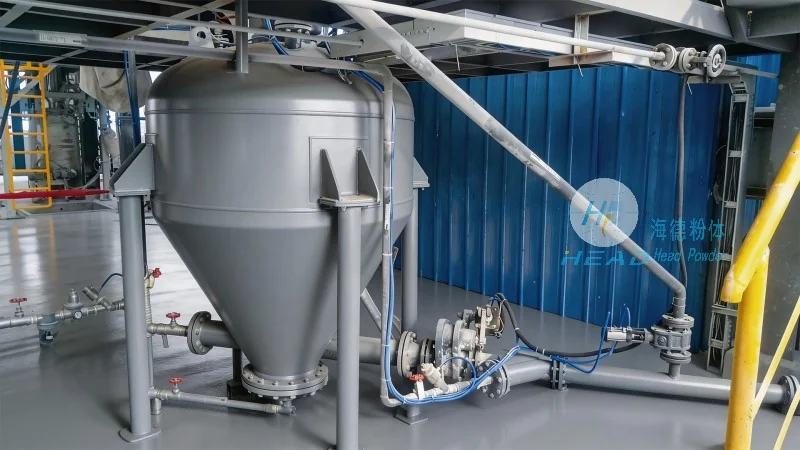
Air-pneumatic conveying, also known as pneumatic conveying, is one of the most widely used methods for transporting lightweight powders. This system utilizes compressed air to move material through a pipeline. There are two primary types: pressure and vacuum systems. Pressure systems use positive pressure to push material from a source to a destination, while vacuum systems use negative pressure to draw material into a pipeline. Air-pneumatic conveying is particularly effective for materials that are dusty, hygroscopic, or require a closed system to prevent contamination. The system can handle a wide range of particle sizes and flow rates, making it versatile for various applications. However, it may require higher energy consumption and careful maintenance to ensure consistent performance.
Screw Conveyors
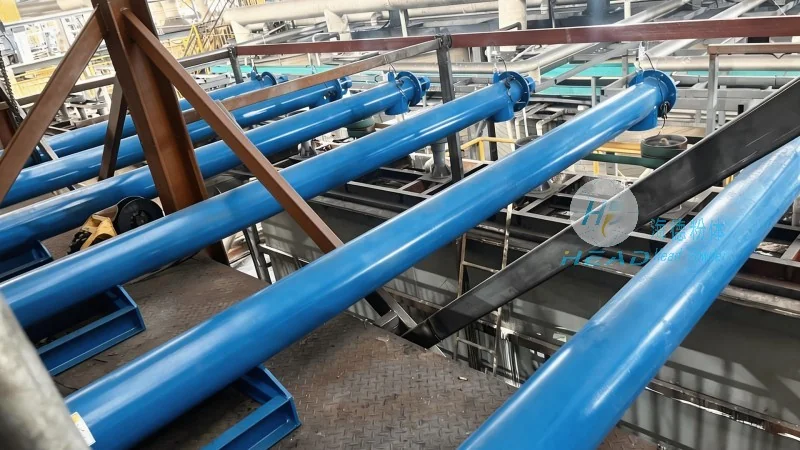
Screw conveyors, or auger conveyors, are another popular choice for transporting lightweight powders. These systems consist of a rotating screw (auger) inside a cylindrical housing. As the screw rotates, it pushes material forward through the tube. Screw conveyors are ideal for horizontal or slight incline applications and are particularly effective for handling free-flowing powders with moderate bulk density. They are relatively simple in design, easy to install, and can be integrated with other processing equipment. However, they may not be suitable for very fine or cohesive powders, as these materials can cause blockages or excessive wear on the screw and housing. Proper selection of screw pitch and material of construction is crucial for optimal performance.
Vibrating Conveyors
Vibrating conveyors use mechanical vibrations to move lightweight powders along a trough. The conveyor consists of a trough supported by vibration motors or eccentrics, which create a sinusoidal motion. This motion causes the material to move forward by a combination of sliding and rolling. Vibrating conveyors are well-suited for handling materials that are cohesive or have a tendency to bridge. They can operate at various angles and are effective for both horizontal and inclined transport. These systems are generally low in energy consumption and can be designed for enclosed or open configurations. However, they may require regular maintenance of the vibration components and may not be as efficient for very fine powders with high dust generation.
Bucket Elevators
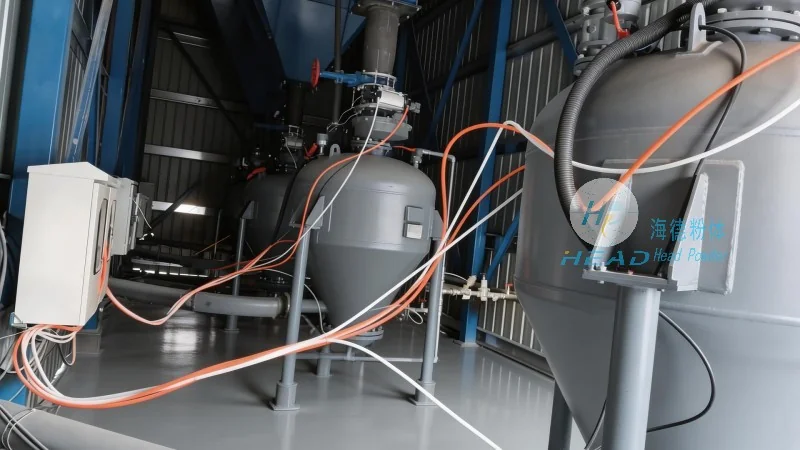
Bucket elevators are vertical or inclined conveyors that use buckets attached to a chain or belt to transport material. The buckets scoop material from a hopper at the bottom and discharge it at the top. This method is highly effective for vertical transport of lightweight powders, especially when a significant elevation change is required. Bucket elevators can handle a wide range of particle sizes and flow rates and are capable of moving material over long vertical distances. They are often used in applications where space is limited and vertical transport is necessary. However, they may have higher initial costs and require more maintenance compared to other systems, particularly for high-volume operations.
Selection Criteria for Choosing the Right Conveying Method
When selecting a conveying method for lightweight powders, several factors must be considered to ensure the most effective and efficient solution. First, the physical properties of the material, such as particle size, density, and flowability, play a critical role. Materials with high dustiness or hygroscopic tendencies may benefit from enclosed systems like air-pneumatic conveying. For cohesive or bridging materials, vibrating conveyors or bucket elevators may provide better performance. Second, the system layout and available space are important considerations. Horizontal or slight incline applications may use screw or vibrating conveyors, while vertical transport may require bucket elevators. Third, operational factors such as required flow rate, speed of operation, and energy consumption must be evaluated. Finally, maintenance requirements and cost-effectiveness should be taken into account to ensure long-term reliability and cost efficiency.
Conclusion
Efficient transportation of lightweight powders is essential for maintaining production efficiency and product quality in the powder processing industry. Shandong HeadPowder Engineering Co., Ltd. offers a range of specialized conveying solutions, including air-pneumatic, screw, vibrating, and bucket elevators, to meet the diverse needs of industrial applications. By carefully evaluating material properties, system requirements, and operational considerations, companies can select the most appropriate conveying method to ensure smooth and reliable material handling. With expertise in powder processing and conveying technology, HeadPowder continues to provide innovative solutions that enhance operational performance and support the growth of their clients in the industry.