
Pneumatic conveying systems have become an indispensable technology in modern material handling operations across maritime, offshore, and shipbuilding industries. When specifically engineered for hull-based applications—such as bulk material transfer onboard vessels, floating production storage and offloading units, or dry bulk carriers—these systems offer significant advantages in terms of space efficiency, cleanliness, and operational reliability. As the global maritime industry moves toward 2026, driven by stricter emission regulations, higher fuel efficiency demands, and the need for automated cargo handling, the role of hull pneumatic conveying systems is expanding beyond conventional grain or cement transport into advanced applications like lithium battery material transfer, fine chemical powders, and even alternative fuel handling such as ammonia or hydrogen storage media. This article provides a comprehensive technical overview of hull pneumatic conveying systems, covering design principles, key components, performance parameters, and selection criteria, while offering actionable insights for engineers and procurement professionals seeking reliable solutions for their specific vessel requirements.

A well-designed hull pneumatic conveying system must address unique challenges inherent to marine environments: limited deck space, dynamic vessel motion, corrosive saline atmosphere, variable humidity, and strict safety codes for explosive dust or toxic materials. Unlike land-based systems, where layout flexibility is high, hull systems require compact, modular configurations that integrate seamlessly with existing ship structures. The conveying pipeline must withstand mechanical vibrations, thermal expansion, and potential impact from cargo shifting. Moreover, with the International Maritime Organization (IMO) pushing for carbon-neutral shipping by 2050, system energy efficiency and low maintenance downtime have become critical selection factors. For ship owners and operators, investing in a robust pneumatic conveying solution is not just about throughput—it directly influences voyage profitability, crew safety, and regulatory compliance. In the following sections, we will explore the core technologies, advanced control strategies, and real-world deployment practices that define state-of-the-art hull pneumatic conveying systems.

Pneumatic conveying relies on the flow of air or an inert gas through a closed pipeline to transport bulk solid materials from one point to another. In hull applications, the system typically operates in either dilute phase or dense phase mode, depending on material characteristics, conveying distance, and allowable degradation. Dilute phase conveying uses high air velocity (typically 15–30 m/s) to suspend particles in the airstream, suitable for free-flowing, non-fragile materials over relatively short distances within the vessel. Dense phase conveying, on the other hand, employs lower velocities (3–8 m/s) and higher pressure differentials, pushing material as a plug or slug through the pipe, ideal for abrasive, fragile, or high-bulk-density powders such as cement, fly ash, or battery precursors. The choice between these modes directly affects pipeline wear, energy consumption, and particle degradation—factors that must be carefully balanced during system design for hull integration.
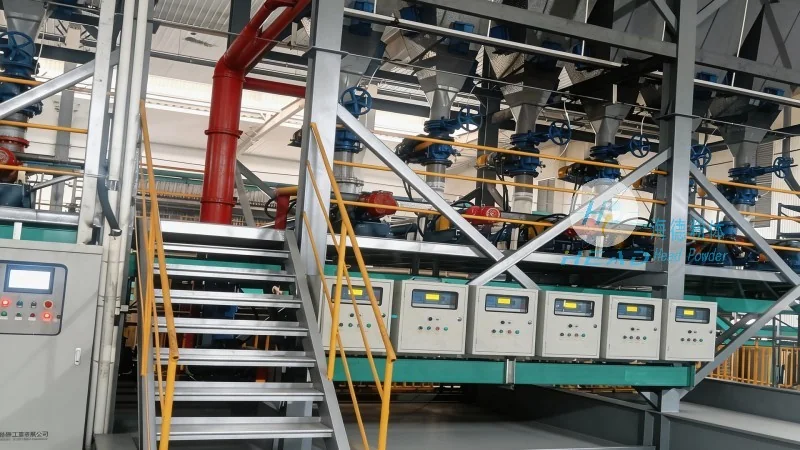
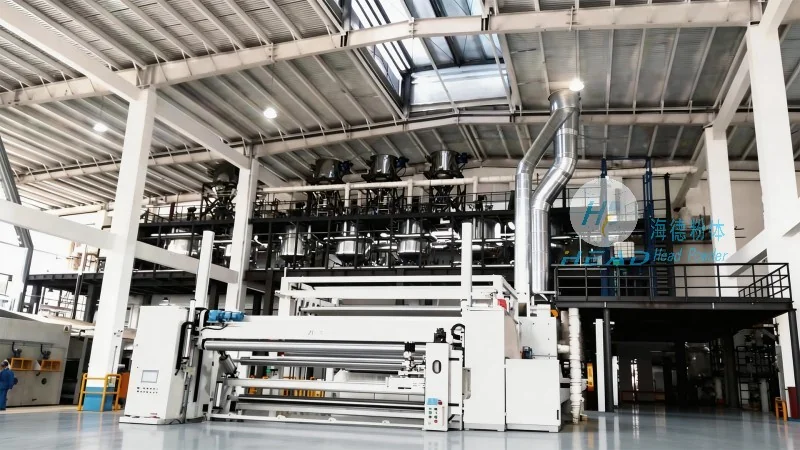
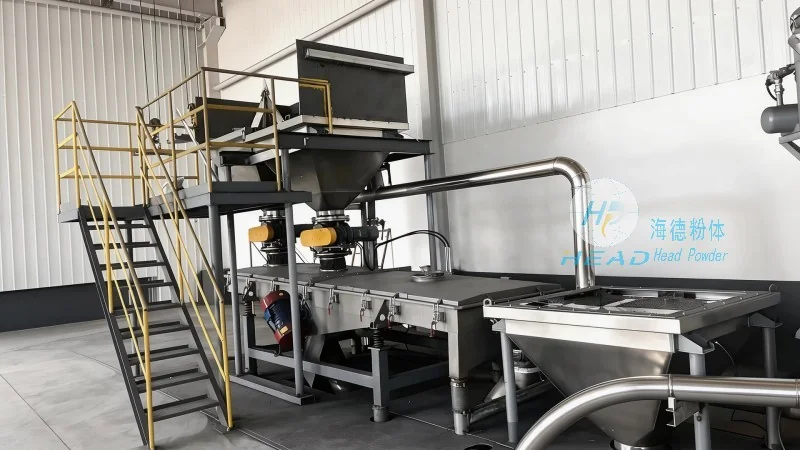
In a typical hull pneumatic conveying system, material is fed into the pipeline via a rotary valve, screw feeder, or venturi injector, depending on the source point—whether from a hopper, silo, or direct discharge from a pneumatic unloader. Air movers, such as positive displacement blowers, compressors, or vacuum pumps, generate the required pressure or vacuum gradient. For hull installations, centrifugal blowers are common for dilute phase due to their compact size and low maintenance, while screw compressors are preferred for dense phase long-distance conveying. The pipeline layout must account for bends, risers, and horizontal sections, with minimum bend radius typically 8–10 times the pipe diameter to prevent particle impact and wear. Advanced systems incorporate flow conditioners, air injection manifolds, and pressure regulating valves to maintain stable conveying conditions despite changes in vessel trim or list. Headpowder, as an experienced supplier in this domain, has developed proprietary pipeline geometry optimization algorithms that reduce pressure drop by 12–18% compared to traditional layouts, resulting in lower blower power requirements and longer component life.

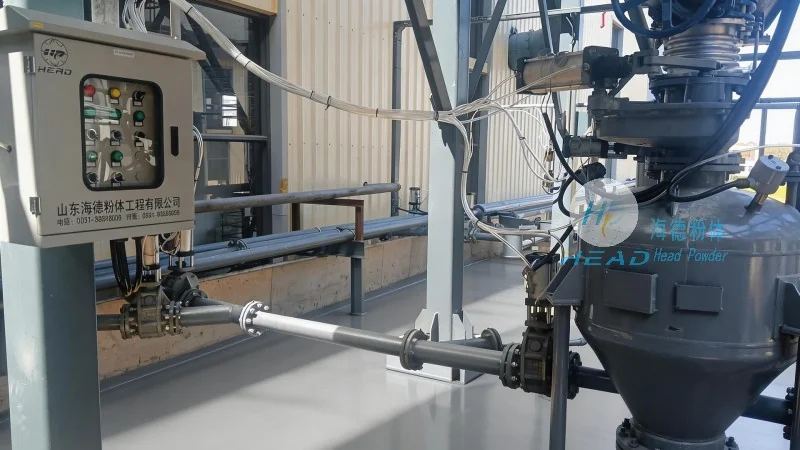
Every hull pneumatic conveying system comprises several critical subsystems: feeding device, air mover, pipeline, separation/filtering unit, and control system. For marine environments, material selection is paramount to withstand salt spray, humidity, and temperature extremes. Pipelines are typically constructed from carbon steel with internal ceramic lining for abrasive materials, or from stainless steel 316L for corrosive applications such as chemical powders. Flanges, gaskets, and expansion joints must meet DNV GL or ABS marine class requirements. The filter receiver, usually a cyclonic separator followed by a baghouse or cartridge filter, must achieve emission levels below 10 mg/Nm³ to comply with MARPOL Annex VI. In hull installations, filter units are often integrated with explosion relief panels and spark detection systems, especially when handling combustible dust like aluminum powder or sulfur. Rotary airlock valves must have tight rotor-to-housing clearances (0.1–0.3 mm) to prevent air leakage while allowing continuous material discharge under differential pressure.
Control systems for hull pneumatic conveying have evolved significantly. Modern PLC-based controllers with HMI touchscreens enable remote monitoring of pressure, flow, temperature, and vibration at multiple points along the pipeline. Predictive maintenance algorithms can detect incipient wear or blockages before they cause downtime. For vessels operating in remote routes, IoT-ready controllers allow shore-based engineers to access real-time data and adjust parameters such as conveying velocity, discharge rate, or blow‑tank pressurization timing. Headpowder has implemented closed‑loop pressure control in numerous hull projects, achieving flow rate stability within ±2% despite vessel motion and varying material properties. This level of precision is particularly valuable when feeding reactors or blending units onboard, where consistent dosing directly affects product quality.
Designing a pneumatic conveying system for a hull requires careful analysis of spatial constraints, structural load capacity, and operational profile. The system must fit within predefined deck areas, often between cargo hatches or inside trunks, without interfering with crane operations, lifeboat davits, or escape routes. Pipeline supports must accommodate thermal expansion and contraction, as well as shock loads from wave impact. Vibration analysis is essential to avoid resonance frequencies that could damage critical components. For systems handling hazardous materials, gas inerting with nitrogen or carbon dioxide is standard practice, and the piping must be routed away from accommodation spaces and ventilation intakes.
Another critical factor is the material receiving point: hull pneumatic systems often interface with shore-based unloading facilities or onboard deeploaders. The connection interface—whether a marine loading arm, hose, or fixed pipeline—must allow for vessel movement during loading/unloading. Automated telescopic chutes with dust control nozzles are now common in modern bulk carriers, reducing spillage and airborne particulates. In 2026, we see a growing trend toward hybrid systems that combine pneumatic conveying with mechanical conveyors (e.g., belt conveyors for horizontal runs and pneumatic lifts for vertical sections) to optimize energy use. For example, a vessel handling alumina may use a mechanical elevator for the low‑energy horizontal segment and a dense‑phase pneumatic system for the final vertical injection into the storage silo, reducing overall power consumption by up to 30%.
Accurate sizing of a hull pneumatic conveying system requires calculation of several interdependent variables: material flow rate (t/h), conveying distance (m), vertical lift (m), pipe diameter (mm), air velocity (m/s), pressure drop (kPa), and blower power (kW). Standard industry correlations, such as those from the Conveying Equipment Manufacturers Association (CEMA), provide baseline equations, but marine applications demand adjustments for humidity, temperature, and material moisture content. For instance, hygroscopic materials like sugar or urea can cause sticky deposits if air dew point is not controlled; therefore, air dryers or heaters may be necessary. Headpowder’s engineering team uses computational fluid dynamics (CFD) simulations to model two-phase flow in complex hull layouts, accounting for bend losses, pipe roughness, and particle size distribution. This approach has enabled successful system designs for vessels carrying powders with particle sizes from 5 µm to 5 mm, with bulk densities ranging from 0.4 to 1.8 t/m³.
Key performance indicators for hull systems include conveying ratio (kg solids per kg air), energy consumption (kWh/t), and wear rate (mm/thousand hours). Dilute phase systems typically achieve conveying ratios of 1–5, while dense phase can reach 10–40 for free‑flowing materials. For hull installations, energy consumption is a major operational cost; modern variable frequency drive (VFD) blowers can reduce power usage by 15–25% compared to fixed‑speed units. When selecting a blower, engineers must also consider air leakage rates through rotary valves and pipeline fittings, which can increase energy waste by 5–10% if not properly sealed. Ultrasonic flow meters and pressure transmitters at critical nodes provide real‑time data for performance monitoring and optimization.
Safety is non‑negotiable in hull pneumatic conveying. The system must comply with international codes such as SOLAS (Safety of Life at Sea), IMSBC Code (International Maritime Solid Bulk Cargoes), and ATEX/IECEx for explosion‑prone environments. For combustible dust hazards, electrical equipment must be rated for Zone 20, 21, or 22 as defined by the vessel’s hazardous area classification. Pressure relief valves, emergency shut‑off valves, and fire suppression interfaces are mandatory. In addition, the system must be designed to prevent static electricity accumulation—conductive hoses, grounding straps, and antistatic gaskets are standard. Headpowder’s systems are type‑approved by major classification societies (DNV, ABS, Lloyd’s) and include built‑in safety interlocks that stop the blower if pressure exceeds set limits or if a filter leak is detected.
Marine environments accelerate wear and corrosion, so a proactive maintenance strategy is essential. Critical wear points include pipeline bends, rotary valve rotor tips, and filter bags. Many hull operators now adopt condition‑based maintenance using vibration sensors, acoustic emission detectors, and pressure trend analysis. For example, a gradual increase in differential pressure across the filter indicates bag clogging and prompts cleaning or replacement before conveying efficiency drops. Headpowder provides remote monitoring services that alert the ship’s crew or shore‑based maintenance team via satellite communication, reducing unplanned downtime. Spare parts kits tailored to each vessel are recommended, including spare rotary valve cartridges, filter cartridges, and gasket sets. A well‑maintained hull pneumatic conveying system can achieve an availability of over 98% over a 15‑year design life, directly contributing to vessel profitability.
The hull pneumatic conveying industry is witnessing several transformative trends. First, digital twinning—creating a virtual replica of the entire conveying system—allows operators to simulate different loading scenarios, optimize energy consumption, and train crew without physical risk. Second, the adoption of hydrogen and ammonia as marine fuels necessitates pneumatic systems that can handle these potentially explosive fuels in solid or slurry form, requiring new material compatibility and safety protocols. Third, lightweight composite piping materials, such as reinforced thermoplastics, are being tested for non‑abrasive powders, offering reduced installation weight and corrosion resistance. Fourth, automation and remote operation are advancing rapidly; autonomous conveying systems that adjust parameters based on real‑time cargo data are already in pilot projects. Headpowder is actively involved in several R&D initiatives focusing on energy‑recovery pneumatic systems that capture kinetic energy from the conveying air to power auxiliary equipment, aligning with the maritime industry’s net‑zero targets.
Choosing the right supplier for a hull pneumatic conveying system directly influences project success. Experience in marine engineering, understanding of classification society rules, and a proven track record of installations on various vessel types—bulk carriers, tankers, offshore support vessels—are essential. Headpowder offers end‑to‑end services: from feasibility study and system design to fabrication, installation supervision, commissioning, and after‑sales support. Our team includes marine engineers, mechanical designers, and automation specialists who collaborate closely with shipyards and operators. One recent project involved retrofitting a 40,000 DWT bulk carrier with a dense‑phase system to transport high‑value chemical powders; the new system reduced dust emissions by 99.2% and increased unloading rate by 28% compared to the previous pneumatic setup. (咨询热线:156-6277-7102) Whether you are specifying a newbuilding or upgrading an existing vessel, consulting with experts early in the design phase can prevent costly modifications later.
Hull pneumatic conveying systems are a critical technology for modern maritime logistics, enabling safe, efficient, and environmentally responsible transport of bulk solids. As the industry embraces digitalization, sustainability, and higher performance standards, the technical complexity of these systems continues to grow. From understanding the nuances of dilute versus dense phase conveying to selecting corrosion‑resistant materials and integrating smart controls, every design decision impacts vessel uptime and operating costs. By partnering with an experienced supplier like headpowder, ship owners and operators gain access to proven engineering methodologies, innovative solutions, and dedicated support that extend system life and maximize return on investment. As 2026 approaches, now is the time to evaluate your vessel’s material handling requirements and explore how modern pneumatic conveying can address both current challenges and future opportunities. Contact our technical team to discuss your specific application and discover how we can deliver a system tailored to your vessel’s unique operational profile.
Shandong headpowder Engineering Co., Ltd.
156-6277-7102(Manager Zhang)
0531-83386006
Jinan City, Shandong Province, China 
服务热线
微信咨询
回到顶部