

Carbon Black Pneumatic Conveying System Equipment Overview and Structural Principles
Carbon black is a critical material in various industrial applications, including rubber, plastics, and pigments. The efficient and reliable transportation of carbon black is essential for maintaining production efficiency and product quality. Pneumatic conveying systems have emerged as a preferred solution for handling carbon black due to their ability to transport powders in a closed environment, minimizing dust and contamination. This article provides an overview of the equipment used in carbon black pneumatic conveying systems and explains the structural principles behind their operation.
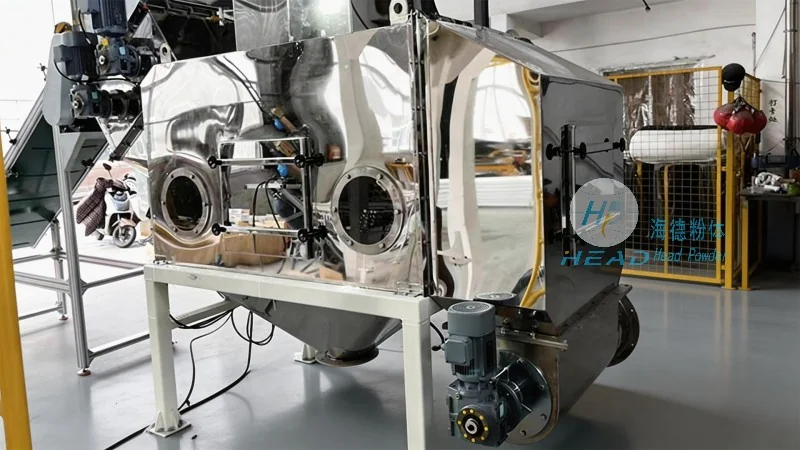
Company Introduction: Shandong HeadPowder Engineering Co., Ltd.
Shandong HeadPowder Engineering Co., Ltd. is a leading manufacturer specializing in the design, development, and supply of pneumatic conveying equipment. With a strong focus on innovation and quality, the company has established itself as a trusted partner in the carbon black processing industry. HeadPowder's expertise lies in creating customized solutions that meet the unique requirements of clients, ensuring optimal performance and durability. The company's headquarters is located in Shandong, China, where it operates a state-of-the-art manufacturing facility equipped with advanced technology and skilled personnel.
Key Equipment in Carbon Black Pneumatic Conveying Systems
The carbon black pneumatic conveying system consists of several key components that work together to transport carbon black from the source to the destination. The primary equipment includes the hopper, feeder, air compressor, conveying line, and receiver. Each component plays a crucial role in the overall system performance.
The hopper is the initial storage vessel where carbon black is stored before being fed into the system. It is typically designed with a conical or rectangular shape to facilitate uniform material flow. The hopper is equipped with a discharge valve or gate that controls the material release rate. For carbon black, which is a fine powder, the hopper may include a pre-feeder or a rotary valve to ensure a consistent feed rate and prevent blockages.
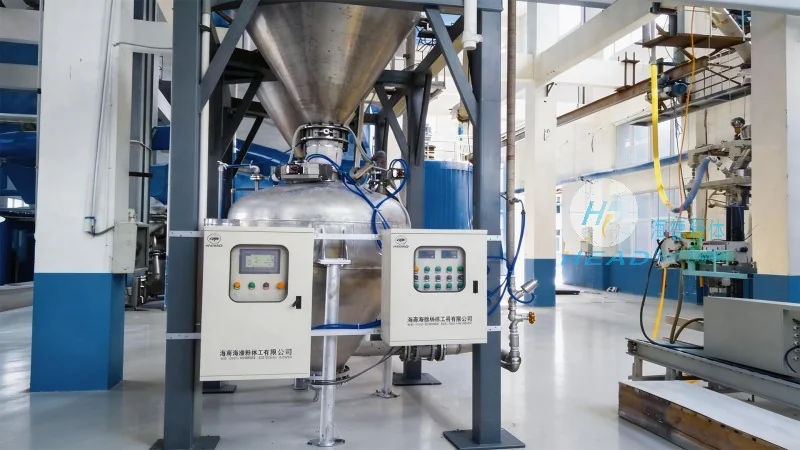
The feeder is responsible for delivering the carbon black from the hopper to the conveying line. There are different types of feeders available, such as rotary valves, star feeders, and screw feeders. The choice of feeder depends on the carbon black properties, such as particle size, moisture content, and flowability. For carbon black, which can be abrasive and prone to caking, a rotary valve or a star feeder is often preferred as they provide a controlled and continuous feed without causing material degradation.
The air compressor is the heart of the pneumatic conveying system, providing the necessary pressure and airflow to move the carbon black through the conveying line. There are various types of air compressors, including rotary screw, reciprocating, and centrifugal compressors. For carbon black applications, a rotary screw compressor is commonly used due to its efficiency, reliability, and ability to handle high volumes of air. The compressor is connected to the conveying line via a filter and regulator to ensure clean and consistent air pressure.
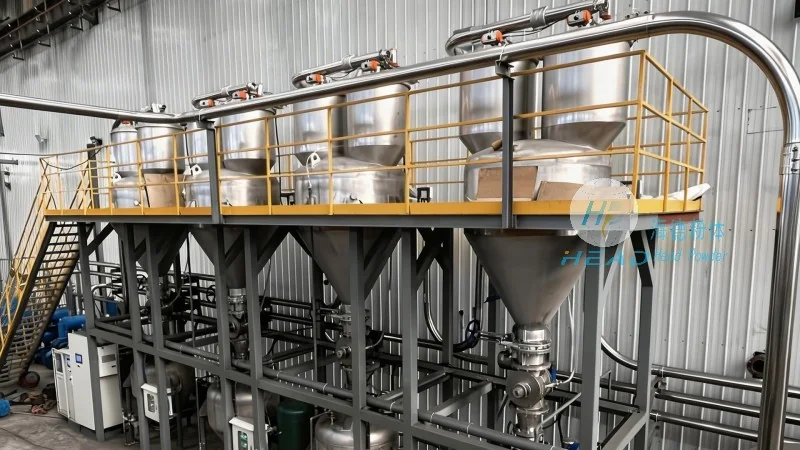
The conveying line is the main pathway for transporting the carbon black from the feeder to the receiver. It is typically made of stainless steel or other corrosion-resistant materials to withstand the abrasive nature of carbon black. The line may include bends, elbows, and expansion joints to accommodate changes in direction and pressure. To prevent dust leakage and maintain a clean environment, the conveying line is often equipped with seals and dust collection systems.
The receiver is the final storage vessel where the carbon black is deposited after being conveyed. It is designed to collect the material efficiently and prevent spillage. The receiver may include a discharge valve or a conveyor to transfer the carbon black to the next processing stage. For large-scale applications, the receiver is often equipped with a level indicator and a pressure relief valve to monitor the material level and prevent overpressure.
Structural Principles of Carbon Black Pneumatic Conveying Systems
The structural principles of carbon black pneumatic conveying systems are based on the principles of fluid dynamics and particle transport. The system operates by creating a pressure differential between the feeder and the receiver, which causes the carbon black to be carried by the air stream. The key principles include the velocity of the air, the particle size distribution, and the air-to-solid ratio.