

Operation Process and Working Principle of Clay Material Pneumatic Conveying Equipment
HeadPowder, a leading manufacturer based in Shandong, China, specializes in the design, production, and supply of advanced pneumatic conveying systems tailored for handling clay materials. Our company, Shandong HeadPowder Engineering Co., Ltd., has established itself as a trusted partner in the industry, delivering high-efficiency and reliable solutions for various industrial applications involving clay transportation.

Introduction to Clay Material Pneumatic Conveying Systems
Pneumatic conveying equipment is a critical component in many industrial processes where the efficient and safe transport of bulk materials, such as clay, is required. Unlike traditional mechanical conveyors, pneumatic systems utilize air or gas to move materials through a pipeline network. This method offers several advantages, including reduced maintenance, lower energy consumption, and the ability to handle materials that are difficult to transport via conventional means. HeadPowder's clay material pneumatic conveying machines are engineered to meet these demands, ensuring optimal performance and durability in demanding environments.
Key Components of the Pneumatic Conveying System
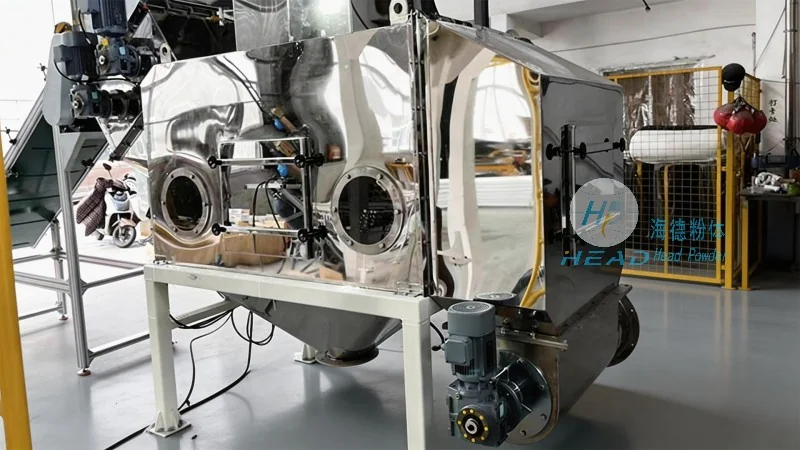
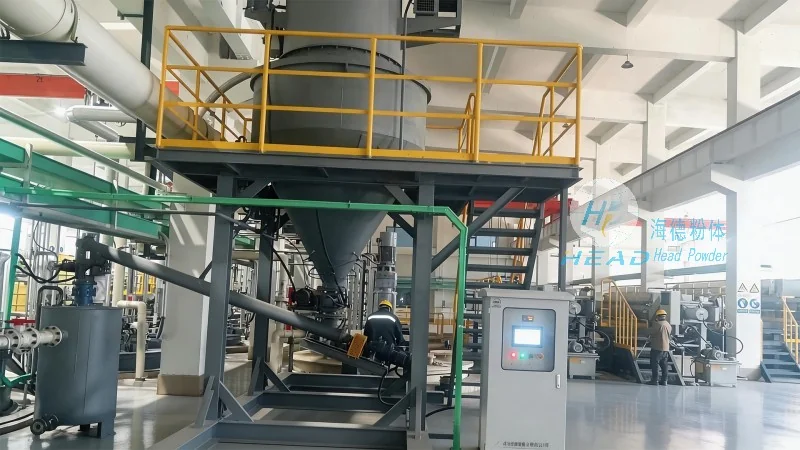
The operation of a clay material pneumatic conveying machine involves several key components that work in concert to facilitate material transport. These components include the material hopper, which stores and feeds the clay; the air compressor or blower, which generates the necessary air pressure; the pipeline system, which transports the material and air mixture; and the discharge unit, which releases the material at the destination. Each component is carefully designed and manufactured to ensure seamless integration and reliable performance.
The Material Loading Process
The process begins with the loading of clay material into the hopper. The hopper is equipped with a feeding mechanism, such as a screw feeder or a rotary valve, which controls the flow rate of the material into the system. This controlled feeding is crucial to maintain a consistent air-to-material ratio, preventing blockages and ensuring smooth operation. The material is then drawn into the pipeline by the air flow generated by the compressor. The air pressure is carefully regulated to match the material's characteristics, such as particle size and moisture content, to achieve optimal conveying efficiency.
The Conveying Process and Air-Material Interaction
Once the material is introduced into the pipeline, it is suspended and transported by the high-velocity air stream. The interaction between the air and the clay particles is a dynamic process that depends on several factors, including air velocity, particle size distribution, and the material's density. HeadPowder's systems are optimized to maintain an appropriate air velocity to keep the particles suspended without causing excessive wear on the pipeline or equipment. The air flow is continuous, ensuring that the material is moved efficiently from the source to the destination without the need for intermediate storage or handling.
The Discharge and Material Separation
At the receiving end of the pipeline, the material is discharged into a collection bin or storage container. The discharge unit, which may include a cyclone separator or a filter, separates the clay from the air. The air is then filtered and returned to the system or released into the atmosphere, depending on the system design. This separation process is essential to prevent material loss and maintain the purity of the conveyed clay. The discharge unit is designed to handle varying material flow rates and particle sizes, ensuring consistent and reliable material delivery.
Control and Monitoring Systems
Modern clay material pneumatic conveying machines are equipped with advanced control and monitoring systems to ensure optimal operation. These systems include pressure sensors, flow meters, and level indicators that provide real-time data on the system's performance. The control panel allows operators to adjust parameters such as air pressure, material feed rate, and discharge settings, ensuring that the system operates within safe and efficient parameters. HeadPowder's systems are designed with user-friendly interfaces, making it easy for operators to monitor and control the conveying process. Additionally, the systems are equipped with safety features, such as pressure relief valves and emergency shut-off mechanisms, to prevent accidents and protect personnel and equipment.
Advantages of Using Clay Material Pneumatic Conveying Equipment
HeadPowder's clay material pneumatic conveying machines offer several advantages over traditional conveying methods. One of the primary benefits is the ability to handle materials that are difficult to transport via mechanical means, such as fine or cohesive clay particles. The pneumatic system can effectively transport these materials without causing blockages or degradation. Another advantage is the reduced maintenance requirements, as there are fewer moving parts compared to mechanical conveyors. This leads to lower operational costs and increased uptime. Additionally, the system is compact and can be installed in confined spaces, making it suitable for various industrial settings. The energy efficiency of the system also contributes to lower operating costs and reduced environmental impact.
Applications and Industries
Clay material pneumatic conveying systems are widely used in various industries, including ceramics, construction, and mining. In the ceramics industry, these systems are used to transport raw clay materials from storage to production lines, ensuring a consistent supply of high-quality material. In the construction industry, they are used to transport clay for brick-making and other building materials. In the mining industry, they are used to transport clay from mining sites to processing facilities. HeadPowder's systems are designed to meet the specific requirements of each industry, ensuring optimal performance and reliability in diverse applications.
Conclusion
HeadPowder's clay material pneumatic conveying equipment is a reliable and efficient solution for transporting clay materials in various industrial applications. The system's design and operation are optimized to ensure high performance, low maintenance, and safe operation. With its advanced components and control systems, the equipment delivers consistent and reliable material transport, meeting the demands of modern industrial processes. As a leading manufacturer in the industry, HeadPowder continues to innovate and provide high-quality solutions that meet the evolving needs of its customers.