

Operation Process and Working Principle of High-Calcium Limestone Powder Pneumatic Conveying Line
High-Calcium limestone powder is a crucial raw material in various industrial applications, including cement production, chemical manufacturing, and construction materials processing. The efficient and reliable transportation of this fine powder is essential for maintaining production efficiency and product quality. Pneumatic conveying systems, particularly those designed for high-calcium limestone powder, offer a solution that minimizes material degradation, reduces contamination risks, and ensures smooth material flow. This article provides an in-depth look at the operation process and working principle of a high-calcium limestone powder pneumatic conveying line, highlighting the key components, operational steps, and technical considerations.
Company Overview: Shandong HeadPowder Engineering Co., Ltd.
HeadPowder, a leading manufacturer in the field of material handling and processing equipment, specializes in designing and manufacturing advanced pneumatic conveying systems. With a strong commitment to innovation and quality, the company has established itself as a trusted partner for industries requiring efficient material transport solutions. HeadPowder's expertise lies in tailoring systems to meet specific customer needs, ensuring optimal performance and durability. The company's headquarters is located in Shandong, China, where it operates a state-of-the-art manufacturing facility and research center.
Key Components of the Pneumatic Conveying System
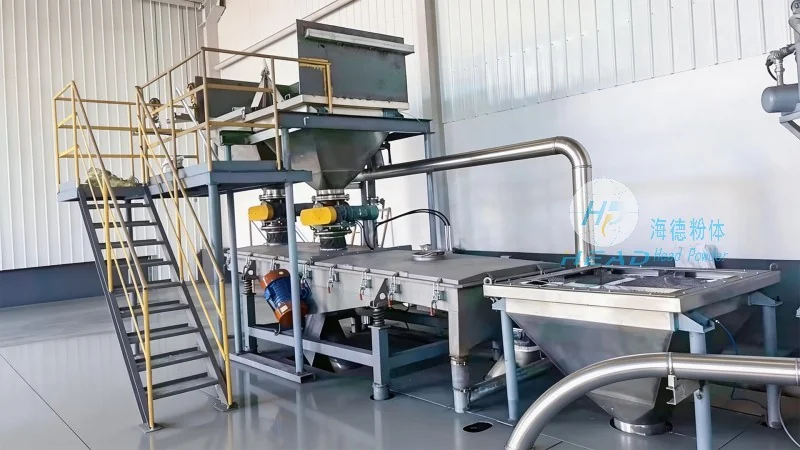
The high-calcium limestone powder pneumatic conveying line consists of several critical components that work in tandem to achieve efficient material transport. These components include the material hopper, feeder, air compressor, conveying pipe, dust collector, and control system. Each component plays a vital role in the overall operation of the system.
The material hopper is designed to store the high-calcium limestone powder and provide a consistent feed to the feeder. It is typically equipped with a level indicator to monitor the material level and ensure continuous operation. The feeder, often a rotary valve or a screw feeder, regulates the flow rate of the powder into the conveying line, preventing overfeeding or underfeeding that could affect system performance.
The air compressor is the heart of the pneumatic conveying system, generating the necessary air pressure to move the powder particles through the conveying pipe. The choice of compressor type, such as rotary or reciprocating, depends on the specific requirements of the application, including the material's properties and the desired conveying distance. The conveying pipe, usually made of stainless steel or other corrosion-resistant materials, is designed to withstand the abrasive nature of the limestone powder and maintain airtight integrity.
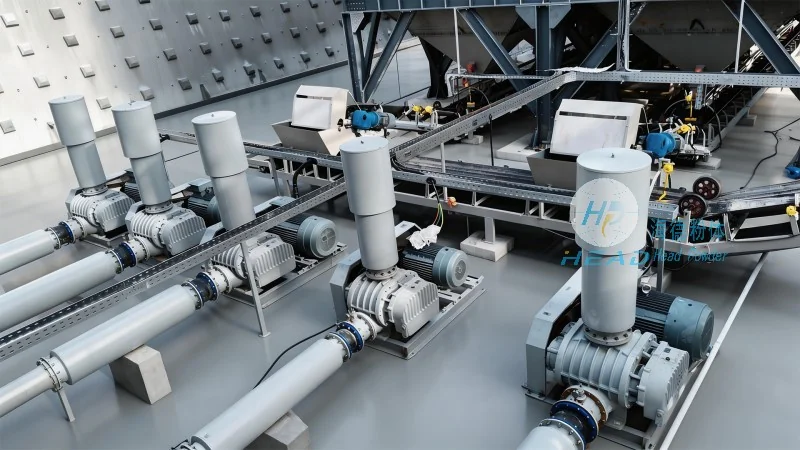
The dust collector is an essential component for maintaining air quality and complying with environmental regulations. It captures any fine particles that may escape the conveying system and filters the air before releasing it back into the environment. The control system, which may include sensors, valves, and a programmable logic controller (PLC), monitors and controls the operation of the entire system, ensuring safe and efficient operation.
Operation Process of the Pneumatic Conveying Line
The operation of the high-calcium limestone powder pneumatic conveying line involves several sequential steps that ensure the smooth and continuous transport of the material. The process begins with the loading of the high-calcium limestone powder into the material hopper. The hopper is then connected to the feeder, which regulates the flow rate of the powder into the conveying line.
Once the feeder starts operating, the air compressor is activated, generating the required air pressure. The compressed air is then introduced into the conveying pipe, creating a flow that lifts and transports the limestone powder particles. The powder particles are carried along the pipe by the air stream, moving from the feeding point to the discharge point.
At the discharge end, the powder is collected in a receiving hopper or storage silo. The air, now containing some fine particles, is directed to the dust collector, where it is filtered and cleaned. The cleaned air is then discharged, while the collected dust is removed and disposed of according to environmental regulations.
The control system continuously monitors the pressure, flow rate, and material level in the system, adjusting the operation as needed to maintain optimal performance. This ensures that the system operates efficiently and safely, minimizing downtime and maximizing productivity.
Working Principle of the Pneumatic Conveying System
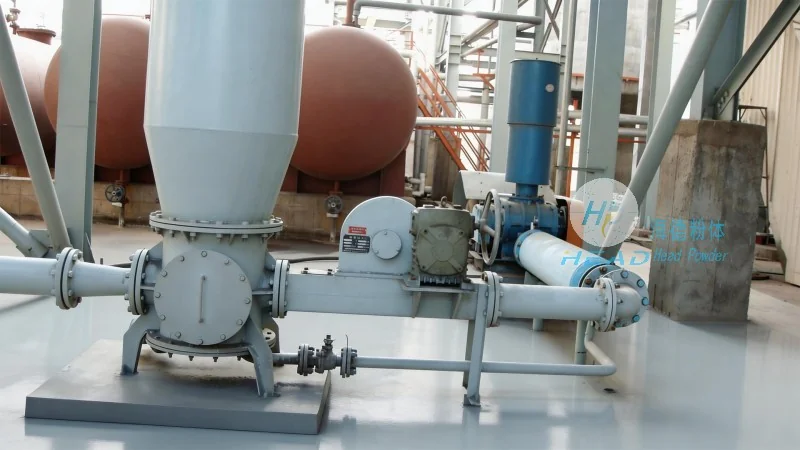
The working principle of the high-calcium limestone powder pneumatic conveying line is based on the fundamental concept of fluidization and particle transport. When compressed air is introduced into the conveying pipe, it creates a low-density mixture of air and powder particles. This mixture, known as a slurry or suspension, allows the powder to be transported through the pipe without the need for mechanical conveying equipment.
The key to efficient pneumatic conveying is the balance between the air velocity and the particle size and density. The air velocity must be sufficient to overcome the gravitational force acting on the powder particles and to maintain the particles in a suspended state. If the air velocity is too low, the particles will settle and cause blockages in the pipe. Conversely, if the air velocity is too high, it may lead to excessive wear on the pipe and components, as well as increased energy consumption.
The system operates on the principle of positive pressure or negative pressure, depending on the specific design. Positive pressure systems use compressed air to push the material through the pipe, while negative pressure systems use suction to draw the material from the source. For high-calcium limestone powder, positive pressure systems are commonly used due to their ability to handle abrasive materials and maintain consistent flow rates.
The conveying efficiency of the system is influenced by several factors, including the particle size distribution, moisture content, and the presence of contaminants. Fine particles are more prone to segregation and blockages, while moisture can cause clumping and reduce the flowability of the powder. Therefore, proper material preparation and conditioning are essential to ensure optimal system performance.