

What is Rare Earth Pneumatic Conveying? And What Are Its Design Principles?
Rare earth materials, such as neodymium, praseodymium, and cerium, are critical components in modern technology, including electronics, magnets, and renewable energy systems. The efficient handling and transportation of these fine powders is essential for industrial applications. Pneumatic conveying, a method that uses air or other gases to transport bulk materials, offers a solution for safely and effectively moving rare earth powders. This article explores the fundamentals of rare earth pneumatic conveying and its underlying design principles, providing insights into how this technology supports the processing and distribution of these valuable materials. HeadPowder, a professional manufacturer based in Shandong, China, specializes in developing customized pneumatic conveying solutions tailored to the unique needs of rare earth processing industries.
The Core Design Principles of Rare Earth Pneumatic Conveying Systems
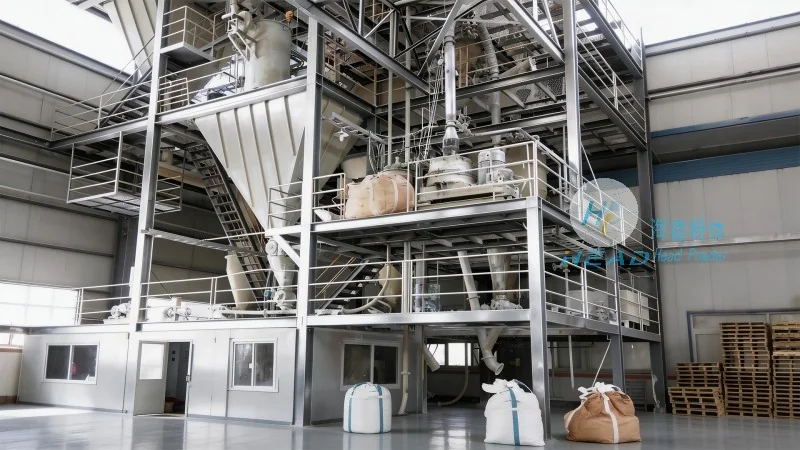
The design of a rare earth pneumatic conveying system involves several key principles to ensure optimal performance, material integrity, and operational efficiency. The first principle is the selection of the appropriate conveying type, which can be categorized into dilute-phase and dense-phase systems. Dilute-phase systems use high-velocity air to suspend the powder particles, typically at velocities above 20 m/s, and are suitable for long-distance transport of fine powders. Dense-phase systems, on the other hand, use lower velocities and higher air-to-material ratios to move the material in a more controlled manner, reducing the risk of particle degradation and equipment wear. For rare earth powders, which are often sensitive to attrition and agglomeration, dense-phase conveying is often preferred to maintain particle size and quality.
Another critical design principle is the system's pressure and flow rate management. The pressure within the conveying line must be sufficient to overcome the resistance caused by the material's density, the pipe length, and any bends or fittings. Proper flow rate control ensures that the material is transported at a consistent speed, preventing issues like clogging or excessive energy consumption. The system also incorporates components such as feeders, filters, and cyclones to regulate the material's flow and separate it from the air stream. For rare earth powders, which can be abrasive and potentially hazardous, these components are designed with materials that resist wear and corrosion, such as stainless steel or specialized alloys.
Key Components and Their Function in Rare Earth Pneumatic Conveying
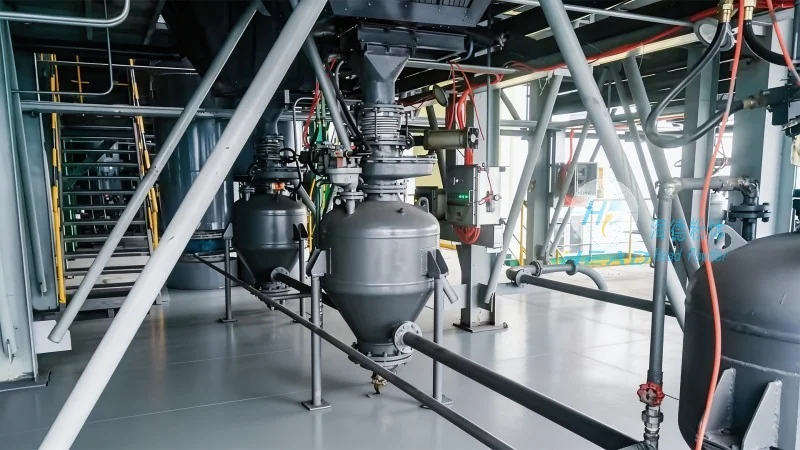
A typical rare earth pneumatic conveying system consists of several essential components, each playing a vital role in the overall operation. The feed system, which includes a hopper and a feeder (such as a rotary valve or a screw feeder), is responsible for accurately metering the material into the conveying line. The feeder must be capable of handling fine powders without causing blockages or uneven flow, which is crucial for maintaining the system's efficiency. The conveying line itself is usually made of smooth, corrosion-resistant materials like stainless steel or PTFE-coated pipes to prevent material buildup and ensure consistent air flow.
The air source, typically a blower or a compressor, provides the necessary pressure and volume of air to move the material. The choice of air source depends on the system's requirements, including the material's properties and the conveying distance. For rare earth powders, which are often light and fine, a high-volume, low-pressure blower is commonly used to avoid damaging the particles. The system also includes a filter or a cyclone separator at the receiving end to capture the material from the air stream, preventing it from being released into the environment. These separators are designed to handle fine powders effectively, ensuring that the material is recovered with minimal loss. Additionally, the system may include a vacuum or pressure regulator to control the air pressure and maintain stable operation.
Applications and Benefits of Rare Earth Pneumatic Conveying
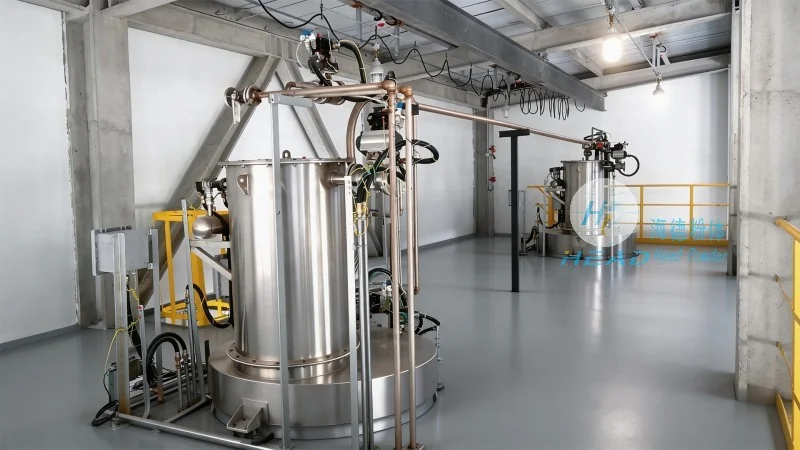
Rare earth pneumatic conveying is widely used in various industrial applications, particularly in the processing and manufacturing of rare earth elements. In these applications, the technology enables the safe and efficient transport of fine powders from processing units to storage or further processing stages. The benefits of using pneumatic conveying for rare earth materials include reduced material handling time, lower labor costs, and improved product quality. Unlike traditional methods like bucket elevators or belt conveyors, pneumatic systems can handle fine, abrasive powders without causing particle degradation or contamination. This is particularly important for rare earth powders, which are often used in high-value applications where purity and particle size are critical. The system also minimizes the risk of dust explosions by containing the material within a closed loop, enhancing workplace safety.
Furthermore, pneumatic conveying systems can be integrated with other processing equipment, such as ball mills or classifiers, to create a continuous production line. This integration improves overall plant efficiency and reduces downtime. The flexibility of pneumatic systems allows them to be adapted to different production scales and material types, making them suitable for both small-scale laboratory operations and large-scale industrial facilities. For companies dealing with rare earth materials, the adoption of pneumatic conveying technology can lead to significant cost savings and operational improvements, while ensuring compliance with environmental and safety regulations.