

What are the conveying methods of caustic soda? Introduction to Haide caustic soda pneumatic conveying method.
Caustic soda, also known as sodium hydroxide, is a highly corrosive and hygroscopic material widely used in industries such as chemical manufacturing, water treatment, pulp and paper, aluminum production, and soap making. The safe and efficient conveying of caustic soda is critical to maintaining production continuity, ensuring worker safety, and preventing material degradation. In industrial practice, several conveying methods are employed depending on the physical form of the caustic soda (flake, pearl, or liquid), the required throughput, the distance of transport, and the environmental conditions. This article provides a comprehensive overview of the main caustic soda conveying methods, with a special focus on the pneumatic conveying solution offered by Shandong Headpowder Engineering Co., Ltd. (headpowder).
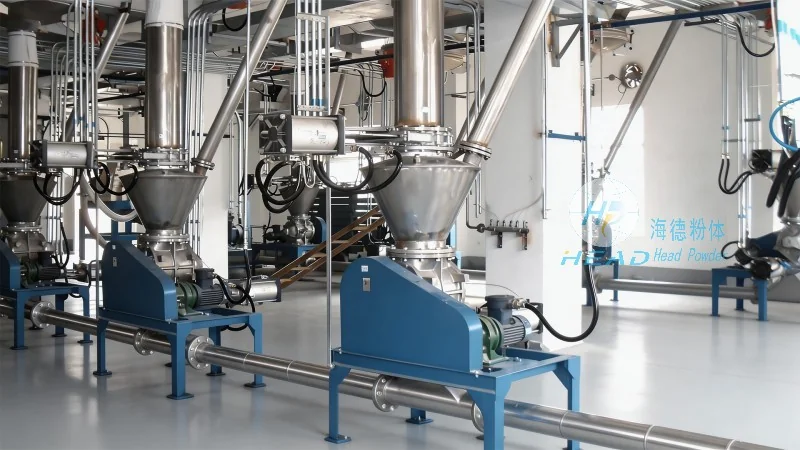
Common Caustic Soda Conveying Methods
The most frequently used methods for caustic soda conveying include mechanical conveying, hydraulic conveying, and pneumatic conveying. Each method has distinct advantages and limitations that must be carefully evaluated for a given application.
Mechanical Conveying
Mechanical conveying systems, such as belt conveyors, screw conveyors, bucket elevators, and drag chain conveyors, are traditionally employed for bulk solid materials. For caustic soda flakes or pearls, these systems can be designed with corrosion-resistant materials like stainless steel 316 or special coatings. However, mechanical conveyors often have exposed moving parts that require regular maintenance, and they can generate dust, which poses a safety hazard due to caustic soda's irritant properties. Moreover, the hygroscopic nature of caustic soda can cause caking and clogging in screw conveyors, especially in humid environments. For these reasons, mechanical conveying is less common in modern caustic soda handling facilities, though it may still be used for short-distance transfers within a controlled environment.
Hydraulic Conveying
Hydraulic conveying involves suspending caustic soda particles in a liquid (usually water or a caustic solution) and transporting the slurry through pipelines. While this method reduces dust generation and can handle large volumes, it introduces the challenge of liquid handling, corrosion, and the need for subsequent drying or separation. For caustic soda, which is highly soluble in water, hydraulic conveying is typically limited to liquid caustic soda (50% or 73% concentration) rather than solid forms. The equipment must be designed to withstand the strong alkaline environment, and the process requires careful control of temperature and concentration to avoid crystallization. This method is more common in large-scale continuous processes where the final product is already in liquid form.
Pneumatic Conveying
Pneumatic conveying is the preferred method for transporting dry caustic soda in flake, pearl, or granular form. It uses a gas stream (usually air or nitrogen) to move the material through a closed pipeline system. Pneumatic conveying offers several key benefits: it is fully enclosed, minimizing dust emissions and protecting workers from exposure; it eliminates the risk of moisture absorption during transport; it can be easily automated and integrated with other process equipment; and it requires less floor space compared to mechanical systems. There are two main types of pneumatic conveying: dilute phase and dense phase. Dilute phase conveys material at high velocity with relatively low solid-to-gas ratio, while dense phase operates at lower velocity with a higher concentration of material, reducing energy consumption and product degradation. For caustic soda, dense phase pneumatic conveying is often recommended because it minimizes particle attrition and reduces the risk of pipe erosion.
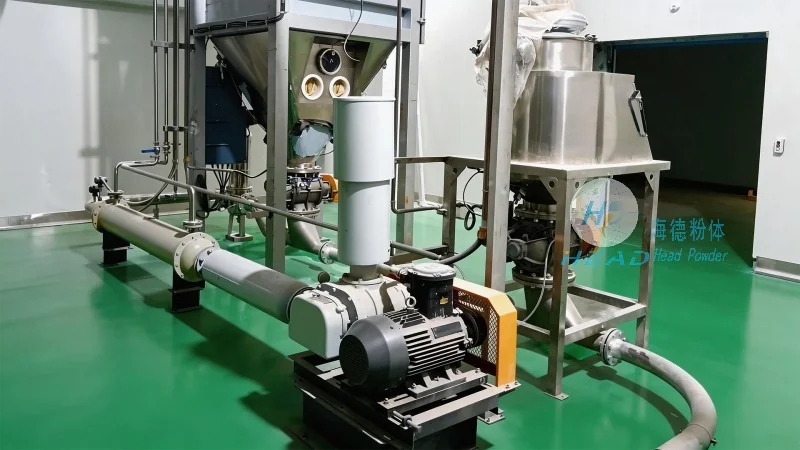
Headpowder Caustic Soda Pneumatic Conveying: A Dedicated Solution
Shandong Headpowder Engineering Co., Ltd., based in Shandong, China, is a professional engineering company specializing in material conveying systems, with a particular focus on pneumatic conveying for challenging bulk solids. The company's core expertise lies in caustic soda pneumatic conveying, where they have developed customized solutions that address the unique properties of this highly reactive material. Headpowder’s caustic soda pneumatic conveying systems are designed to handle both flake and pearl forms, ensuring reliable, dust-free, and low-maintenance operation.
Headpowder’s approach combines advanced engineering principles with practical experience. The company uses a combination of dense phase pneumatic conveying technology and proprietary feeding devices to achieve stable and gentle transport. The system typically includes a rotary airlock feeder or a venturi injector, a specially designed pipeline with wear-resistant bends, and a cyclone separator or bag filter for material collection. Because caustic soda is highly hygroscopic and can absorb moisture from the conveying air, Headpowder integrates dehumidification and air drying units to maintain product quality. The system is also equipped with pressure monitoring and automatic control logic to prevent blockages and ensure consistent flow.
One of the distinguishing features of Headpowder’s caustic soda conveying solution is the attention to material compatibility. All contact parts are made of stainless steel 316L or higher-grade alloys, and the internal surfaces are polished to reduce friction and prevent build-up. The conveying pipeline is designed with a gentle radius to minimize particle impact and degradation. For applications requiring sterile or inert atmospheres, nitrogen can be used as the conveying gas. These features make Headpowder’s system suitable for food-grade caustic soda production as well as for demanding chemical processes.
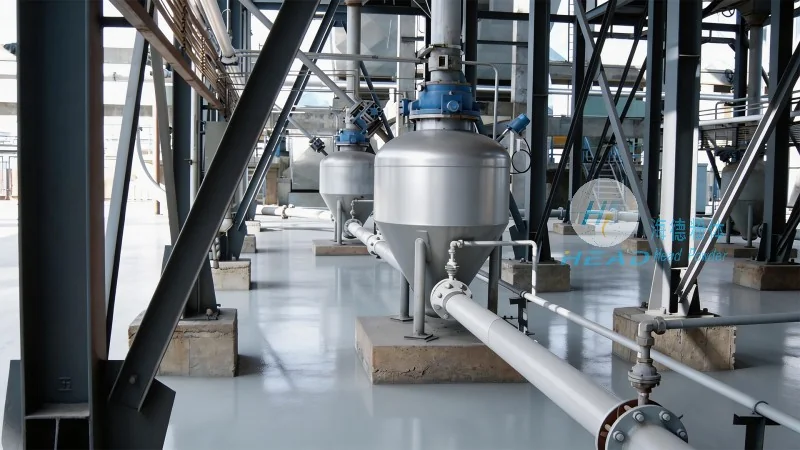
Why Choose Headpowder for Caustic Soda Pneumatic Conveying?
As a leading provider in the field of material conveying, Shandong Headpowder Engineering Co., Ltd. (headpowder) has accumulated extensive experience in designing and manufacturing pneumatic conveying systems for caustic soda and other challenging materials. The company’s engineering team understands the critical importance of safety, reliability, and efficiency in caustic soda handling. By choosing Headpowder, customers benefit from a turnkey solution that includes system design, equipment fabrication, installation supervision, and commissioning support.
Headpowder also offers a full range of auxiliary equipment, such as silos, hoppers, dust collectors, and control panels, to create a complete material handling system. The company’s deep knowledge of caustic soda conveying extends to the integration of the conveying system with upstream and downstream processes, such as weighing, mixing, and packaging. Whether the requirement is for a small batch transfer or a large-scale continuous production line, Headpowder can tailor the solution to meet specific capacity and layout constraints.
For any inquiry regarding caustic soda conveying, caustic soda pneumatic conveying, or general material conveying, you can contact Manager Zhang directly via WeChat: 15662777102. The team at Shandong Headpowder Engineering Co., Ltd. is ready to provide detailed technical consultation and project proposals.
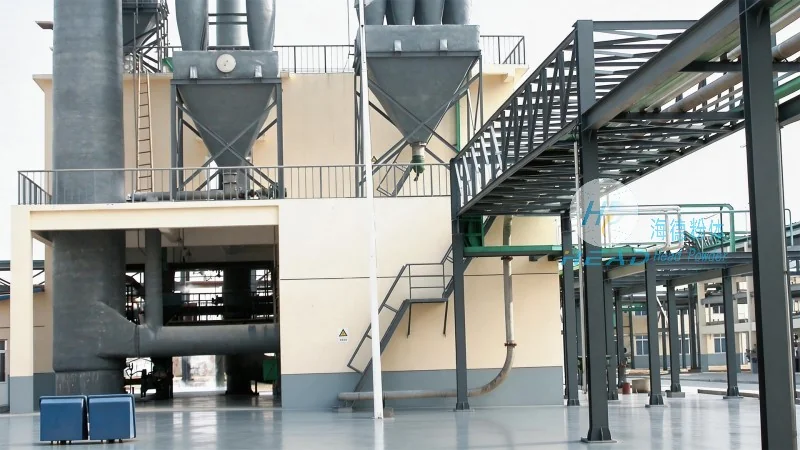
Optimizing Caustic Soda Conveying for Your Facility
When selecting a caustic soda conveying method, it is essential to evaluate all parameters: material characteristics (particle size, angle of repose, abrasiveness, moisture sensitivity), required throughput, conveying distance, available space, and budget. Pneumatic conveying, particularly the dense phase approach, consistently outperforms other methods for dry caustic soda in terms of safety, cleanliness, and product integrity. Headpowder’s specialized systems have been proven in numerous installations across China and internationally, helping clients reduce downtime, lower maintenance costs, and improve workplace safety.
To further enhance the reliability of caustic soda pneumatic conveying, Headpowder incorporates advanced features such as automatic purging, pressure relief valves, and leak detection systems. The company also provides training for operators and maintenance personnel, ensuring that the system performs at its best over its entire lifecycle. If you are considering upgrading your existing caustic soda conveying line or building a new facility, Headpowder’s engineering team can conduct a site survey and propose the most cost-effective solution.
Remember, the correct conveying method can significantly impact your production efficiency and product quality. For professional advice and a tailored quote, reach out to Manager Zhang via WeChat: 15662777102. Shandong Headpowder Engineering Co., Ltd. is your trusted partner in material conveying, with a proven track record in caustic soda handling and beyond.
Conclusion
In summary, the main methods for caustic soda conveying include mechanical, hydraulic, and pneumatic systems. Among these, pneumatic conveying – especially dense phase technology – offers the best combination of safety, efficiency, and material preservation for dry caustic soda. Shandong Headpowder Engineering Co., Ltd. (headpowder) has developed a specialized caustic soda pneumatic conveying solution that addresses the unique challenges of this material, from corrosion resistance to moisture control. With a strong presence in Shandong, China, and a dedicated team led by Manager Zhang, Headpowder is well-positioned to support your caustic soda conveying needs. For more information, contact Manager Zhang via WeChat: 15662777102. Let Headpowder help you optimize your material conveying process today.