

Classification and Application Analysis of Lead Powder Pneumatic Conveying Systems
Shandong HeadPowder Engineering Co., Ltd., a leading enterprise in the field of lead powder processing and conveying technology, specializes in the design, manufacturing, and installation of advanced pneumatic conveying systems tailored for lead powder handling. HeadPowder, with its headquarters in Shandong, China, has established itself as a trusted partner for industries requiring efficient and reliable lead powder transportation solutions.
Introduction to Lead Powder Pneumatic Conveying Systems
Pneumatic conveying systems are widely used in various industrial applications to transport bulk materials, including lead powder, through the use of air or gas as the conveying medium. These systems offer advantages such as reduced material contamination, improved safety, and the ability to handle materials in enclosed environments. The classification of lead powder pneumatic conveying systems is based on several key factors, including the conveying principle, material flow characteristics, and system configuration.
Classification of Lead Powder Pneumatic Conveying Systems
Lead powder pneumatic conveying systems can be broadly categorized into two main types: dilute-phase and dense-phase systems. Dilute-phase systems, also known as low-pressure or high-velocity systems, utilize high air velocities to suspend the lead powder particles in the air stream, allowing for long-distance transportation with minimal pressure drops. Dense-phase systems, on the other hand, operate at lower velocities and higher pressures, where the lead powder is conveyed in a more compact form, often with the assistance of pulse or rotary valves.
Application Analysis of Different Conveying Systems
Dilute-phase pneumatic conveying systems are commonly employed in applications requiring high throughput and long-distance transport of lead powder. These systems are suitable for scenarios where the material is free-flowing and does not require strict control over particle size or moisture content. For instance, in lead battery manufacturing plants, dilute-phase systems are used to transport lead powder from storage silos to mixing and casting areas, ensuring consistent material flow and reducing the risk of material buildup or clogging.
Dense-phase systems, while typically more complex and higher in cost, are preferred in applications where the lead powder is sensitive to air exposure or where precise control over material flow is critical. These systems are often used in processes that involve mixing lead powder with other chemicals or in environments where dust control is paramount. For example, in lead recycling facilities, dense-phase conveying helps maintain the integrity of the lead powder and prevents oxidation or contamination during transport.
Technical Advantages and Considerations
Both dilute-phase and dense-phase lead powder pneumatic conveying systems offer distinct advantages. Dilute-phase systems are generally more cost-effective and easier to install, making them ideal for short to medium-distance applications. They are also less prone to material blockages, as the high air velocity keeps the lead powder particles suspended. However, they may not be suitable for materials with high moisture content or those that are prone to agglomeration.
Dense-phase systems, although more expensive, provide better control over material flow and can handle materials with higher moisture content or those that are prone to clogging. They are also more effective in preventing dust emissions and maintaining material quality. The choice between these systems depends on the specific requirements of the application, including the distance of transport, material properties, and operational constraints.
Real-World Applications and Case Studies
HeadPowder has successfully implemented lead powder pneumatic conveying systems in various industrial settings. One notable case involves a lead battery manufacturer in China, where the company installed a dilute-phase system to transport lead powder from storage silos to the production line. The system was designed to handle high volumes of lead powder over a distance of 200 meters, with minimal pressure loss and consistent material flow. The implementation resulted in improved production efficiency and reduced labor costs associated with manual material handling.
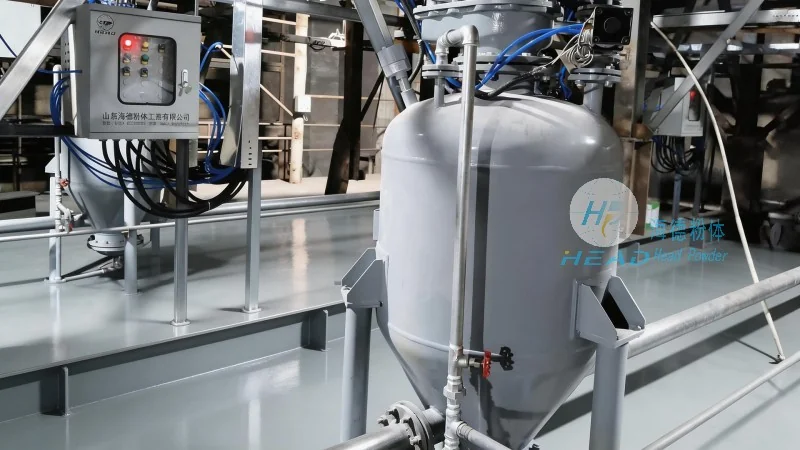
In another application, a lead recycling plant in Shandong, China, utilized a dense-phase system to convey lead powder from the crushing and grinding stage to the mixing and smelting processes. The system was equipped with advanced control mechanisms to regulate the air pressure and flow rate, ensuring precise control over the material transport. The dense-phase system effectively prevented lead powder oxidation and maintained the material's quality, leading to higher yields and reduced waste in the recycling process.
Conclusion
Lead powder pneumatic conveying systems are essential components in industries that handle lead powder, offering efficient and reliable transportation solutions. The classification of these systems, based on dilute-phase and dense-phase principles, allows for tailored solutions that meet the specific needs of different applications. Companies like Shandong HeadPowder Engineering Co., Ltd. play a crucial role in providing customized pneumatic conveying systems that enhance operational efficiency, improve safety, and maintain material quality. As the demand for lead powder handling systems continues to grow, the importance of advanced pneumatic conveying technology will remain significant in ensuring sustainable and effective material transport in various industrial sectors.