

Introduction to Weighing and Mixing Systems: Structural Design and Operational Principles
HeadPowder, a leading manufacturer based in Shandong, China, specializes in the design and production of advanced weighing and mixing systems. These systems are integral to industries requiring precise material handling and consistent product quality. This article provides an overview of the structural design and operational principles of such equipment, highlighting the technical advancements and practical applications that define modern batching and mixing technology.
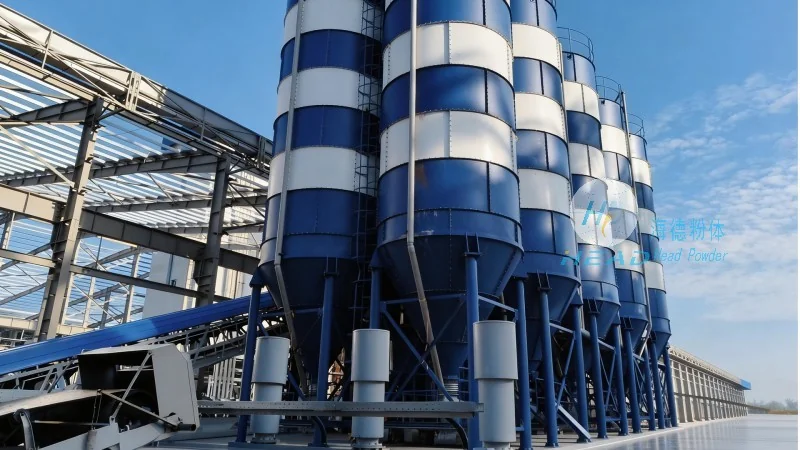
Overview of Weighing and Mixing Systems
Weighing and mixing systems, also known as batching systems, are sophisticated pieces of industrial equipment used to accurately measure and combine raw materials. These systems are crucial in sectors like pharmaceuticals, food processing, chemicals, and construction, where the uniformity of ingredients directly impacts the final product's performance and safety. The systems typically consist of multiple components, including load cells, hoppers, mixers, and control panels, all integrated to achieve precise dosing and efficient mixing. HeadPowder, with its roots in Shandong, China, has established itself as a key player in this field, delivering customized solutions tailored to the specific needs of clients worldwide.
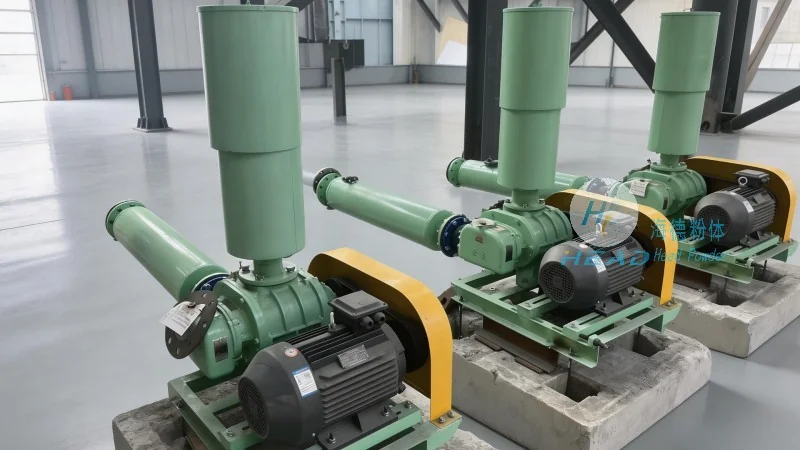
Structural Components and Design Principles
The structural design of a weighing and mixing system is engineered to ensure durability, accuracy, and reliability under continuous operational conditions. Key structural components include the weighing hopper, which houses the load cells responsible for measuring material weight, and the mixing chamber, which may feature various designs such as ribbon mixers, paddle mixers, or planetary mixers. The control system, often equipped with digital displays and programmable logic controllers (PLCs), coordinates the operation of all components, allowing for precise control over the batching process. The integration of these components is critical; for instance, the load cells must be properly calibrated to maintain measurement accuracy, while the mixer's speed and rotation are optimized to achieve uniform mixing without causing material degradation. HeadPowder's engineering team in Shandong leverages advanced design software and rigorous testing protocols to ensure that each system meets or exceeds industry standards for performance and safety.
Operational Principles and Working Mechanism
The operational principle of a weighing and mixing system involves a sequence of steps designed to achieve precise material dosing and thorough mixing. The process typically begins with the user inputting the required batch recipe into the control panel. The system then activates the feeding mechanism, which delivers raw materials into the weighing hopper. As the material accumulates, the load cells continuously transmit weight data to the control system. Once the target weight is reached, the feeding stops, and the material is transferred to the mixing chamber. The mixer then operates according to the programmed parameters, such as speed and duration, to ensure uniform mixing. The control system monitors the entire process, providing real-time feedback and alerts in case of deviations or errors. This closed-loop control system enhances the accuracy and consistency of the output, making it suitable for applications where precision is non-negotiable. HeadPowder's systems are equipped with features like automatic weight correction and anti-clogging mechanisms, further enhancing their operational reliability.
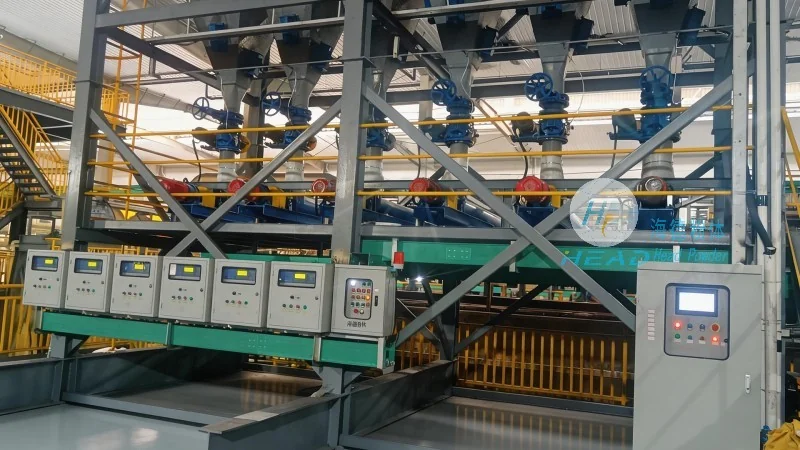
Technical Advantages and Practical Applications
Modern weighing and mixing systems offer several technical advantages that make them indispensable in various industries. One of the primary advantages is the high level of precision, often achieving measurement accuracy within ±0.1% of the target weight. This precision is essential in applications like pharmaceutical manufacturing, where even minor variations can affect the efficacy of the final product. Another advantage is the automation capabilities, which reduce human error and increase production efficiency. HeadPowder's systems are designed to be user-friendly, with intuitive interfaces that simplify operation and maintenance. The robust construction of these systems ensures long-term durability, even in harsh industrial environments. In terms of practical applications, these systems are widely used in the production of powders, granules, and other bulk materials. For example, in the food industry, they are used to mix ingredients for baked goods or beverages, while in the chemical industry, they are employed to blend reagents for manufacturing processes. The versatility of HeadPowder's weighing and mixing systems makes them suitable for a wide range of applications, from small-scale batch production to large-scale industrial operations.