

Operation Process and Working Principle of a Pneumatic Conveying System for Manganese Carbonate Mate
The pneumatic conveying system designed for manganese carbonate materials is a specialized equipment solution developed by Shandong HeadPowder Engineering Co., Ltd. (headpowder), a leading manufacturer in China. This system is engineered to efficiently transport manganese carbonate powders from storage silos or processing units to downstream equipment such as reactors, mixers, or packaging systems. The system operates on the principle of using compressed air to create a flow that propels the material through a pipeline network, ensuring a reliable and continuous material handling process.
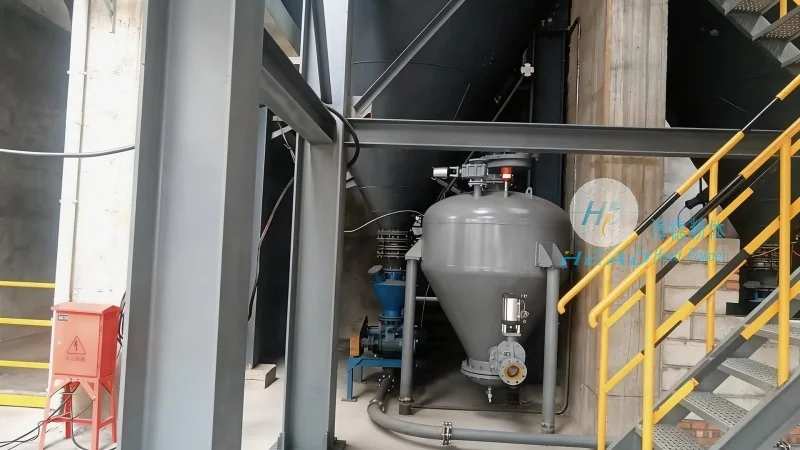
Key Components of the Pneumatic Conveying System
The system comprises several critical components that work in tandem to achieve effective material transport. The primary components include a hopper or feeder for material storage and feeding, a compressor or blower to generate the necessary air pressure, a pipeline system for conveying the material-air mixture, and a receiver or discharge unit for material collection. Each component is carefully selected and integrated to ensure optimal performance and minimal downtime. The hopper is typically equipped with a rotary valve or gate valve to control the flow rate of the manganese carbonate material, preventing overfilling and maintaining consistent feed. The compressor or blower is chosen based on the required air volume and pressure, which are determined by the material's properties, such as particle size, density, and moisture content. The pipeline system is constructed from materials like stainless steel or polyethylene to withstand the abrasive nature of the manganese carbonate particles and the corrosive effects of any moisture present. The receiver or discharge unit is designed to separate the material from the air stream, often using a cyclone separator or a bag filter, and collects the material in a container or directly into the next processing stage.
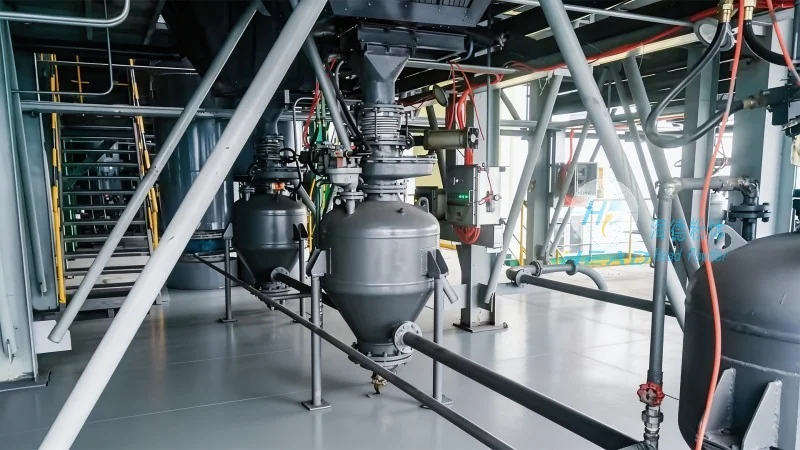
Operation Process of the Pneumatic Conveying System
The operation of the pneumatic conveying system for manganese carbonate materials follows a systematic sequence to ensure smooth and efficient material transport. The process begins with the loading of the material into the hopper. The rotary valve or gate valve then regulates the flow of the manganese carbonate powder into the pipeline. Simultaneously, the compressor or blower starts to generate compressed air, which is introduced into the pipeline at a specific pressure and flow rate. The air and material mixture is then propelled through the pipeline, moving from the hopper to the receiver or discharge unit. As the mixture travels, the air velocity is maintained above the material's terminal velocity to prevent settling or blockages. The receiver or discharge unit, equipped with a cyclone separator, separates the material from the air by utilizing centrifugal force. The manganese carbonate particles are collected in the receiver, while the air is discharged through a filter or vent. The separated material is then transferred to the next processing step, such as a reactor or mixer, completing the transport cycle. The system operates continuously, with the feed rate and air pressure adjusted as needed to maintain a stable flow and prevent system overload. Regular maintenance, including cleaning of the pipeline and filter, is performed to ensure the system's longevity and performance.
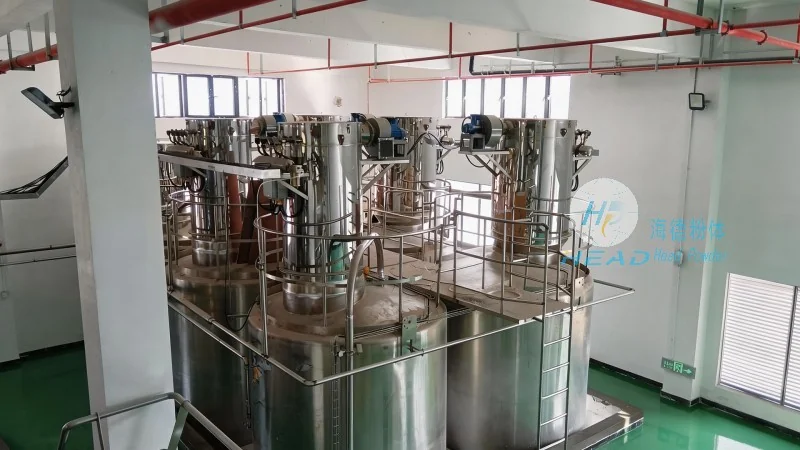
Working Principle of the Pneumatic Conveying System
The working principle of the pneumatic conveying system for manganese carbonate materials is based on the fundamental concept of fluidization and pneumatic transport. The system relies on the use of compressed air to create a fluidized bed of the material, which allows the particles to be suspended and transported through the pipeline. The key principle is that the air velocity in the pipeline must exceed the terminal velocity of the manganese carbonate particles. The terminal velocity is the maximum speed at which a particle can be supported by the air stream without settling. By maintaining the air velocity above this threshold, the particles remain suspended and are carried along the pipeline. The system operates in either positive or negative pressure modes, depending on the application. In positive pressure systems, the air is forced into the pipeline, creating a pressure higher than the ambient air, which helps to push the material forward. In negative pressure systems, the air is drawn out of the pipeline, creating a vacuum that pulls the material. The choice of pressure mode depends on factors such as the distance to be covered, the material's properties, and the need to prevent dust emissions. The system's efficiency is influenced by several factors, including the particle size distribution, moisture content, and the air-to-material ratio. Proper design and operation of the system ensure that the material is transported with minimal degradation, low energy consumption, and high reliability. The integration of advanced control systems allows for real-time monitoring of the system's performance, enabling adjustments to be made promptly to maintain optimal operation.
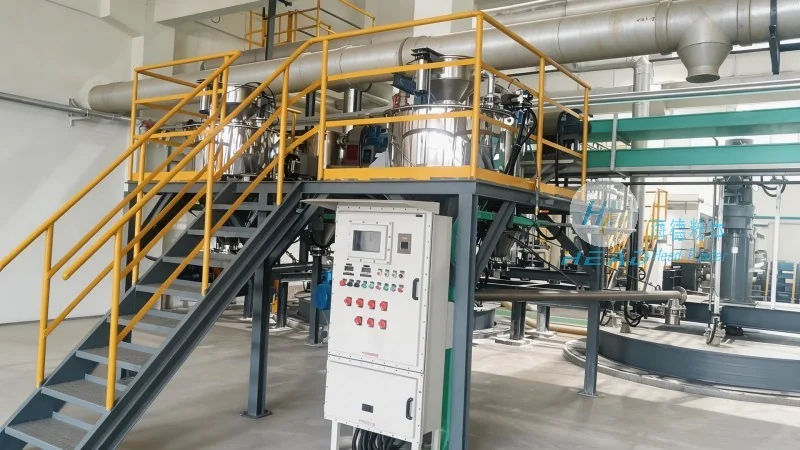
Advantages of the Pneumatic Conveying System for Manganese Carbonate Materials
Implementing a pneumatic conveying system for manganese carbonate materials offers several advantages over traditional mechanical conveying methods. One of the primary benefits is the ability to transport the material over long distances without the need for intermediate transfer points or elevators. This reduces the risk of material spillage and contamination, which is critical for maintaining product quality. The system also provides a closed-loop operation, minimizing dust emissions and improving workplace safety. Unlike mechanical systems, which may require regular maintenance and replacement of wear parts, the pneumatic system has fewer moving parts, resulting in lower maintenance costs and longer service life. The system's flexibility allows for easy integration with existing processing equipment, making it suitable for various production scales and configurations. Additionally, the system can handle a wide range of material properties, including different particle sizes, densities, and moisture levels, without significant performance degradation. The energy efficiency of the system is another key advantage, as it can transport large volumes of material using relatively low air pressure, reducing operational costs. Overall, the pneumatic conveying system provides a reliable, efficient, and cost-effective solution for handling manganese carbonate materials, enhancing the overall productivity and safety of the processing facility.