

Operation Process and Working Principle of Rubber Granule Pneumatic Conveying Systems
HeadPowder, a leading provider of industrial conveying solutions, specializes in rubber granule pneumatic conveying systems. These systems are engineered to efficiently transport rubber granules from one location to another, ensuring minimal product degradation and optimal operational performance. This article delves into the operation process and working principles of such systems, highlighting their design, functionality, and key components.
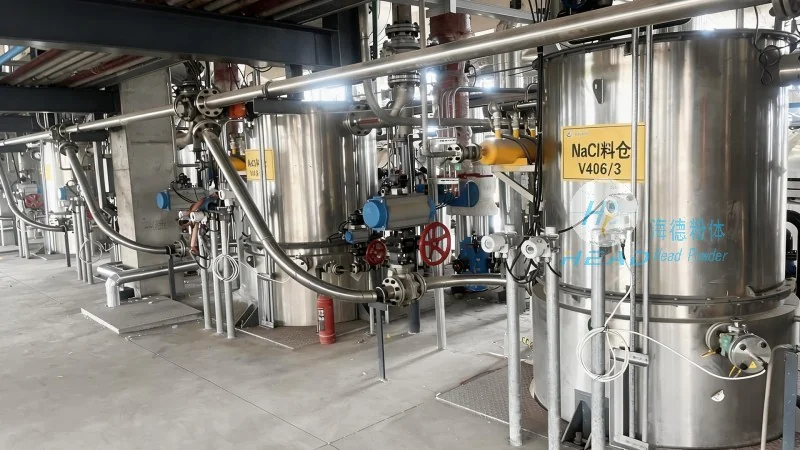
Overview of Rubber Granule Pneumatic Conveying Systems
Rubber granule pneumatic conveying systems are advanced industrial equipment designed to handle the transportation of rubber granules, which are commonly used in various applications such as flooring, sports surfaces, and industrial materials. The systems utilize air or gas as the conveying medium to move the granules through a network of pipes and components. This method offers several advantages over traditional mechanical conveying, including reduced product contamination, lower maintenance requirements, and the ability to transport materials over long distances without the need for intermediate storage.
Key Components of the Pneumatic Conveying System
The rubber granule pneumatic conveying system consists of several critical components that work in tandem to ensure efficient operation. These components include the hopper, feeder, air compressor, conveying line, and control system. The hopper serves as the storage container for the rubber granules, while the feeder regulates the flow of material into the system. The air compressor generates the necessary pressure to move the granules through the conveying line. The conveying line, typically made of stainless steel or other corrosion-resistant materials, transports the granules from the source to the destination. The control system monitors and adjusts the system parameters to maintain optimal performance.
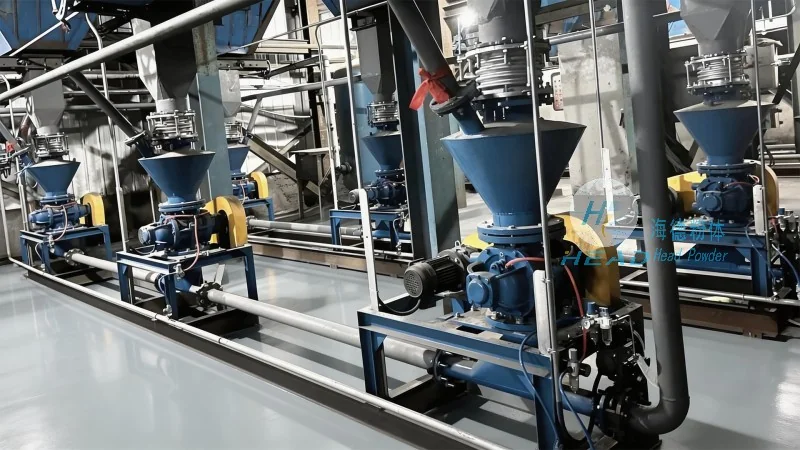
Operation Process of the Rubber Granule Pneumatic Conveying System
The operation process of the rubber granule pneumatic conveying system begins with the loading of rubber granules into the hopper. The feeder then controls the discharge rate of the granules into the conveying line. Simultaneously, the air compressor starts and generates a flow of air or gas, which creates a pressure differential within the system. This pressure differential propels the rubber granules forward through the conveying line. As the granules travel through the system, they are continuously mixed with the conveying medium, ensuring uniform movement and preventing blockages. The system terminates at the destination point, where the granules are discharged into a receiving container or processing unit.
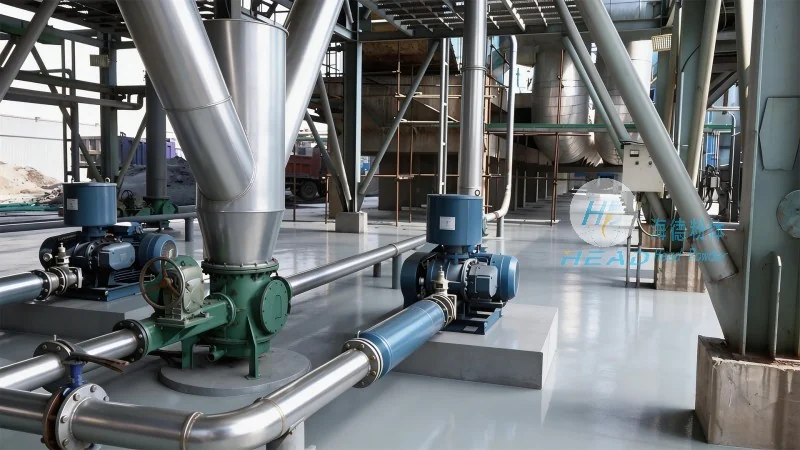
Working Principle of the Pneumatic Conveying System
The working principle of the rubber granule pneumatic conveying system is based on the principles of fluid dynamics and particle transport. The system operates by creating a pressure difference between the inlet and outlet of the conveying line. The air compressor supplies compressed air, which is introduced into the hopper and mixes with the rubber granules. The mixture of granules and air forms a dense phase or dilute phase flow, depending on the system design and operating conditions. In the dense phase mode, the granules are carried in a slurry-like state, while in the dilute phase mode, the granules are suspended in the air stream. The choice of operating mode depends on factors such as the material properties, conveying distance, and system capacity. The system's control system continuously monitors parameters like pressure, flow rate, and temperature to maintain stable operation and prevent system failures.
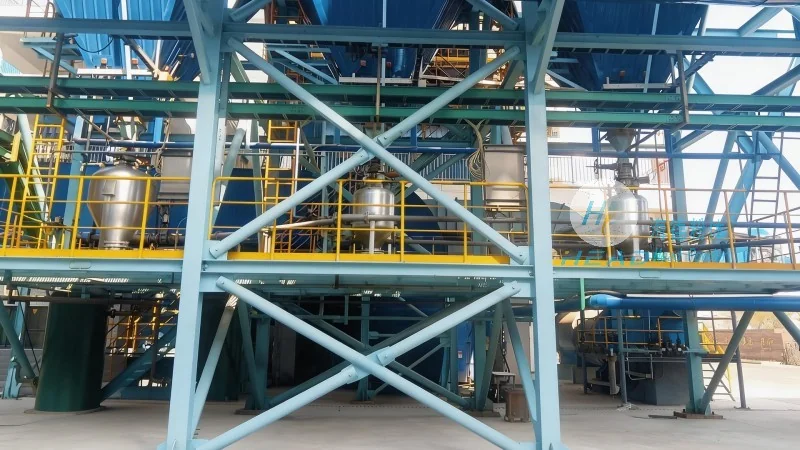
Advantages and Applications of Rubber Granule Pneumatic Conveying Systems
Rubber granule pneumatic conveying systems offer several advantages over traditional conveying methods. These include reduced product contamination, as the system is enclosed and prevents exposure to external elements. Additionally, the systems are less prone to mechanical wear and tear, resulting in lower maintenance costs. The ability to transport materials over long distances without the need for intermediate storage makes them ideal for applications in large-scale industrial settings. The systems are commonly used in the rubber industry for transporting granules from production lines to storage facilities or processing units. They are also utilized in other industries, such as the manufacturing of sports surfaces and flooring materials, where the consistent quality of the rubber granules is critical.
Conclusion
HeadPowder's rubber granule pneumatic conveying systems are engineered to provide efficient, reliable, and cost-effective transportation of rubber granules. By understanding the operation process and working principles of these systems, users can optimize their performance and ensure the consistent quality of their materials. The systems are designed to meet the specific needs of various industrial applications, offering flexibility and adaptability to different production requirements. With its commitment to quality and innovation, Shandong HeadPowder Engineering Co., Ltd. continues to be a trusted partner in providing advanced conveying solutions for the rubber industry and beyond.