

Principles and Working Scene Characteristics of High-Pressure Dense-Phase Material Pneumatic Conveyi
Shandong HeadPowder Engineering Co., Ltd., commonly known as headpowder, is a professional enterprise based in Shandong, China, specializing in the research, development, and application of high-pressure dense-phase material pneumatic conveying technology. This technology represents a significant advancement in the field of powder and bulk material handling, offering efficient, reliable, and environmentally friendly solutions for various industrial applications.
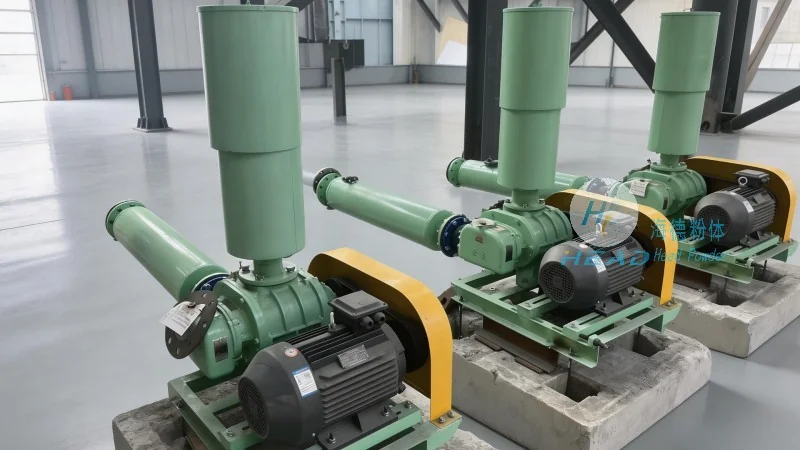
Understanding the Principles of High-Pressure Dense-Phase Pneumatic Conveying
At the core of high-pressure dense-phase material pneumatic conveying is the use of compressed air or other gases to transport particulate materials through pipelines. Unlike traditional dilute-phase systems that rely on low-pressure, high-volume air to suspend particles, dense-phase conveying operates at higher pressures, typically ranging from 0.5 to 2.0 MPa. This higher pressure allows for a higher concentration of material in the air stream, forming a dense, slurry-like flow. The key principle is to maintain a balance between the air velocity and the particle size, density, and moisture content, ensuring that the particles remain in contact with each other and the pipe walls, reducing the risk of blockages and minimizing air consumption.
The process begins with the material being fed into a hopper or feeder, where it is then introduced into the conveying line under controlled pressure. The high-pressure air is introduced at specific points along the pipeline, creating a series of pressure pulses that propel the material forward. This method not only enhances the conveying efficiency but also allows for the transportation of materials over longer distances with minimal degradation. The dense-phase flow also helps in reducing the wear and tear on the pipeline and components, as the particles are less likely to impact the pipe walls at high speeds.
Key Working Scene Characteristics and Applications
High-pressure dense-phase material pneumatic conveying is particularly well-suited for a wide range of industrial scenarios, including but not limited to chemical processing, pharmaceutical manufacturing, food processing, and mining operations. The technology is ideal for handling materials that are sensitive to moisture, temperature, or contamination, as the enclosed pipeline system provides a controlled environment that minimizes exposure to external factors.
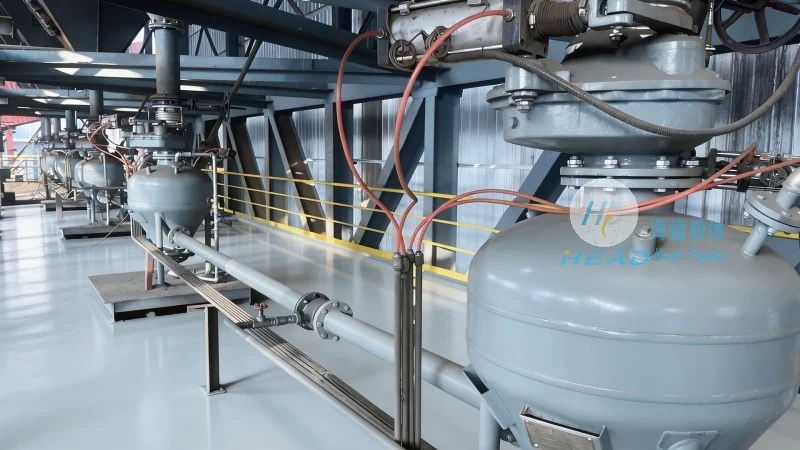
In chemical plants, for example, dense-phase conveying is commonly used to transport raw materials such as powders, granules, and slurries between processing units. This method ensures that the materials are delivered in a consistent and uniform manner, which is crucial for maintaining the quality and stability of chemical reactions. The system can handle a variety of materials, from fine powders with particle sizes as small as 1 micron to larger granules, making it versatile for different production needs.
In the pharmaceutical industry, the hygienic design of dense-phase conveying systems is critical. The enclosed, sealed pipelines prevent cross-contamination and ensure that the materials are handled under sterile conditions. This is essential for maintaining the purity and safety of pharmaceutical products. The technology is also used in food processing facilities to transport ingredients like flour, sugar, and spices, where the risk of contamination and the need for clean handling are paramount.
In mining and mineral processing, dense-phase conveying is employed to transport ore, tailings, and other bulk materials from processing plants to storage or disposal sites. The high-pressure system allows for efficient transportation over long distances, reducing the need for multiple transfer points and minimizing the environmental impact. The ability to handle abrasive materials without excessive wear on the equipment makes it a preferred choice in these applications.
Advantages and Considerations in Working Scenarios
One of the primary advantages of high-pressure dense-phase material pneumatic conveying is its ability to handle a wide range of materials with varying properties. The system can be customized to meet specific requirements, such as adjusting the air pressure, flow rate, and material feed rate to optimize performance. This flexibility makes it suitable for diverse working scenarios, from small-scale laboratory applications to large-scale industrial operations.
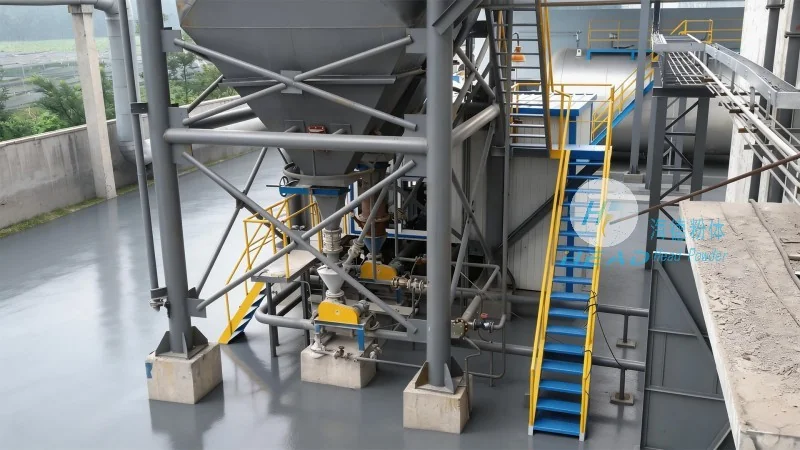
Another key advantage is the reduced energy consumption compared to traditional dilute-phase systems. By operating at higher material concentrations, the system requires less air volume, resulting in lower operational costs and a smaller environmental footprint. Additionally, the enclosed pipeline design minimizes dust emissions, contributing to a cleaner and safer working environment.
However, the implementation of high-pressure dense-phase conveying requires careful consideration of several factors. The design of the system must account for the specific characteristics of the material being conveyed, including its particle size distribution, density, and moisture content. The pipeline layout, including the number and placement of air injection points, must be optimized to ensure smooth flow and prevent blockages. Proper maintenance and regular inspection of the equipment are also essential to ensure long-term reliability and efficiency.
Conclusion
High-pressure dense-phase material pneumatic conveying, as exemplified by the solutions offered by Shandong HeadPowder Engineering Co., Ltd., represents a sophisticated and efficient method for handling bulk materials in various industrial settings. By understanding the underlying principles and leveraging the working scene characteristics, industries can achieve improved productivity, reduced costs, and enhanced safety. The technology continues to evolve, with ongoing research and development aimed at further optimizing performance and expanding its applications across different sectors.