

Principle and Working Scene Characteristics of Nickel Powder Pneumatic Conveying Lines
For industries dealing with nickel powder, efficient and reliable material handling is crucial. This article explores the principles and operational characteristics of nickel powder pneumatic conveying lines, highlighting their importance in modern manufacturing processes. The systems are designed to transport nickel powder in a controlled manner, ensuring minimal loss and contamination while optimizing operational efficiency.
The Working Principle of Pneumatic Conveying
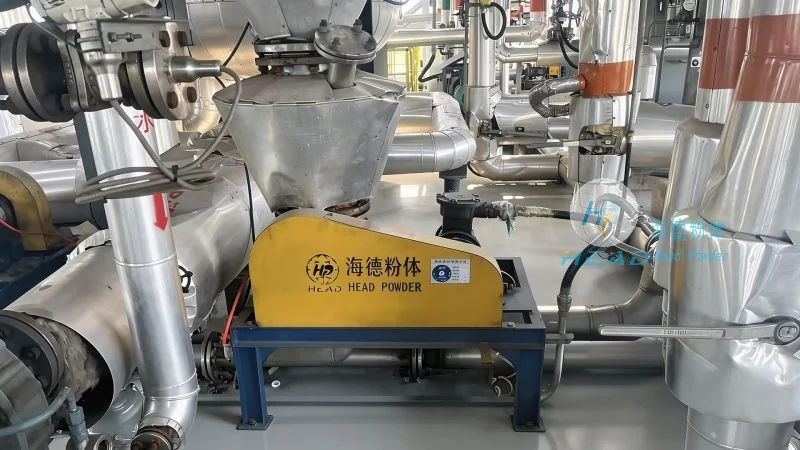
Nickel powder pneumatic conveying systems utilize air as the primary medium to move dry powders through a pipeline. The process begins with a blower or compressor that generates a controlled airflow, which draws the nickel powder into the system and propels it from the source to the destination. There are two main operational modes: dilute phase and dense phase. Dilute phase systems operate at higher air velocities, keeping the powder suspended in the air stream, suitable for long-distance transport and high flow rates. Dense phase systems, conversely, use lower air velocities and higher pressure to push the powder in a slurry-like state, ideal for handling sensitive or abrasive materials. The selection of the mode depends on the specific properties of the nickel powder, such as particle size, moisture content, and flowability, to ensure optimal performance and material integrity.
Key Features and Advantages
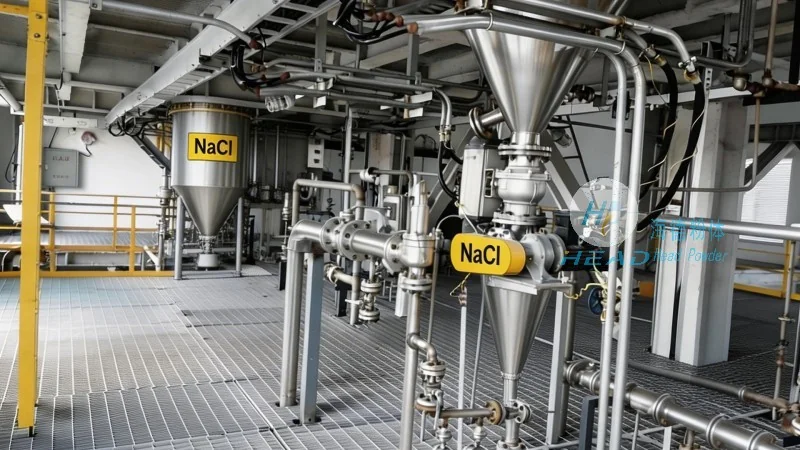
Headpowder's nickel powder pneumatic conveying lines offer several key advantages that enhance their suitability for industrial applications. One of the primary benefits is the closed system design, which minimizes dust exposure and environmental contamination. This is particularly critical for nickel powder, as it can pose health risks if inhaled or cause skin irritation. The closed system also preserves the quality of the powder by preventing contamination from external sources, ensuring consistent product performance. Additionally, these systems are energy-efficient compared to traditional material handling methods like bucket elevators or belt conveyors. They achieve high transport rates with lower power consumption, reducing operational costs and environmental impact. The modular design of the conveying lines allows for easy integration into existing production lines, minimizing downtime during installation and facilitating future expansions. Furthermore, the systems are adaptable to varying flow rates, making them versatile for different production demands and ensuring flexibility in operation.
Application Scenarios and Industry Uses
Nickel powder pneumatic conveying lines are widely utilized across various industries where nickel powder is a vital component. In the chemical industry, these systems are employed to transport nickel powder for the production of nickel-based catalysts and alloys, enabling precise control over the material flow and maintaining product purity. The pharmaceutical industry benefits from these systems when handling nickel powder for drug formulations, as the closed system adheres to GMP (Good Manufacturing Practice) standards, ensuring compliance with regulatory requirements. The metalworking sector utilizes nickel powder for coating applications, such as thermal spraying or electroplating, where the powder needs to be delivered to processing equipment in a controlled manner to achieve uniform coatings. In the battery manufacturing industry, nickel powder is used as an electrode material, and pneumatic conveying lines efficiently move the powder to battery assembly lines, supporting high-volume production. The versatility of these systems makes them applicable across multiple sectors, ensuring reliable and consistent material handling for nickel powder applications.
Technical Specifications and Design Considerations
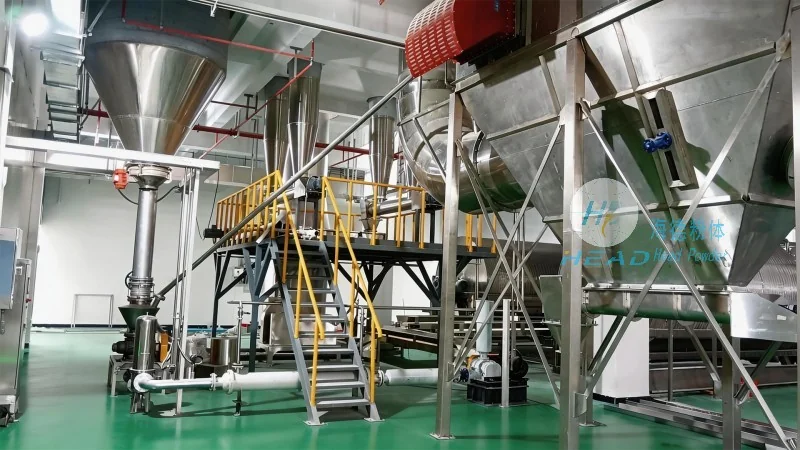
The design of nickel powder pneumatic conveying lines by Shandong HeadPowder Engineering Co., Ltd. incorporates several technical specifications to ensure optimal performance and durability. The system includes essential components like air blowers, filters, cyclones, and conveying pipes, each engineered to handle the unique properties of nickel powder. The air blowers are selected based on the required airflow rate and pressure, ensuring sufficient power to transport the powder without excessive energy consumption. Filters are installed to remove contaminants from the air, preventing them from entering the powder stream and compromising product quality. Cyclones are used to separate the powder from the air at the destination, allowing for efficient recovery of the material and reducing waste. The conveying pipes are constructed from corrosion-resistant materials, such as stainless steel, to withstand the abrasive effects of nickel powder over time. The system also features safety mechanisms, including pressure relief valves and dust explosion protection, to ensure safe operation in industrial environments. The design process involves thorough analysis of the powder characteristics, including particle size distribution, moisture content, and bulk density, to determine the optimal conveying parameters and prevent system failures.