

What is a Glass Fiber Pneumatic Conveying Equipment? What Are Its Design Principles?
Understanding the role and design of glass fiber pneumatic conveying equipment is crucial for industries dealing with fine powders and granular materials. This equipment utilizes air to transport materials, offering a flexible and efficient solution for material handling. The following sections will explore the fundamental concepts and design principles behind such systems.
Introduction to Glass Fiber Pneumatic Conveying Equipment
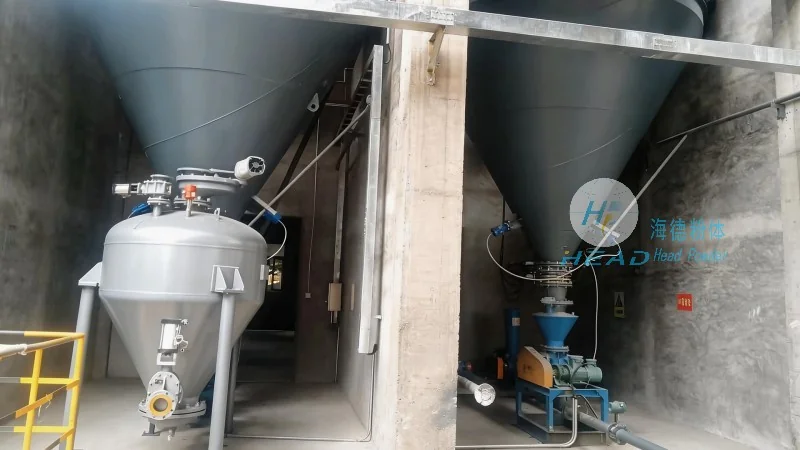
Glass fiber pneumatic conveying equipment is a specialized system designed to transport bulk materials, such as powders and granules, through a pipeline using compressed air. Unlike traditional mechanical conveyors, this method relies on the force of air to move materials, making it particularly suitable for handling delicate or abrasive substances. The equipment typically consists of a hopper, a blower or compressor, a pipeline system, and a receiver or discharge unit. The choice of glass fiber for the components is critical due to its high strength, corrosion resistance, and ability to withstand abrasive wear, ensuring long-term durability and reliability in demanding applications.
Key Components and Their Functions
The design of a glass fiber pneumatic conveying system involves several key components, each playing a vital role in the overall operation. The hopper serves as the material storage and feeding unit, where the bulk material is introduced into the system. It is designed to minimize material bridging and ensure a consistent flow of material into the pipeline. The blower or compressor provides the necessary air pressure and volume to create the airflow required for conveying. This component is typically selected based on the material's characteristics, such as particle size, density, and moisture content, to achieve optimal conveying efficiency. The pipeline system, made from glass fiber or other durable materials, transports the material from the hopper to the discharge point. The design of the pipeline, including bends, elbows, and straight sections, is carefully engineered to minimize pressure losses and ensure smooth material flow. Finally, the receiver or discharge unit collects the conveyed material and discharges it into the desired location. This component is often equipped with a filter or separator to remove any air or fine particles before the material is released.
Design Principles for Efficient Conveying
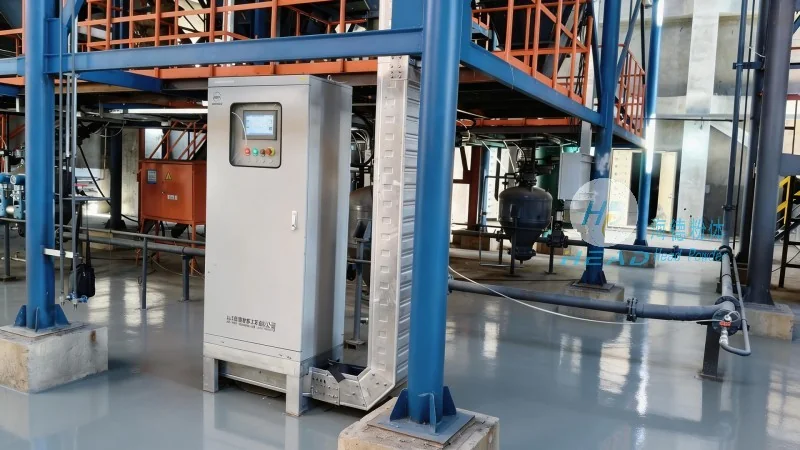
The design principles of glass fiber pneumatic conveying equipment focus on maximizing efficiency, minimizing energy consumption, and ensuring the safe and reliable transport of materials. One of the primary design considerations is the selection of the appropriate air velocity and pressure. The air velocity must be high enough to overcome the gravitational and frictional forces acting on the material particles, but not so high as to cause excessive wear on the pipeline or components. The pressure is typically maintained at a level that ensures the material is fully suspended in the air stream, preventing blockages and ensuring consistent flow. Another critical design principle is the proper sizing of the pipeline and components. The diameter of the pipeline is determined based on the material's flow rate and the required air velocity, while the length and number of bends are optimized to minimize pressure losses and maintain the material's integrity. The use of glass fiber materials in the construction of the pipeline and components is a key design choice, as it provides excellent resistance to abrasion, corrosion, and thermal stress, ensuring the equipment's longevity and performance in harsh environments.
Applications and Benefits
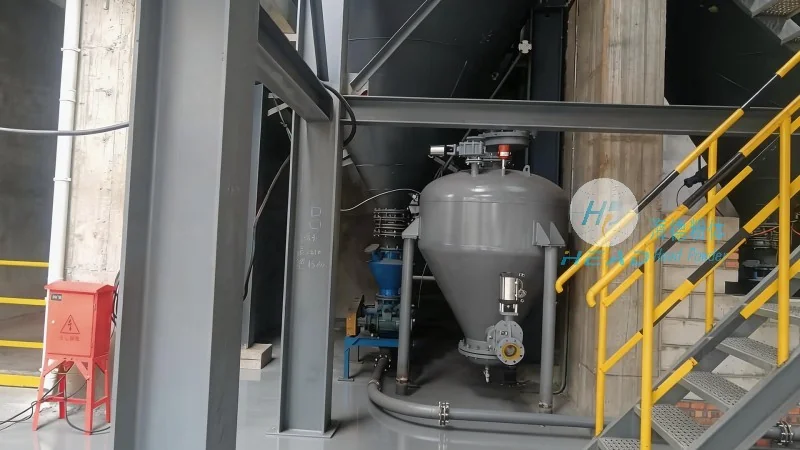
Glass fiber pneumatic conveying equipment is widely used in various industries, including pharmaceuticals, food processing, chemical manufacturing, and mining. Its ability to handle delicate or abrasive materials makes it an ideal choice for applications where traditional mechanical conveyors may cause contamination or damage. The equipment offers several benefits, including flexibility in layout, as the pipeline can be easily routed around obstacles, and the ability to transport materials over long distances without the need for multiple transfer points. Additionally, the system is relatively low maintenance, as it has fewer moving parts compared to mechanical conveyors, reducing downtime and operational costs. The use of glass fiber materials also ensures that the equipment is resistant to chemical corrosion, making it suitable for handling corrosive or hazardous materials.
Conclusion
In conclusion, glass fiber pneumatic conveying equipment is a sophisticated and efficient solution for transporting bulk materials. The design principles, which focus on material characteristics, air dynamics, and component durability, ensure optimal performance and reliability. The use of glass fiber materials in the construction of the system provides long-term benefits, including resistance to wear and corrosion. For industries dealing with fine powders and granular materials, this equipment offers a flexible and cost-effective alternative to traditional mechanical conveyors. As a leading manufacturer in this field, Shandong HeadPowder Engineering Co., Ltd. specializes in designing and manufacturing high-quality glass fiber pneumatic conveying systems tailored to the specific needs of various industries, ensuring efficient and reliable material handling solutions.