

Bentonite Pneumatic Conveying: How to Efficiently Transport Powder and Granular Materials with Air F
Efficient material handling is a critical aspect of many industrial processes, especially when dealing with bulk materials like bentonite. Pneumatic conveying offers a versatile and effective solution for transporting such materials over short to medium distances. This article explores the principles and applications of bentonite pneumatic conveying, focusing on how to achieve efficient material transport using air flow.
Understanding Bentonite and Its Handling Challenges
Bentonite is a natural clay mineral widely used in various industries, including construction, foundry, and pharmaceuticals, due to its unique properties such as high swelling capacity and thixotropy. However, its fine particle size and cohesive nature present challenges in traditional handling methods like belt conveyors or bucket elevators. These methods often lead to material degradation, blockages, and increased maintenance costs. Pneumatic conveying provides a solution by using air to transport the material in a sealed system, minimizing contamination and preserving product quality.
Key Components of a Pneumatic Conveying System
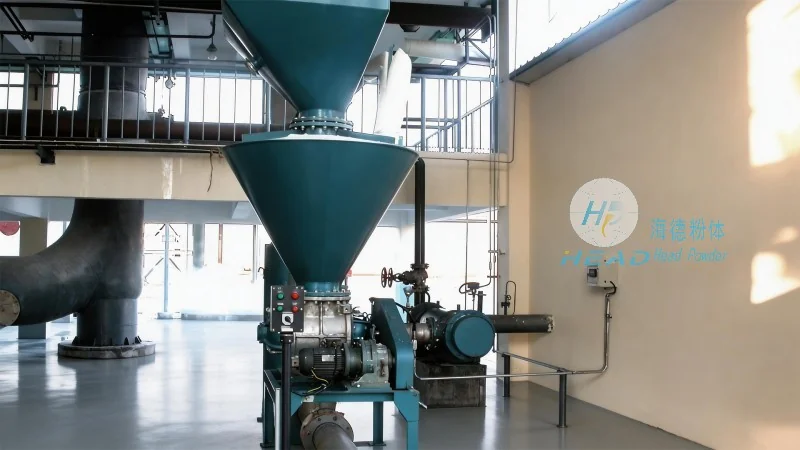
A typical pneumatic conveying system for bentonite consists of several key components that work together to ensure efficient transport. These include the material feed hopper, which holds the bentonite and regulates the flow; the air compressor or blower, which generates the necessary air pressure; the conveying line, which can be either positive or negative pressure depending on the system design; and the receiver or discharge hopper, where the material is deposited. The choice of components depends on factors such as the material's properties, the distance to be covered, and the required flow rate.

Types of Pneumatic Conveying Systems
There are two main types of pneumatic conveying systems: positive pressure and negative pressure. Positive pressure systems use a blower to push air and material through the conveying line, making them suitable for long distances and high material loads. Negative pressure systems, on the other hand, use a vacuum to draw material into the line, which is ideal for short distances and when the material is to be transported from multiple sources. For bentonite, positive pressure systems are often preferred due to their ability to handle high volumes and maintain consistent flow rates.
Optimizing Air Flow and Pressure for Efficient Transport
The efficiency of a pneumatic conveying system depends heavily on the proper selection of air flow rate and pressure. Too low a pressure may result in insufficient material transport, while too high a pressure can cause excessive wear on the system components and increase energy consumption. The optimal air flow rate is typically determined by the material's bulk density, particle size, and the system's design. For bentonite, which has a relatively low bulk density and fine particles, a moderate air flow rate is usually sufficient to achieve efficient transport without causing excessive pressure drop or material degradation.
Benefits of Using Pneumatic Conveying for Bentonite
Implementing a pneumatic conveying system for bentonite offers several advantages over traditional handling methods. First, it reduces material handling costs by eliminating the need for multiple transfer points and reducing labor. Second, it minimizes product contamination and degradation, which is crucial for applications where the material's quality is critical. Third, it improves safety by containing dust and preventing exposure to workers. Finally, it increases operational efficiency by allowing for continuous material flow and reducing downtime due to blockages or maintenance.
Case Study: HeadPowder's Pneumatic Conveying Solutions
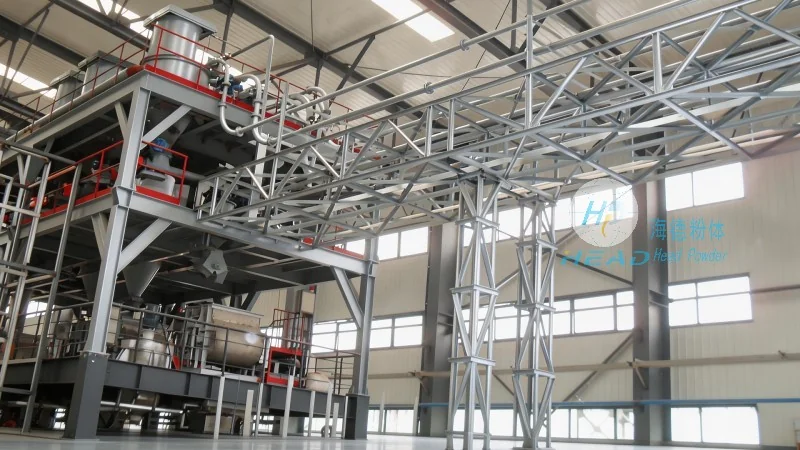
Shandong HeadPowder Engineering Co., Ltd., a leading provider of material handling solutions, specializes in designing and manufacturing pneumatic conveying systems tailored to the specific needs of bentonite and other fine materials. With years of experience in the industry, HeadPowder has developed advanced systems that optimize air flow and pressure to ensure efficient and reliable transport. The company's solutions are designed to handle various bentonite types, from natural to modified, and can be customized to fit different production scales and operational requirements. By partnering with HeadPowder, industries can enhance their material handling processes, reduce costs, and improve overall productivity.