

What is an Aluminum Nitride Material Handling System? What Are Its Design Principles?
Aluminum nitride (AlN) is a high-performance ceramic material widely used in advanced electronics and semiconductor applications due to its excellent thermal conductivity, electrical insulation properties, and chemical stability. Efficient material handling systems are crucial for processing AlN, as maintaining its purity and integrity is essential for achieving optimal performance in final products. This article explores the concept of aluminum nitride material handling systems and the key design principles that govern their operation.
Introduction to Aluminum Nitride Material Handling Systems
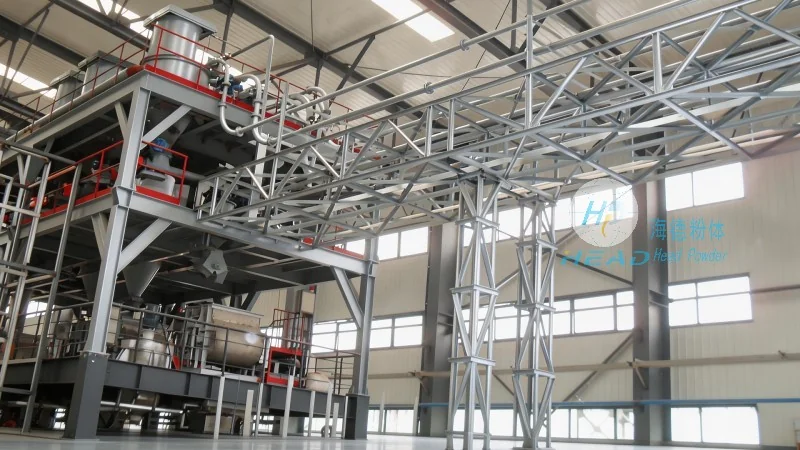
Material handling systems for aluminum nitride are engineered to transport, store, and process AlN powders or bulk materials with minimal risk of contamination or degradation. These systems are critical in industries such as semiconductor manufacturing, where AlN is used as a substrate for power devices or a thermal interface material. The primary goal of such systems is to ensure that AlN remains in its high-purity state throughout the entire production process, from raw material storage to final product integration.
Company Overview: Shandong HeadPowder Engineering Co., Ltd.
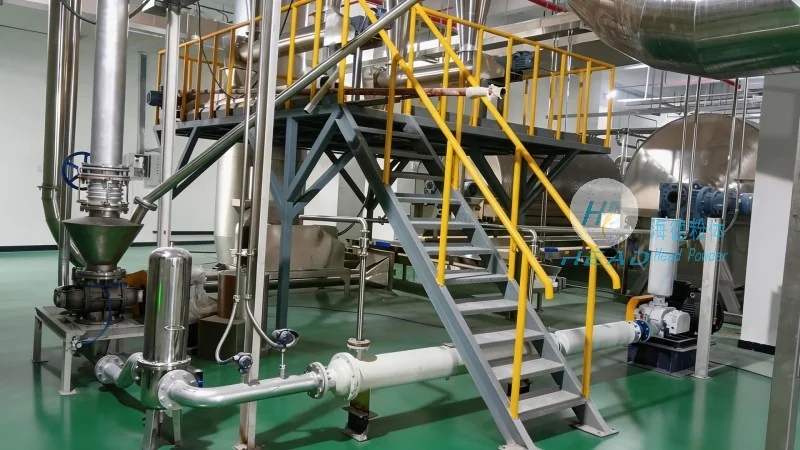
Shandong HeadPowder Engineering Co., Ltd., commonly referred to as HeadPowder, is a leading provider of specialized engineering solutions for advanced material processing. With a strong focus on precision and innovation, HeadPowder has developed expertise in designing and manufacturing material handling systems tailored to the unique requirements of high-purity materials like aluminum nitride. HeadPowder’s facilities are located in Shandong, China, where the company leverages advanced manufacturing capabilities and technical knowledge to deliver reliable and efficient solutions for its clients in the electronics and semiconductor sectors.

Key Components of an Aluminum Nitride Material Handling System
The core components of an aluminum nitride material handling system typically include feeding mechanisms, conveying systems, storage containers, and control units. The feeding mechanism is responsible for accurately dispensing AlN material from bulk storage into processing equipment. This may involve screw feeders, vibratory feeders, or pneumatic systems, depending on the material's properties and the required flow rate. The conveying system ensures the material is transported efficiently between different stages of the production line, such as from storage to mixing, or from mixing to sintering. Common conveying methods include belt conveyors, screw conveyors, and pneumatic conveying lines, each chosen based on factors like material density, particle size, and the need for contamination control. Storage containers are designed to maintain the purity of AlN, often using inert gas purging and sealed systems to prevent moisture or oxygen ingress. Control units integrate sensors and automation to monitor and regulate the material flow, ensuring consistent performance and safety.
Design Principles and Functional Aspects
The design of an aluminum nitride material handling system follows several critical principles to ensure optimal performance and material integrity. First, contamination control is paramount. All components in contact with AlN are made from materials that do not react with or absorb the powder, such as stainless steel, PTFE, or specialized ceramics. The system is also equipped with inert gas purging to maintain a dry, oxygen-free environment, which is essential for preserving the high purity of AlN. Second, precision and accuracy are critical for maintaining consistent material properties. The feeding and conveying mechanisms are calibrated to deliver precise quantities of AlN, minimizing variations in particle distribution and flow rate. Third, the system is designed for easy cleaning and maintenance to prevent cross-contamination between batches. This includes features like removable parts, easy-to-clean surfaces, and automated cleaning cycles. Fourth, safety considerations are integrated into the design, with features like overfill protection, emergency stop buttons, and interlocks to prevent accidents during operation.
Application Scenarios and Operational Benefits
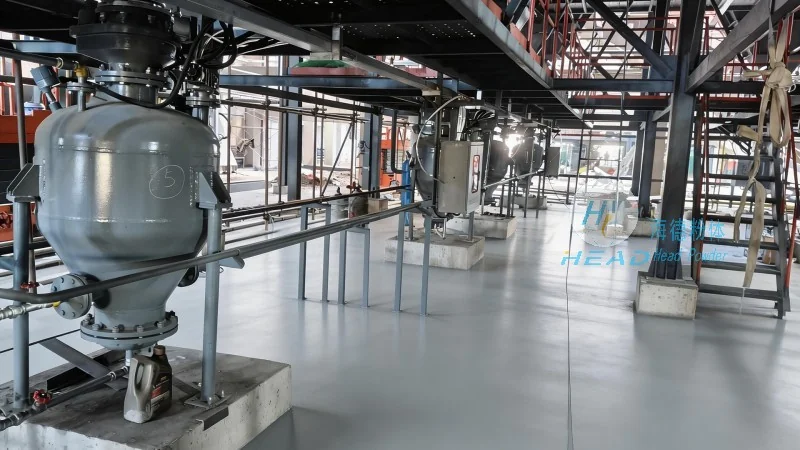
Aluminum nitride material handling systems are widely used in various applications within the semiconductor and electronics industry. One primary application is in the production of AlN-based substrates and power devices, where the material is used as a thermal conductor or dielectric layer. The system ensures that AlN powders are accurately mixed with other materials and transported to sintering furnaces without degradation. Another application is in the manufacturing of optoelectronic components, where AlN is used as a light-emitting material. The material handling system maintains the purity of AlN during the deposition and processing stages, leading to higher-quality optical devices. Operational benefits of using a well-designed material handling system include improved material yield, reduced processing time, and enhanced product quality. By minimizing contamination and ensuring consistent material flow, the system helps manufacturers achieve higher efficiency and lower costs in their production processes.