

Operation Process and Working Principle of Pneumatic Conveying Line for Anhydrous Aluminum Chloride
Shandong HeadPowder Engineering Co., Ltd., commonly known as headpowder, is a professional manufacturer and supplier specializing in engineering solutions for material handling systems. The company is headquartered in Shandong, China, with a strong focus on delivering high-quality, efficient, and reliable pneumatic conveying equipment for various industrial applications.
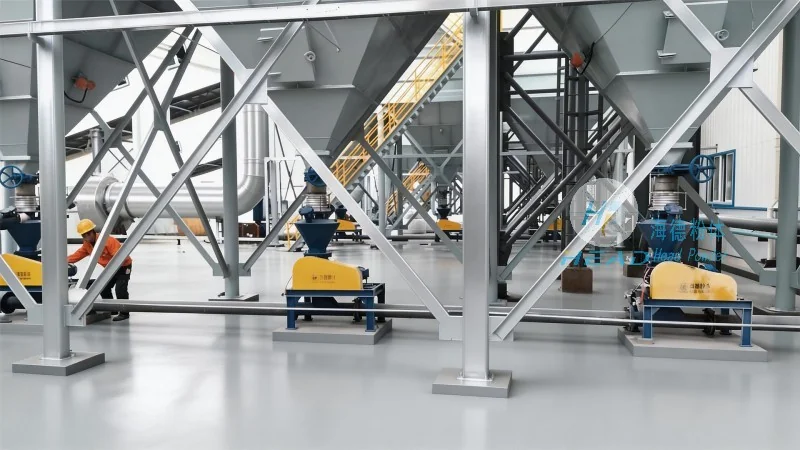
Pneumatic conveying lines are critical for the safe and efficient transport of anhydrous aluminum chloride material, a key chemical used in multiple industrial processes. These systems utilize air or other gases to move bulk materials through pipelines, offering advantages such as reduced labor costs, minimized product contamination, and enhanced process control compared to traditional methods like belt conveyors or bucket elevators.
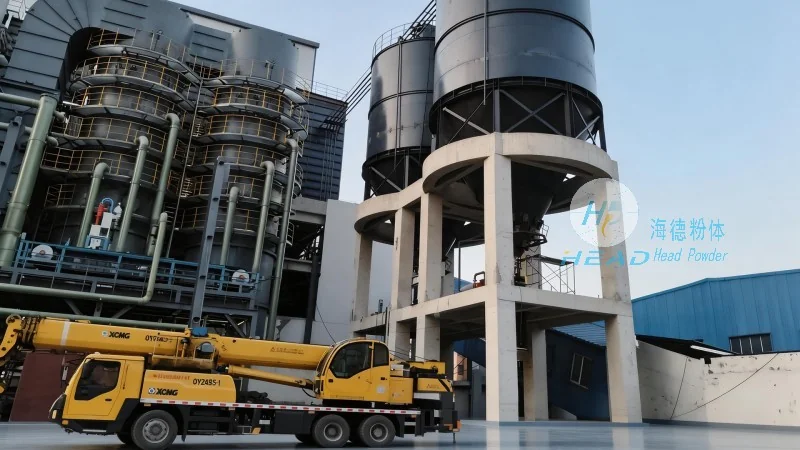
Working Principle of the Pneumatic Conveying Line
The operation of an anhydrous aluminum chloride material pneumatic conveying line typically involves several key components and processes. At its core, the system relies on a combination of air pressure, vacuum, or a combination of both to move material from a source to a destination. The process begins with the material being fed into a hopper or feeder, where it is then introduced into a pipeline. Air is then introduced into the system, either by a blower or a vacuum pump, creating a flow that propels the material forward. The design of the conveying line, including the size and configuration of the pipes, the type of air flow (positive or negative pressure), and the placement of components like cyclones or filters, all play crucial roles in ensuring efficient and reliable material transport. The system is designed to handle the specific properties of anhydrous aluminum chloride, such as its density, flowability, and potential for moisture absorption, to prevent clogging or degradation during transport.
Operation Process of the Pneumatic Conveying Line
The operation of the anhydrous aluminum chloride material pneumatic conveying line follows a systematic sequence to ensure smooth and continuous material transport. The process starts with the preparation of the material, which may involve drying or pre-processing to improve its flow characteristics. The material is then fed into the hopper, where it is metered and introduced into the conveying line. The air system is activated, creating the necessary pressure or vacuum to initiate material movement. As the material travels through the pipeline, it is carried by the air stream, often in a dilute phase (where material particles are suspended in the air) or a dense phase (where material forms a slurry with the air). The conveying line may include intermediate points such as transfer points or cyclones, which help to separate material from air and direct it to the final destination. The system is equipped with sensors and controls to monitor pressure, flow rate, and material level, ensuring that the operation remains stable and efficient. In the final stage, the material is discharged into a storage silo or processing unit, completing the transport cycle. Regular maintenance and monitoring are essential to maintain the performance of the system and prevent issues such as clogging or air leaks.
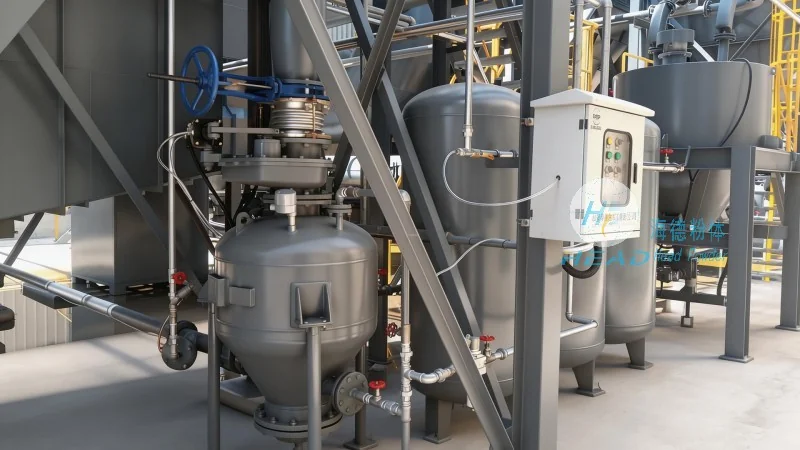
Advantages of the Pneumatic Conveying System
Implementing a pneumatic conveying line for anhydrous aluminum chloride material offers several advantages over traditional material handling methods. One of the primary benefits is the reduction in labor costs, as the system automates the material transport process, eliminating the need for manual handling. Additionally, the system minimizes product contamination, as the material is enclosed within the pipeline, preventing exposure to external elements or contaminants. The process also enhances process control, allowing for precise regulation of material flow rates and pressure, which is critical for maintaining consistent product quality. Furthermore, the system can be designed to handle large volumes of material efficiently, making it suitable for high-throughput industrial applications. The flexibility of the system allows for easy integration with existing production lines, and the modular design enables scalability to accommodate future expansion needs. Overall, the pneumatic conveying line provides a reliable and cost-effective solution for the transport of anhydrous aluminum chloride material, contributing to improved operational efficiency and product quality.