

Operation Process and Working Principle of Automatic Loading and Unloading Powder Pneumatic Conveyin
Shandong HeadPowder Engineering Co., Ltd., commonly known as headpowder, is a professional manufacturer specializing in the design, development, and production of advanced powder handling systems. The company is headquartered in Shandong, China, and has established a strong reputation for delivering high-quality, efficient, and reliable solutions for various industrial powder processing applications. With a focus on innovation and customer satisfaction, headpowder has become a trusted partner for businesses seeking to optimize their material handling processes.
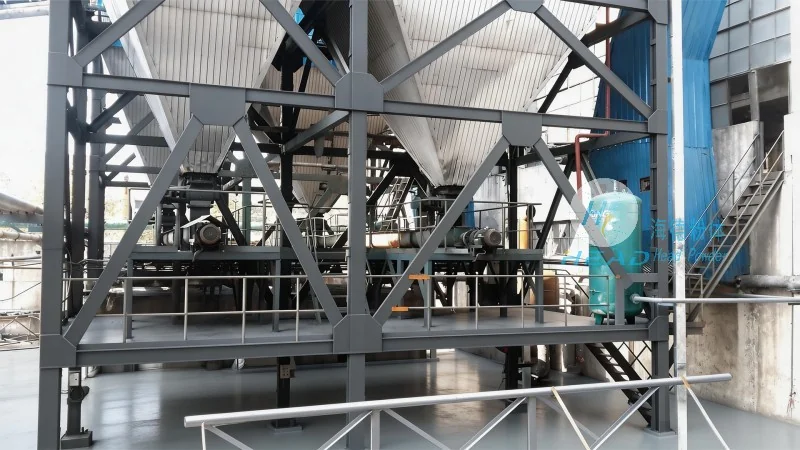
Introduction to Automatic Loading and Unloading Powder Pneumatic Conveying Lines
Automatic loading and unloading powder pneumatic conveying lines are sophisticated systems engineered to transport bulk powders and granular materials over long distances with minimal human intervention. These systems are widely used in industries such as food, pharmaceuticals, chemicals, and manufacturing due to their ability to handle delicate materials while maintaining high levels of efficiency and cleanliness. The core components of these lines typically include feed hoppers, rotary valves, pneumatic conveyors, and discharge units, all working in tandem to ensure seamless material flow. The design of these systems is tailored to meet specific operational requirements, including varying material types, processing capacities, and environmental standards.
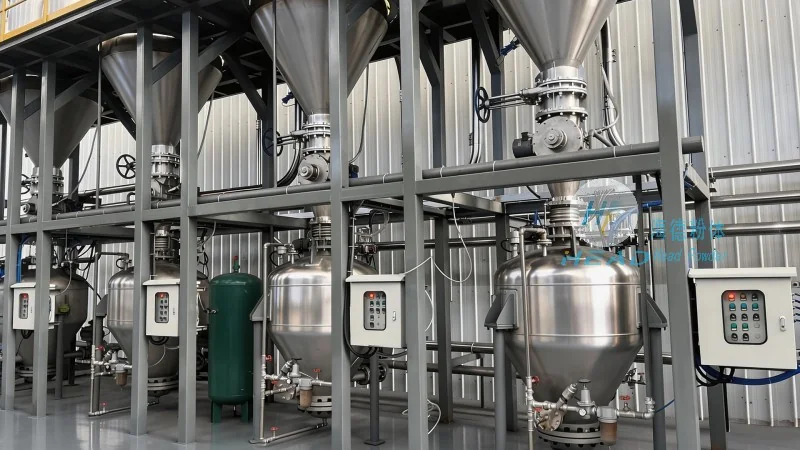
Operation Process of the Powder Pneumatic Conveying Line
The operation of an automatic loading and unloading powder pneumatic conveying line involves several key steps that ensure the smooth and continuous movement of materials. The process begins with the loading of bulk powder into the feed hopper. The hopper is equipped with a level sensor that monitors the material level, triggering the start of the loading process when the hopper is nearly full. A rotary valve, positioned at the bottom of the hopper, controls the flow of powder into the pneumatic conveyor. The rotary valve operates in a controlled manner, allowing precise dosing of the material to be conveyed. Once the powder enters the conveyor, it is transported by a stream of compressed air, which propels the material through the pipeline. The compressed air is generated by a blower or compressor, and its pressure and flow rate are adjusted to match the material characteristics and conveying distance. The conveying line may include intermediate silos or storage tanks to buffer the material and maintain a consistent flow rate. At the discharge end, the material is released into a receiving container or processing unit. The discharge process is controlled by another rotary valve or a pressure relief valve, ensuring that the material is discharged at a controlled rate without causing blockages or spills. The entire system is automated, with sensors and control panels monitoring and adjusting the operation in real-time to maintain optimal performance.
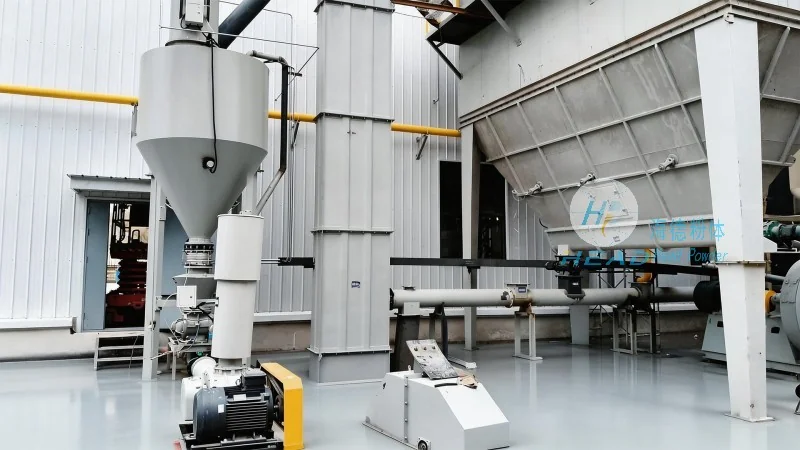
Working Principle of the Pneumatic Conveying System
The working principle of the automatic loading and unloading powder pneumatic conveying line is based on the use of compressed air to create a pressure differential that moves the material through the system. The system operates under either positive pressure or negative pressure (vacuum) depending on the specific application and material characteristics. In positive pressure systems, a blower supplies compressed air to the conveyor, creating a high-pressure environment that forces the material forward. The air and material mixture travels through the pipeline, with the air providing the necessary momentum to transport the powder. The air is then separated from the material at the discharge end, typically using a cyclone separator or a filter, and is recirculated back to the blower to improve energy efficiency. In negative pressure systems, a vacuum pump creates a low-pressure environment at the discharge end, drawing the material from the loading point and pulling it through the pipeline. The material is then collected in a container at the discharge point. The choice between positive and negative pressure depends on factors such as the material's dustiness, the conveying distance, and the need for environmental control. The system also incorporates features such as airlocks and check valves to prevent backflow and ensure that the material is conveyed in the correct direction. The control system, often integrated with a programmable logic controller (PLC), manages all aspects of the operation, including the start and stop of the blower, the rotation of the rotary valves, and the monitoring of pressure and flow rates. This ensures that the system operates safely and efficiently, minimizing downtime and maximizing productivity.
Key Components and Their Functions
The automatic loading and unloading powder pneumatic conveying line consists of several critical components, each playing a vital role in the overall operation. The feed hopper is the initial component where bulk powder is stored before being fed into the system. It is designed to accommodate large quantities of material and is equipped with a level indicator to provide real-time information on the material inventory. The rotary valve, located at the bottom of the hopper, acts as a controlled gate, regulating the flow of powder into the pneumatic conveyor. It is typically made of durable materials such as stainless steel to withstand the abrasive nature of powders and to prevent material buildup. The pneumatic conveyor is the core of the system, responsible for transporting the material through the pipeline. It can be a positive pressure system using a blower or a negative pressure system using a vacuum pump. The pipeline is usually made of stainless steel or plastic, chosen based on the material's compatibility and the need for hygiene. Intermediate silos or storage tanks are used to buffer the material and maintain a consistent flow rate, especially in systems with varying production rates. The discharge unit, located at the end of the pipeline, collects the conveyed material and transfers it to the next processing step. It may include a rotary valve or a pressure relief valve to control the discharge rate. The cyclone separator or filter is used to separate the air from the material at the discharge end, ensuring that the air is recirculated and the material is collected efficiently. The control panel, equipped with sensors and a PLC, monitors all operational parameters and adjusts the system as needed to maintain optimal performance. The sensors include pressure sensors, flow meters, and level sensors, providing data on the system's status and enabling proactive maintenance.
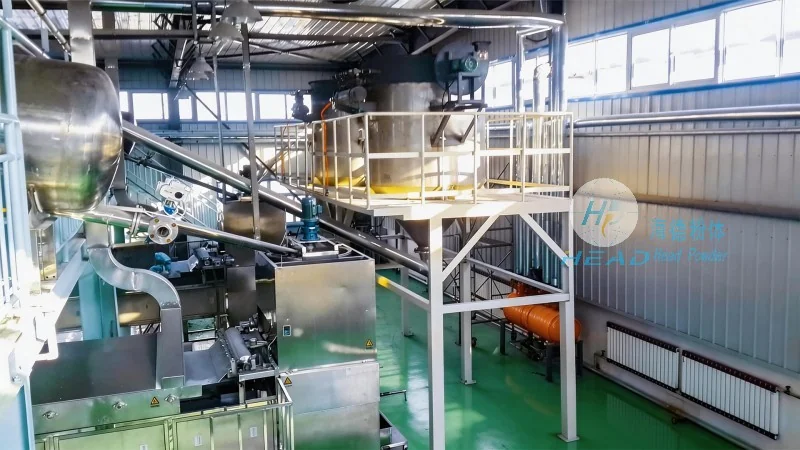
Advantages and Applications
The automatic loading and unloading powder pneumatic conveying line offers several advantages that make it an ideal solution for various industrial applications. One of the primary advantages is its ability to handle a wide range of materials, including fine powders, granules, and bulk solids, without causing degradation or contamination. The system is also highly efficient, with minimal material loss and low energy consumption compared to traditional conveying methods such as belt conveyors or bucket elevators. The automated operation reduces the need for manual labor, improving safety and reducing labor costs. Additionally, the system is compact and can be customized to fit into existing facilities, making it suitable for both new and retrofit applications. The headspace of the system is designed to minimize dust generation and improve environmental control, which is crucial in industries such as food and pharmaceuticals where hygiene is paramount. The applications of these systems are diverse, ranging from small-scale laboratory operations to large-scale industrial production lines. They are commonly used in the food industry for conveying ingredients like flour, sugar, and spices; in the pharmaceutical industry for handling active pharmaceutical ingredients (APIs) and excipients; in the chemical industry for transporting powders like catalysts and pigments; and in manufacturing for conveying raw materials to production lines. The versatility and reliability of the automatic loading and unloading powder pneumatic conveying line make it a preferred choice for businesses seeking to optimize their material handling processes and improve overall operational efficiency.