

Principle and Working Scene Characteristics of Carbon Black Powder Conveying Lines
Carbon black powder conveying lines are critical components in industrial processes that handle carbon black, a key material used in various applications such as rubber, plastics, and pigments. The efficiency and reliability of these conveying systems directly impact production quality and operational costs. This article explores the fundamental principles behind carbon black powder conveying lines and highlights the key characteristics of their working environments, providing insights into how these systems are designed and applied in real-world industrial settings.
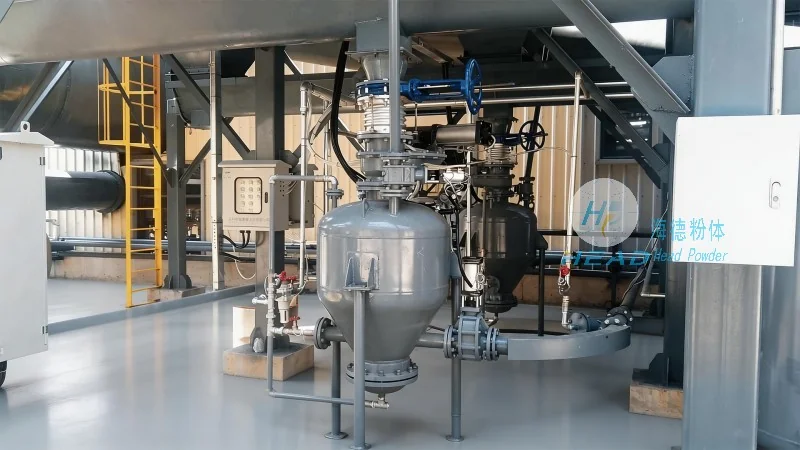
Principle of Carbon Black Powder Conveying Lines
Carbon black powder conveying lines operate based on principles of pneumatic or mechanical transport, depending on the specific application and material characteristics. Pneumatic conveying systems use compressed air to move carbon black particles through pipelines, while mechanical systems rely on screw conveyors, belt conveyors, or bucket elevators. The choice of conveying method is determined by factors such as particle size (typically ranging from 10 to 100 microns for carbon black), moisture content (often below 0.5% for dry conveying), and the required conveying distance (ranging from short distances in batch processes to long distances in continuous production lines). In pneumatic systems, the air velocity must be sufficient to overcome the particle's weight and friction, ensuring stable flow without clogging. For example, a positive pressure system uses compressed air to push particles forward, while a negative pressure system uses suction to draw particles into the pipeline. The air velocity is carefully calculated to maintain a "fluidized" state where particles behave like a fluid, preventing segregation and ensuring uniform flow. Mechanical systems, on the other hand, are suitable for bulk materials with higher moisture content or larger particle sizes, where air resistance may be a concern. Screw conveyors, for instance, use rotating screws to move particles along a trough, while belt conveyors use moving belts to transport materials horizontally or at an incline. The design of the conveying line, including the type of equipment (e.g., rotary valves, airlocks, and filters), is tailored to maintain material integrity and prevent contamination. Rotary valves are used to control the flow of carbon black from storage silos to the conveying line, ensuring a smooth and consistent feed. Airlocks are employed to isolate the conveying system from the rest of the plant, preventing dust leakage and maintaining a controlled environment. Filters are essential to remove any fine particles or impurities from the air, protecting the system and ensuring the purity of the carbon black material. These components work together to create a reliable and efficient conveying system that meets the stringent requirements of carbon black processing.
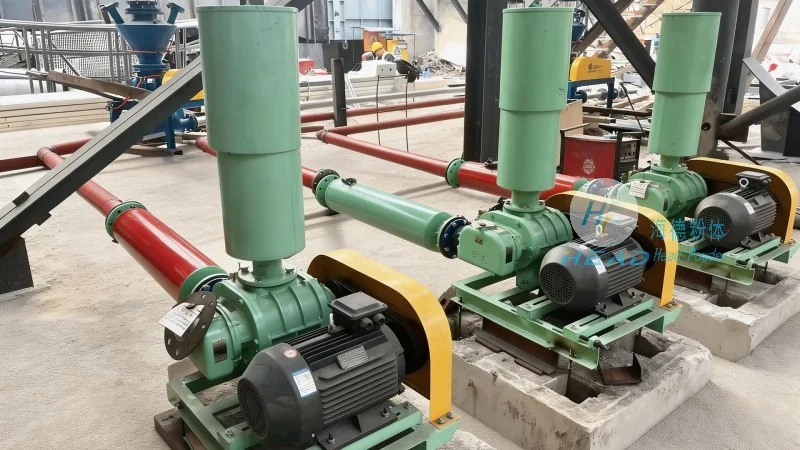
Working Scene Characteristics of Carbon Black Powder Conveying Lines
The working environments for carbon black powder conveying lines vary significantly based on the production scale, material handling requirements, and operational conditions. Large-scale industrial plants, such as those in the rubber and tire manufacturing sectors, typically require high-capacity conveying systems capable of transporting large volumes of carbon black over long distances. These systems often operate in continuous mode, with automated controls to maintain consistent flow rates and prevent material buildup. In contrast, smaller-scale applications, such as in specialty chemical or pigment production, may use compact conveying lines with lower capacity but higher precision. The working environment also includes considerations for dust control and safety, as carbon black powders can be fine and potentially hazardous if inhaled. Advanced filtration systems and enclosed conveying designs are commonly employed to minimize dust emissions and ensure compliance with occupational health and safety regulations. Additionally, the temperature and humidity of the working environment can affect the conveying performance, as moisture can cause agglomeration of carbon black particles, leading to blockages in the system. Proper temperature control and moisture management are therefore essential for maintaining the efficiency and reliability of carbon black powder conveying lines. The operational environment may also involve high temperatures in some processing stages, requiring materials and components that can withstand thermal stress without degrading performance. This necessitates the use of heat-resistant materials in the construction of conveying lines and associated equipment, ensuring long-term durability under demanding conditions.
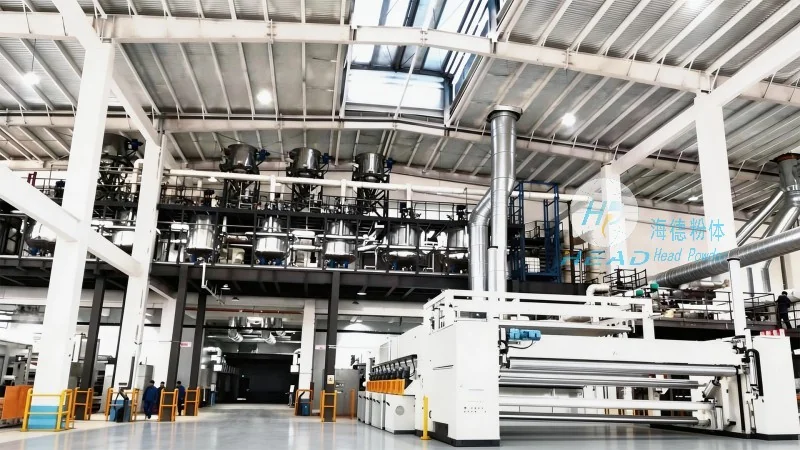
HeadPowder: Expert in Carbon Black Powder Conveying Solutions
Shandong HeadPowder Engineering Co., Ltd. specializes in designing and manufacturing customized carbon black powder conveying lines tailored to the unique needs of industrial clients. With a focus on innovation and quality, HeadPowder leverages advanced engineering principles to develop systems that enhance material handling efficiency while ensuring product purity. The company's expertise spans both pneumatic and mechanical conveying technologies, allowing them to provide comprehensive solutions for various industrial applications. By integrating state-of-the-art components and robust design, HeadPowder's conveying lines are built to withstand the demanding conditions of carbon black processing, ensuring long-term reliability and minimal downtime. The company's commitment to customer satisfaction is reflected in its comprehensive after-sales support and technical assistance, helping clients optimize their production processes and achieve higher productivity. HeadPowder's team of engineers works closely with clients to assess their specific requirements, from initial material analysis to final system integration. This collaborative approach ensures that the conveying line is optimized for the client's production volume, particle characteristics, and operational constraints. The company's facilities in Shandong, China, are equipped with advanced testing equipment to simulate real-world conditions and validate the performance of conveying systems before delivery. This rigorous testing process helps identify potential issues and ensures that the final product meets or exceeds industry standards. HeadPowder's solutions are designed to be scalable, allowing clients to expand their operations without the need for major system overhauls. This flexibility is particularly valuable for industries experiencing growth or undergoing process upgrades. The company also provides training and maintenance services to help clients maximize the lifespan and efficiency of their conveying lines, reducing long-term operational costs.