

[Epoxy Resin Pneumatic Conveying: Working Principles and Classification Applications]
HeadPowder, a leading provider in the field of material handling solutions, specializes in advanced pneumatic conveying systems for epoxy resin applications. This article delves into the fundamental working principles of epoxy resin pneumatic conveying and explores the various classification applications that define its practical implementation in industrial settings.
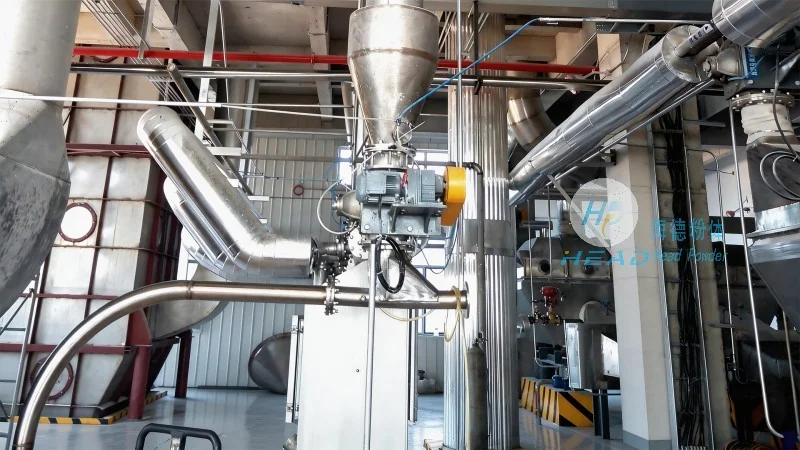
Introduction to Epoxy Resin Pneumatic Conveying
Epoxy resin, a widely used thermosetting polymer, often requires efficient and reliable material transport methods to ensure consistent quality and process efficiency in manufacturing operations. Pneumatic conveying, a technology that utilizes air or gas to move bulk materials through a pipeline system, has emerged as a preferred solution for epoxy resin handling due to its ability to maintain product integrity, minimize contamination, and enhance operational flexibility. HeadPowder, with its expertise in engineering tailored material handling systems, offers comprehensive solutions that address the unique challenges associated with epoxy resin transportation.
Core Working Principles of Epoxy Resin Pneumatic Conveying
The fundamental principle of pneumatic conveying for epoxy resin involves the use of compressed air to create a flow that propels the resin particles through a sealed pipeline. This process can be categorized into two primary modes: dilute-phase and dense-phase conveying, each with distinct characteristics that influence system design and performance. In dilute-phase systems, the resin particles are suspended in a continuous stream of air, allowing for high-velocity transport over longer distances with lower pressure requirements. Conversely, dense-phase conveying employs lower air velocities and higher particle concentrations, enabling more controlled and gentle movement of the resin, which is critical for preserving the material's viscosity and chemical properties.
A key component in the operation of epoxy resin pneumatic conveying systems is the air compressor, which generates the necessary pressure to drive the material through the pipeline. The compressor's capacity and efficiency directly impact the system's throughput and energy consumption. Additionally, the design of the conveying line, including the diameter, length, and number of bends, plays a crucial role in determining the system's performance. Properly sized and configured pipelines minimize pressure drop and ensure smooth material flow, preventing issues such as clogging or material degradation.
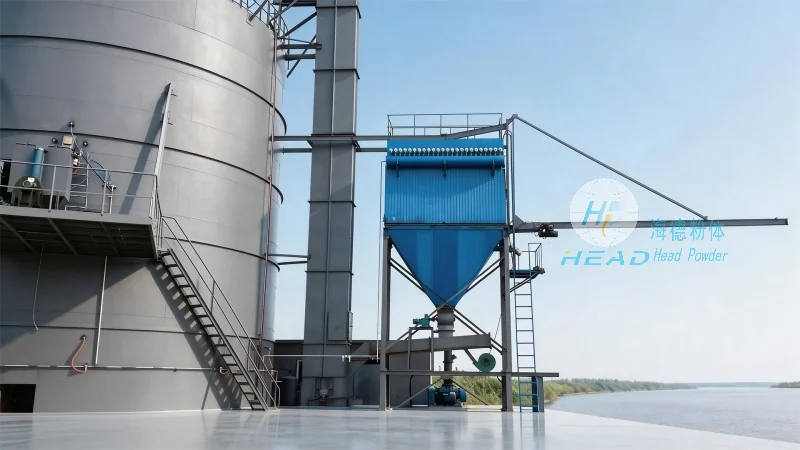
Classification of Epoxy Resin Pneumatic Conveying Systems
Epoxy resin pneumatic conveying systems are typically classified based on the direction of material flow and the pressure applied. The two main categories are suction (or aspirating) systems and pressure (or blow) systems. Suction systems utilize a vacuum to draw the resin from the source, making them ideal for applications where the material is stored in hoppers or silos at a higher elevation than the processing equipment. These systems are particularly effective for handling fine powders and granules, as the vacuum helps maintain a consistent flow rate and prevents material settling. On the other hand, pressure systems use compressed air to push the resin through the pipeline, which is suitable for applications requiring high throughput and longer transport distances. Pressure systems are often preferred in industrial settings where the processing equipment is located at a lower level than the storage facilities.
Within these primary classifications, further subcategories exist based on the air-to-material ratio and the velocity of the conveying medium. Dilute-phase systems, as mentioned earlier, operate with a low air-to-material ratio, resulting in high velocities and relatively low pressure. Dense-phase systems, in contrast, use a higher air-to-material ratio and lower velocities, which allows for more controlled and gentle material movement. This distinction is critical for epoxy resin, as the material's sensitivity to shear forces and temperature changes necessitates a conveying method that minimizes mechanical stress and maintains its chemical stability.
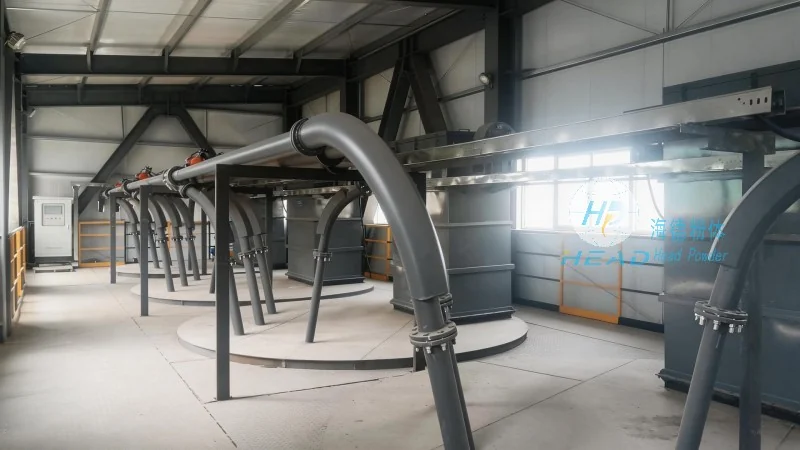
Application Scenarios and Practical Implementation
The versatility of epoxy resin pneumatic conveying systems makes them applicable across a wide range of industrial sectors. In the manufacturing of epoxy-based composites, these systems are used to transport resin powders and hardeners to mixing and molding equipment, ensuring precise proportioning and consistent product quality. The food and pharmaceutical industries also benefit from pneumatic conveying systems, as they provide a hygienic and contamination-free method for handling epoxy resins used in packaging and coating applications. Additionally, in the construction and infrastructure sectors, epoxy resin pneumatic conveying is employed for the transport of epoxy-based adhesives and sealants to application sites, facilitating efficient and uniform coating processes.
HeadPowder's expertise in customizing pneumatic conveying solutions ensures that each system is tailored to the specific requirements of the epoxy resin application. Factors such as resin viscosity, particle size, and the desired throughput are carefully considered during the design phase to optimize system performance. The company's engineering team utilizes advanced simulation tools to model the conveying process, allowing for the prediction and mitigation of potential issues such as pressure drops, material degradation, and system inefficiencies. This approach ensures that the final system meets the client's operational needs while adhering to industry standards and safety regulations.
Conclusion and Company Overview
Epoxy resin pneumatic conveying represents a sophisticated and efficient method for material handling in various industrial applications. By understanding the fundamental working principles and classification of these systems, manufacturers can select the most appropriate technology to enhance productivity, maintain product quality, and reduce operational costs. HeadPowder, with its commitment to innovation and customer-centric solutions, continues to lead the way in providing advanced pneumatic conveying systems for epoxy resin applications. Based in Shandong, China, HeadPowder Engineering Co., Ltd. leverages its extensive experience and technical expertise to deliver reliable and high-performance material handling solutions that meet the evolving needs of the industry.