

Operation Process and Working Principle of Pneumatic Conveying Equipment for Activated Carbon Powder
Shandong HeadPowder Engineering Co., Ltd. specializes in the design, manufacturing, and supply of advanced pneumatic conveying systems tailored for activated carbon powder materials. As a leading manufacturer in China, the company's equipment is engineered to meet the precise demands of industries requiring efficient, reliable, and safe material handling solutions. This article delves into the operational process and underlying principles of such systems, highlighting their key components, functionality, and benefits.
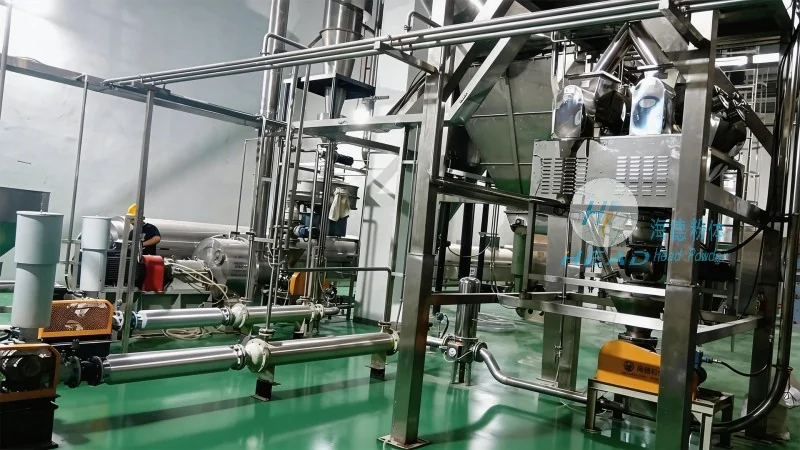
Key Components of the Pneumatic Conveying System
The pneumatic conveying equipment for activated carbon powder materials typically consists of several critical components that work in tandem to ensure smooth material transport. These include a hopper for material storage, a feeder to control the flow rate, a conveying pipeline, a pressure vessel or receiver to collect the material at the destination, and a blower or compressor to generate the necessary air pressure. Each component plays a vital role in maintaining the system's efficiency and preventing material degradation or blockages.
Working Principle of the Pneumatic Conveying Process
The operation of the pneumatic conveying system begins with the material being fed from the hopper into the conveying pipeline. The feeder, often a rotary valve or a screw feeder, regulates the amount of powder released into the pipeline. Simultaneously, the blower or compressor supplies high-pressure air into the pipeline, creating a flow that propels the activated carbon powder particles forward. As the powder travels through the pipeline, it is suspended in the air stream, allowing it to move efficiently over long distances without the need for mechanical components like belts or chains. The pressure vessel at the receiving end captures the material, and the air is either filtered and recirculated or vented to the atmosphere, depending on the system design.
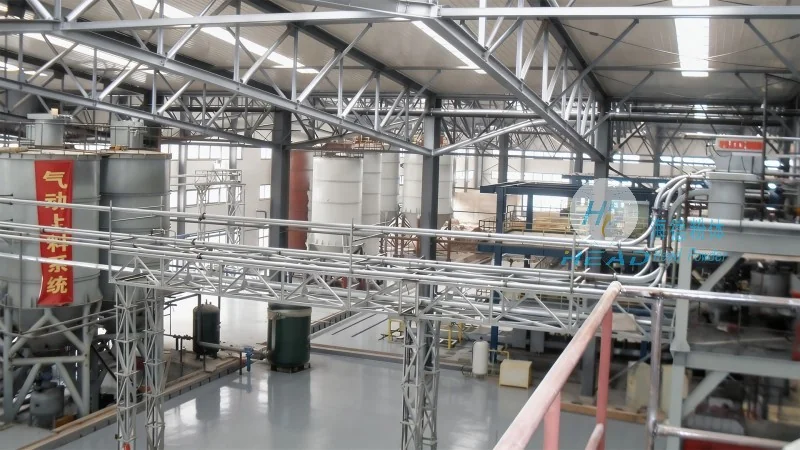
Operation Process: Step-by-Step Overview
The operational process of the pneumatic conveying equipment for activated carbon powder materials can be broken down into several key steps. First, the activated carbon powder is loaded into the hopper, ensuring a consistent supply. The feeder then adjusts the feed rate based on the required output. The blower starts, generating the air pressure needed to initiate the conveying process. As the air flows through the pipeline, it picks up the powder particles, forming a dense phase or dilute phase flow, depending on the system's design. The material travels to the receiving vessel, where it is collected. The system may include a filter to remove any fine particles from the air before recirculation, enhancing environmental compliance and system longevity. Throughout the process, sensors and controls monitor pressure, flow rate, and material level to maintain optimal performance and prevent operational issues.
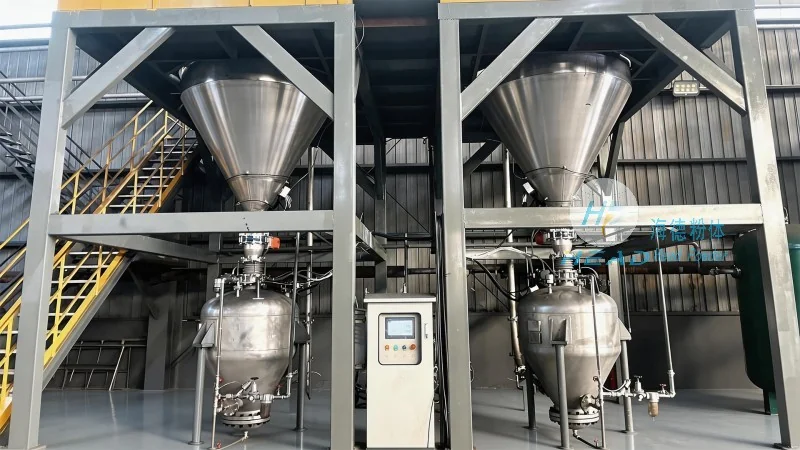
Advantages of Using Pneumatic Conveying for Activated Carbon Powder Materials
Employing pneumatic conveying systems for activated carbon powder materials offers numerous advantages over traditional mechanical conveying methods. These include reduced material degradation due to minimal contact with equipment surfaces, improved safety by eliminating the need for manual handling of powders, and enhanced hygiene, which is critical in industries such as pharmaceuticals and food processing. Additionally, the systems are highly flexible, allowing for changes in material flow rates and distances without significant modifications. The ability to handle fine powders without clogging is another key benefit, as the air flow effectively prevents particle accumulation in the pipeline. Furthermore, the systems are compact and can be integrated into existing production lines, making them a cost-effective solution for material transport needs.
Applications and Industries Served
The pneumatic conveying equipment from Shandong HeadPowder Engineering Co., Ltd. is widely used in various industries that handle activated carbon powder materials. These include water treatment facilities, where activated carbon is used for filtration and adsorption processes; chemical manufacturing, for transporting raw materials and finished products; and environmental remediation projects, where activated carbon is employed for soil and water purification. The equipment's adaptability makes it suitable for both small-scale and large-scale operations, catering to the diverse needs of different sectors.