

Principle and Working Scene Characteristics of Limestone Material Pneumatic Conveying Equipment
HeadPowder, a leading manufacturer based in Shandong, China, specializes in the design and production of advanced pneumatic conveying systems tailored for limestone handling applications. This article explores the fundamental principles behind these systems and highlights the key working scene characteristics that make them indispensable in various industrial settings.
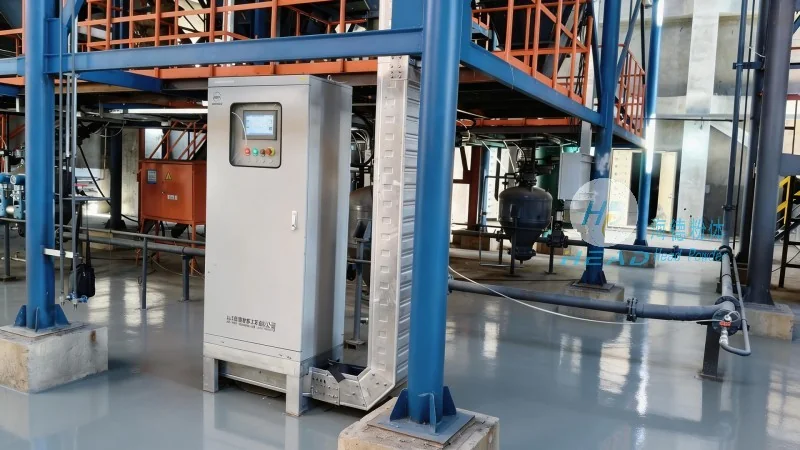
Principle of Pneumatic Conveying for Limestone
The core principle of pneumatic conveying for limestone involves the use of air or gas to transport bulk materials through a pipeline system. Unlike traditional mechanical conveyors, which rely on mechanical components like belts or screws, pneumatic systems utilize pressure differentials to move the material. In a typical setup, a blower or compressor generates a flow of air that pulls or pushes the limestone particles through the pipeline. The process can be categorized into two main types: dilute phase and dense phase, each offering distinct advantages depending on the material characteristics and distance of transport.
For limestone, which is often a fine or semi-fine powder, dilute phase conveying is commonly employed. This method involves transporting the material in a relatively low concentration within the air stream, typically at velocities ranging from 20 to 30 meters per second. The high velocity ensures that the particles remain suspended and move efficiently through the pipeline. Dense phase conveying, on the other hand, uses lower velocities and higher material concentrations, making it suitable for handling more abrasive or sensitive materials. HeadPowder's systems are engineered to optimize these parameters, ensuring efficient and reliable transport of limestone while minimizing wear and energy consumption.
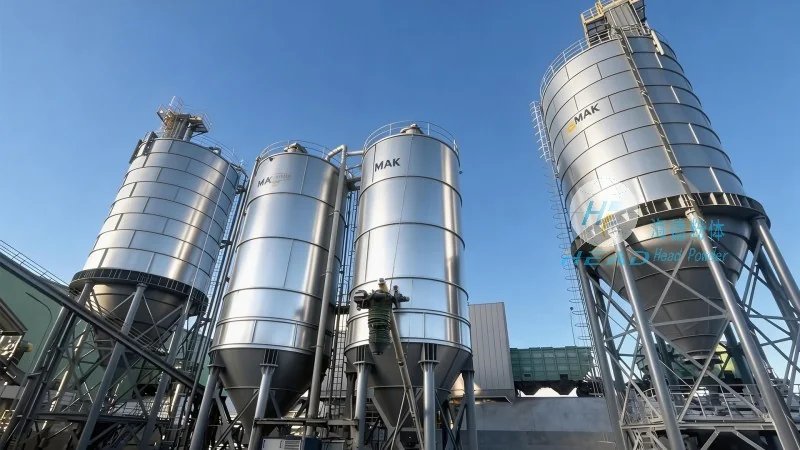
Working Scene Characteristics of Limestone Pneumatic Conveying
The working scene characteristics of limestone pneumatic conveying systems are tailored to meet the specific demands of industrial applications. These characteristics include high efficiency, low maintenance, and adaptability to various operational conditions. One of the primary advantages is the ability to handle limestone in a dust-free environment, which is crucial for maintaining air quality and preventing material contamination. This is particularly important in industries such as cement production, where limestone is a key raw material, and dust control is essential for both safety and environmental compliance.
Another key characteristic is the flexibility in system design. HeadPowder's pneumatic conveying systems can be customized to accommodate different distances, from short-line transport within a facility to long-distance transfer over several kilometers. The modular design allows for easy integration with existing production lines, reducing installation time and costs. Additionally, the systems are designed to handle varying limestone qualities, including different particle sizes and moisture content, ensuring consistent performance across diverse operational scenarios.
Operational reliability is a critical aspect of limestone pneumatic conveying, and HeadPowder's systems are built to deliver consistent performance. The use of high-quality materials and robust components ensures minimal downtime and long service life. For example, the pipeline components are constructed from corrosion-resistant materials to withstand the chemical properties of limestone, while the blower and compressor units are equipped with advanced control systems to maintain optimal pressure and flow rates. This reliability is essential for continuous production processes, where any interruption can lead to significant losses.
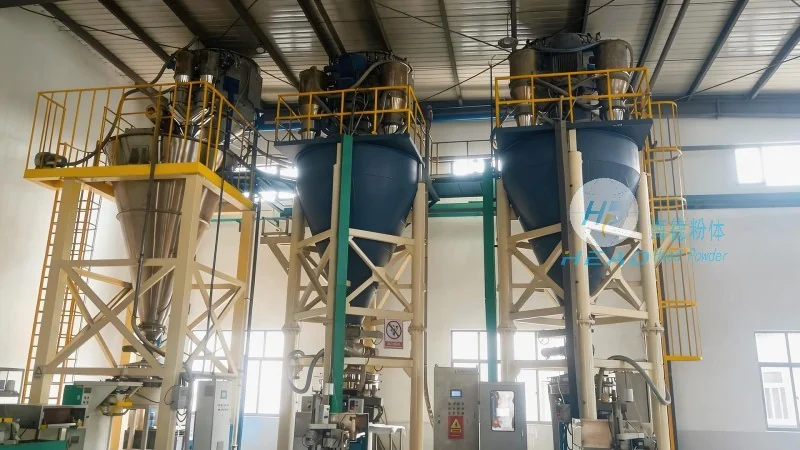
Applications and Benefits in Industrial Settings
Limestone pneumatic conveying systems are widely used in various industrial sectors, including cement manufacturing, chemical processing, and mining. In cement plants, limestone is transported from storage silos to the raw mill or kiln, where it is processed into clinker. The efficiency of the pneumatic system ensures that the material is delivered in a controlled manner, maintaining the required quality and reducing the risk of material degradation. In chemical plants, limestone is used as a neutralizing agent or raw material for various products, and the conveying system ensures that it is handled safely and without contamination.
The benefits of using pneumatic conveying for limestone extend beyond efficiency and reliability. Environmental considerations are a significant factor, as these systems help minimize dust emissions and improve overall air quality. This is particularly important in regions with strict environmental regulations, where compliance is mandatory. Additionally, the systems contribute to operational safety by reducing the need for manual handling of bulk materials, which can be hazardous. The automated nature of the system also reduces the risk of accidents and improves workplace safety.