

Working Principle and Features of Quantitative Weighing Pneumatic Conveying System Equipment
Quantitative weighing pneumatic conveying systems represent a sophisticated solution in material handling, combining precision measurement with efficient pneumatic transport. These systems are widely utilized across various industries, including pharmaceuticals, food processing, and chemical manufacturing, where accurate material transfer and control are critical. The technology behind these systems integrates advanced sensors, control mechanisms, and pneumatic components to ensure reliable and consistent operation.
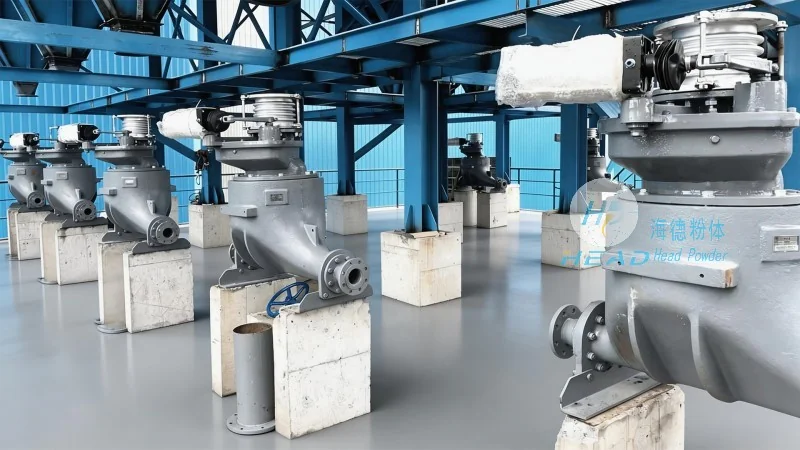
Company Overview: Shandong HeadPowder Engineering Co., Ltd.
Headpowder, the brand under Shandong HeadPowder Engineering Co., Ltd., is a leading manufacturer specializing in the design, development, and production of quantitative weighing pneumatic conveying systems. With a strong presence in China, particularly in Shandong province, the company has built a reputation for delivering high-quality, reliable equipment tailored to diverse industrial needs. The company’s commitment to innovation and customer satisfaction has positioned it as a trusted partner in the material handling sector.
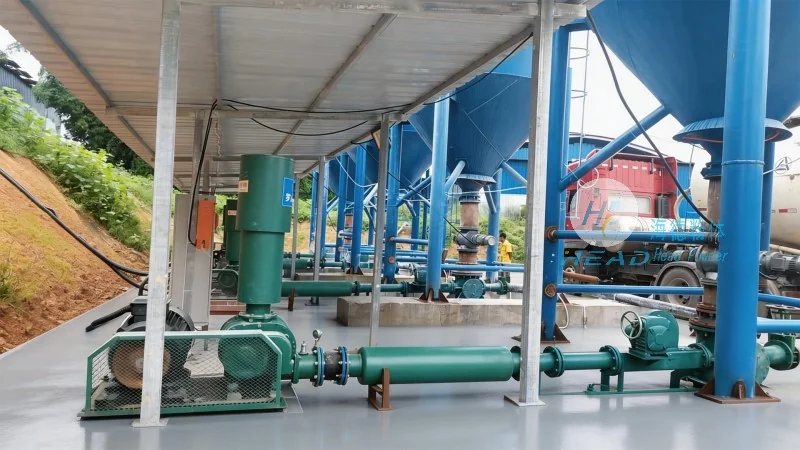
Working Principle of Quantitative Weighing Pneumatic Conveying Systems
The core working principle of a quantitative weighing pneumatic conveying system involves the controlled transport of bulk materials using air as the conveying medium. The system typically consists of a hopper, a feeder, a pneumatic conveyor line, and a weighing hopper or scale. The process begins with the material being fed into the system from the hopper. A feeder, often a screw or rotary valve, regulates the flow of material into the pneumatic conveyor. Simultaneously, the system uses a blower or compressor to generate airflow through the conveyor line, which propels the material forward. The weighing hopper, equipped with load cells and a digital scale, measures the mass of the material being conveyed in real-time. A control system monitors the weight data and adjusts the feeder speed or air pressure to maintain the desired flow rate, ensuring precise and consistent weighing. This closed-loop control mechanism allows for accurate measurement and delivery of materials, minimizing errors and optimizing process efficiency.

Key Features and Advantages
Quantitative weighing pneumatic conveying systems from Headpowder offer several key features that enhance operational performance and user experience. One of the primary advantages is the high level of precision in material weighing. The integration of advanced load cells and digital scales enables accurate measurement, typically with a tolerance of ±0.1% or better, which is crucial for applications requiring strict dosage control. The systems are also designed for automation, reducing the need for manual intervention and minimizing human error. This automation capability improves process consistency and reduces labor costs. Additionally, the pneumatic conveying method provides a hygienic and dust-free environment, which is essential for industries such as food and pharmaceuticals where contamination control is paramount. The systems are constructed with materials that are resistant to corrosion and wear, ensuring long-term durability and low maintenance requirements. Another notable feature is the adaptability to various material types, including powders, granules, and fine particles. The adjustable air pressure and flow rates allow the system to handle different material characteristics, from light and fine powders to heavier granules. This versatility makes the systems suitable for a wide range of applications, from small-scale laboratory use to large-scale industrial production.
Technical Specifications and Application Scenarios
The technical specifications of quantitative weighing pneumatic conveying systems vary based on the specific model and application requirements. Generally, these systems can handle material flow rates ranging from a few kilograms per hour to several tons per hour, depending on the conveyor line length and blower capacity. The weighing accuracy is a critical specification, with most systems achieving a precision of ±0.1% to ±0.5% of the measured mass. The system’s capacity to handle different particle sizes is another important specification, with some models capable of conveying materials with particle sizes as small as 10 microns or as large as several millimeters. The control system typically includes programmable logic controllers (PLCs) or advanced software interfaces that allow users to set and adjust parameters such as flow rate, pressure, and weighing targets. These systems are commonly used in applications such as bulk material handling, batching, and dosing. In the pharmaceutical industry, they are used for the precise transfer of active pharmaceutical ingredients (APIs) and excipients. In the food industry, they are employed for the handling of powders like flour, sugar, and spices. In the chemical industry, they are used for conveying raw materials and intermediates in production processes. The systems are also utilized in research and development laboratories for small-scale material testing and prototyping.
Conclusion
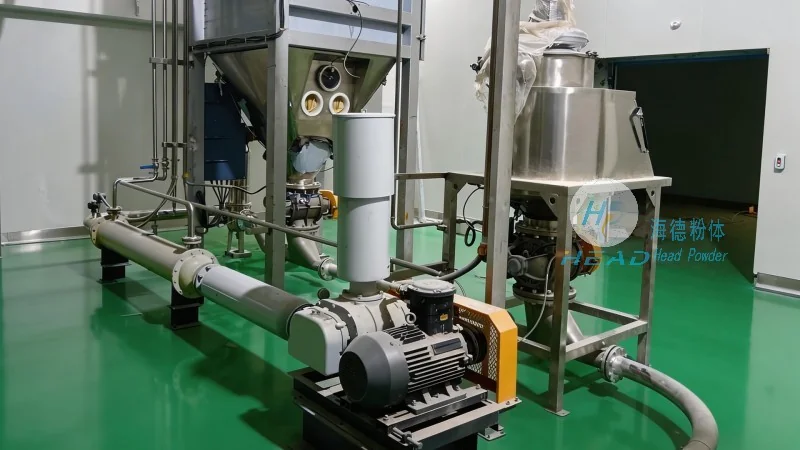
Quantitative weighing pneumatic conveying systems represent a highly effective solution for precise material handling and transport. The integration of advanced weighing technology with pneumatic conveying provides a reliable and efficient method for industries that require accurate and controlled material transfer. Headpowder, as a leading manufacturer, offers systems that are designed to meet the diverse needs of modern industrial applications, combining precision, automation, and durability. By leveraging the working principles and features of these systems, industries can enhance their operational efficiency, reduce errors, and ensure compliance with regulatory standards. The continued development and innovation in this field will likely lead to even more advanced and versatile systems, further expanding their applications in various sectors.