

Inorganic Salt Pneumatic Conveying System Introduction and Structural Principle Explanation
HeadPowder, a leading enterprise in the field of pneumatic conveying technology, specializes in the design, manufacturing, and installation of advanced inorganic salt pneumatic conveying systems. This article provides a comprehensive overview of the system's structure and operational principles, highlighting its key components and the engineering solutions tailored for efficient material handling in industrial applications.
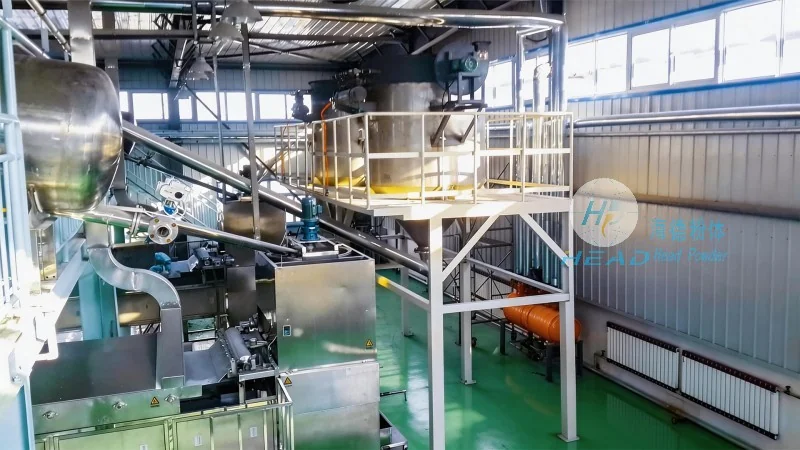
Company Profile: Shandong HeadPowder Engineering Co., Ltd.
HeadPowder, with its headquarters located in Shandong, China, is dedicated to delivering high-quality pneumatic conveying solutions. The company's expertise lies in understanding the unique challenges of handling inorganic salts, such as their varying particle sizes, moisture content, and chemical properties. By leveraging years of industry experience, HeadPowder has developed systems that ensure reliable, safe, and efficient material transport, meeting the diverse needs of clients across various sectors.
Overview of Inorganic Salt Pneumatic Conveying Systems
Inorganic salt pneumatic conveying systems are engineered to transport bulk materials like sodium chloride, potassium chloride, and other mineral salts through a pipeline using compressed air or other gas streams. These systems are widely used in chemical, food, and pharmaceutical industries due to their ability to handle abrasive and corrosive materials without the need for mechanical components that might cause wear or contamination. The core of the system is a network of pipes, valves, and control units that work in tandem to move materials from the source to the destination.
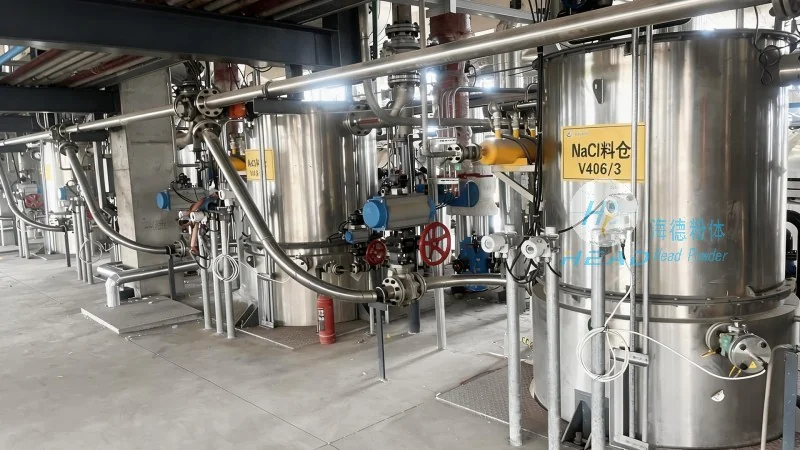
Key Structural Components and Their Functions
The inorganic salt pneumatic conveying system consists of several critical components, each playing a vital role in the overall operation. The primary components include the material feed hopper, the air compressor or blower, the conveying pipeline, the control valves, and the discharge unit. The material feed hopper is designed to store and feed the inorganic salt into the system at a controlled rate, preventing blockages and ensuring consistent flow. The air compressor or blower generates the necessary pressure to move the material through the pipeline. The conveying pipeline, typically made of stainless steel or other corrosion-resistant materials, is configured to handle the specific characteristics of the inorganic salt, minimizing wear and corrosion. Control valves are used to regulate the air flow and material discharge, allowing for precise control over the conveying process. The discharge unit, such as a rotary valve or a dust collector, collects the material at the end of the pipeline, ensuring a clean and efficient discharge.
Operational Principles and Flow Process
The operational principle of the inorganic salt pneumatic conveying system is based on the principle of pneumatic transport, where the material is suspended in a gas stream and carried through the pipeline. The process begins with the material being fed from the hopper into the pipeline. Simultaneously, compressed air is introduced into the pipeline, creating a high-velocity gas flow. The air stream lifts and transports the inorganic salt particles through the pipeline, maintaining a consistent flow rate. As the material travels through the pipeline, it may encounter various components such as bends, elbows, and expansion joints, which are designed to minimize pressure loss and maintain the integrity of the material flow. The system is equipped with sensors and control mechanisms to monitor the pressure, flow rate, and material level, ensuring optimal performance and preventing system failures. The material is then discharged at the receiving end, where it is collected and processed further.
Advantages of Inorganic Salt Pneumatic Conveying Systems
HeadPowder's inorganic salt pneumatic conveying systems offer several advantages over traditional mechanical conveying methods. One of the key benefits is the ability to handle abrasive and corrosive materials without causing wear or damage to the system components. The system is also highly flexible, allowing for easy integration with existing industrial processes and the ability to transport materials over long distances with minimal maintenance. Additionally, the system is energy-efficient, as it uses compressed air to move the material, reducing the need for mechanical components that consume more energy. The system also provides a clean and dust-free environment, which is crucial for industries where contamination must be avoided, such as food and pharmaceutical manufacturing.
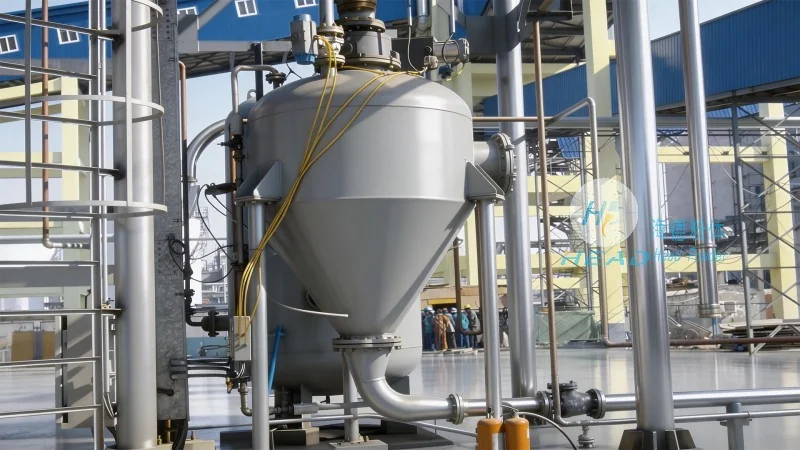
Application Scenarios and Customization Options
Inorganic salt pneumatic conveying systems are suitable for a wide range of applications, including the transportation of sodium chloride for salt production, potassium chloride for fertilizer manufacturing, and other mineral salts used in chemical processing. HeadPowder offers customized solutions tailored to the specific requirements of each client, considering factors such as material properties, conveying distance, and production capacity. The company works closely with clients to understand their operational needs and design systems that meet their exact specifications, ensuring optimal performance and cost-effectiveness.
Conclusion
HeadPowder's inorganic salt pneumatic conveying systems represent a reliable and efficient solution for the transportation of bulk inorganic salts. By leveraging advanced engineering and materials, the system ensures safe, clean, and cost-effective material handling. With its headquarters in Shandong, China, HeadPowder continues to innovate and provide high-quality pneumatic conveying solutions to clients worldwide, contributing to the advancement of industrial material handling technologies.