

Operation Process and Working Principle of Sodium Bicarbonate Pneumatic Conveying Machine
Sodium bicarbonate, also known as baking soda, is a widely used chemical in various industries, including food processing, pharmaceuticals, and manufacturing. The efficient and reliable transport of this material from storage to processing units is crucial for maintaining production efficiency and product quality. Pneumatic conveying systems, particularly those designed for sodium bicarbonate, offer a solution that combines safety, precision, and adaptability. This article explores the operation process and working principle of a sodium bicarbonate pneumatic conveying machine, highlighting its key components, operational steps, and the technical advantages it provides.
About HeadPowder: Your Expert in Powder Handling Solutions
HeadPowder, or Shandong HeadPowder Engineering Co., Ltd., is a leading manufacturer and supplier of advanced powder handling equipment. With a strong presence in China, particularly in Shandong province, the company specializes in designing and manufacturing pneumatic conveying systems tailored to the unique needs of various industries. HeadPowder's commitment to quality, innovation, and customer satisfaction has established it as a trusted partner for businesses seeking reliable and efficient material transport solutions. The company's facilities in Shandong are equipped with state-of-the-art technology and skilled professionals who ensure that each product meets the highest standards of performance and durability.
The Operation Process of a Sodium Bicarbonate Pneumatic Conveying Machine
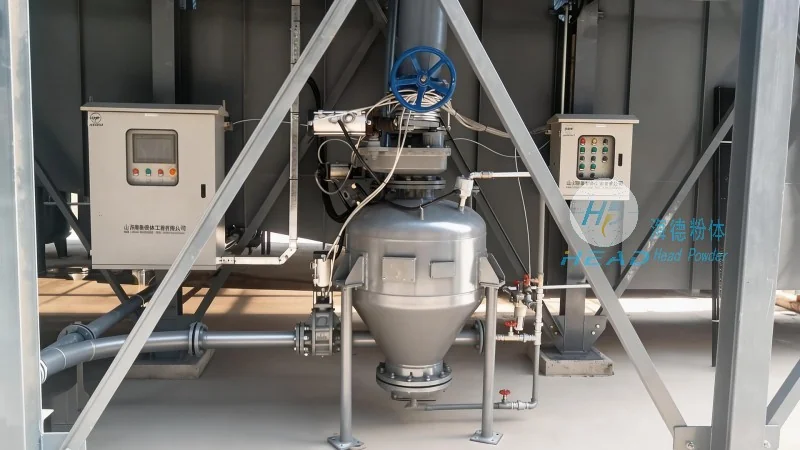
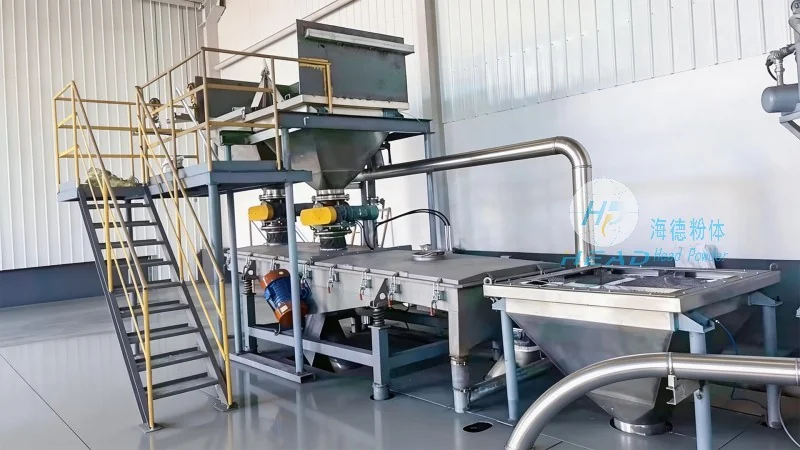
The operation of a sodium bicarbonate pneumatic conveying machine involves several sequential steps that ensure the material is transported safely and efficiently from its source to the destination. The process typically begins with the loading of the sodium bicarbonate into a hopper or storage silo. From there, the material is fed into the conveying system via a feed device, such as a rotary valve or a star feeder, which controls the flow rate and prevents blockages. The next step involves the generation of air flow, which can be achieved through a blower or a vacuum pump. In a typical pneumatic conveying setup, the air is introduced into the conveying line, creating a pressure or vacuum environment that propels the sodium bicarbonate particles through the pipeline. The conveying line is designed with appropriate bends, elbows, and straight sections to ensure smooth flow and minimize pressure loss. At the receiving end, the material is discharged into a receiving hopper or storage tank, where it is collected for further processing. The entire operation is controlled by a programmable logic controller (PLC) or a similar control system, which monitors parameters such as pressure, flow rate, and temperature to ensure optimal performance and prevent any operational issues.

Working Principle of Pneumatic Conveying for Sodium Bicarbonate
The working principle of a pneumatic conveying system for sodium bicarbonate is based on the principles of fluid dynamics and particle transport. There are two main types of pneumatic conveying: pressure conveying and vacuum conveying. In pressure conveying, a blower or compressor creates positive pressure in the conveying line, pushing the material forward. This method is suitable for short to medium distances and for transporting materials that are free-flowing and non-abrasive. Vacuum conveying, on the other hand, uses a vacuum pump to create a negative pressure in the line, drawing the material from the source. This method is ideal for long-distance transport and for handling materials that are dusty or have a tendency to clog the line. The sodium bicarbonate particles are suspended in the air stream and transported through the pipeline. The velocity of the air is critical; it must be sufficient to keep the particles in suspension but not so high as to cause excessive wear on the equipment or damage to the particles. The conveying line is typically made of materials such as stainless steel or plastic, which are resistant to corrosion and abrasion from the sodium bicarbonate particles. The system also includes filters and cyclones to separate the material from the air, ensuring that the air is clean and can be recirculated or discharged safely. The control system monitors the pressure and flow rates to maintain a consistent and efficient conveying process.
Key Components and Technical Advantages
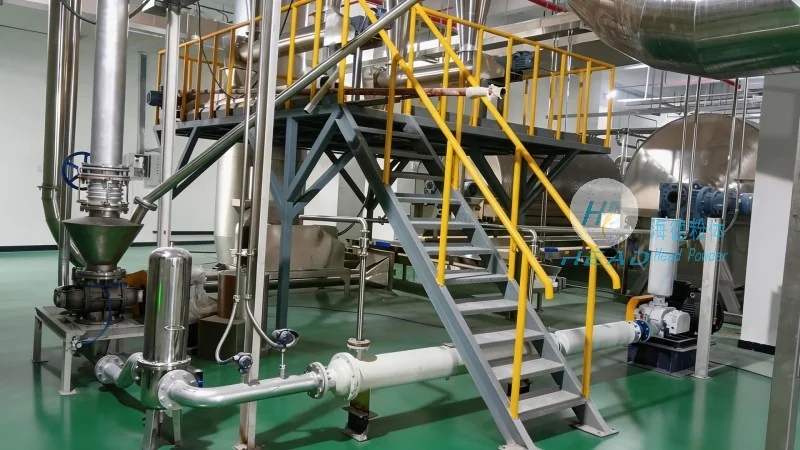
Several key components are essential for the proper operation of a sodium bicarbonate pneumatic conveying machine. These include the hopper or storage silo, the feed device (rotary valve or star feeder), the blower or vacuum pump, the conveying line, the receiving hopper, and the control system. Each component plays a critical role in ensuring the smooth and efficient transport of the material. The feed device controls the flow rate of the sodium bicarbonate, preventing overloading or underloading of the system. The blower or vacuum pump provides the necessary air pressure or vacuum to move the material. The conveying line is designed to handle the specific characteristics of sodium bicarbonate, such as its particle size, density, and flowability. The control system monitors and adjusts the operation parameters to maintain optimal performance. The technical advantages of pneumatic conveying for sodium bicarbonate include high efficiency, as the material is transported in a closed system, minimizing dust and contamination. It also offers flexibility in terms of layout and distance, as the conveying line can be arranged in various configurations to suit the plant layout. Additionally, pneumatic conveying systems are relatively easy to install and maintain, reducing downtime and operational costs.
Conclusion and Application
Sodium bicarbonate pneumatic conveying machines are essential equipment for industries that rely on the efficient transport of this important chemical. The operation process, which involves loading, feeding, conveying, and receiving, is designed to ensure safety, precision, and reliability. The working principle, based on pneumatic conveying technology, provides a flexible and efficient solution for transporting sodium bicarbonate from storage to processing units. HeadPowder, with its expertise in powder handling equipment, offers high-quality pneumatic conveying systems that meet the specific needs of various industries. By understanding the operation process and working principle of these machines, businesses can make informed decisions about their material transport needs and choose the right equipment to enhance their production efficiency and product quality.