

Operation Process and Working Principle of Soybean Pneumatic Conveying Lines
HeadPowder, the abbreviation for Shandong HeadPowder Engineering Co., Ltd., is a professional manufacturer and supplier of pneumatic conveying systems based in Shandong, China. The company specializes in the design, production, and installation of advanced conveying solutions tailored for various industrial applications, including the efficient handling of bulk materials like soybeans.
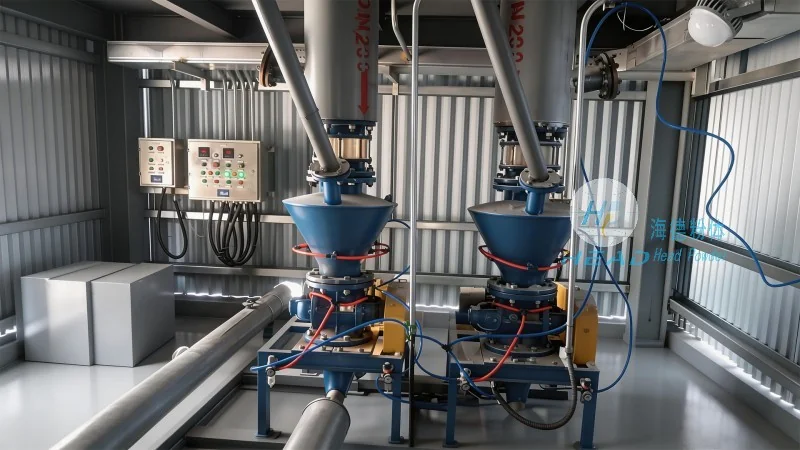
Introduction to Soybean Pneumatic Conveying Lines
Soybean pneumatic conveying lines are sophisticated systems engineered to transport soybeans and other bulk agricultural products through an enclosed pipeline using air pressure. These systems are widely used in the food processing, agricultural, and logistics sectors due to their ability to handle large volumes of material with minimal human intervention and reduced product contamination. The design of such lines typically incorporates high-efficiency components, including air blowers, cyclone separators, and flexible hoses, ensuring reliable and consistent operation.
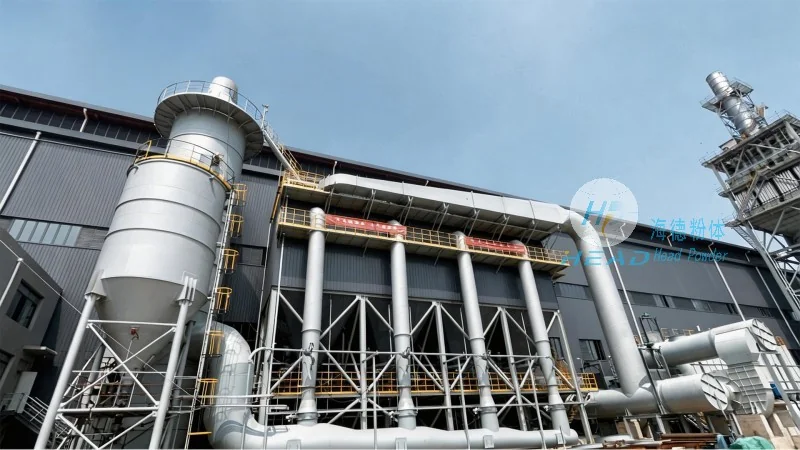
Operation Process of Soybean Pneumatic Conveying Lines
The operation of a soybean pneumatic conveying line involves several key steps that ensure the smooth and efficient movement of material from the source to the destination. First, the soybeans are loaded into the initial hopper or storage bin, where they are fed into the system via a feeder mechanism. The feeder then regulates the flow of soybeans into the pipeline, controlling the quantity and speed of material discharge. Simultaneously, an air blower generates high-pressure air, which is introduced into the pipeline at the inlet point. The air and soybeans are mixed within the pipeline, creating a dense slurry that propels the material forward through the system. As the mixture travels, it passes through various sections of the pipeline, including bends, vertical risers, and horizontal runs, with the air pressure maintaining the flow. At the receiving end, a cyclone separator or a dust collector separates the soybeans from the air, allowing the product to be discharged into a collection bin or storage tank. The separated air is then filtered and either recirculated back into the system or released to the atmosphere, depending on the system design. This continuous cycle ensures that the conveying process operates efficiently, with minimal downtime and consistent material handling performance.
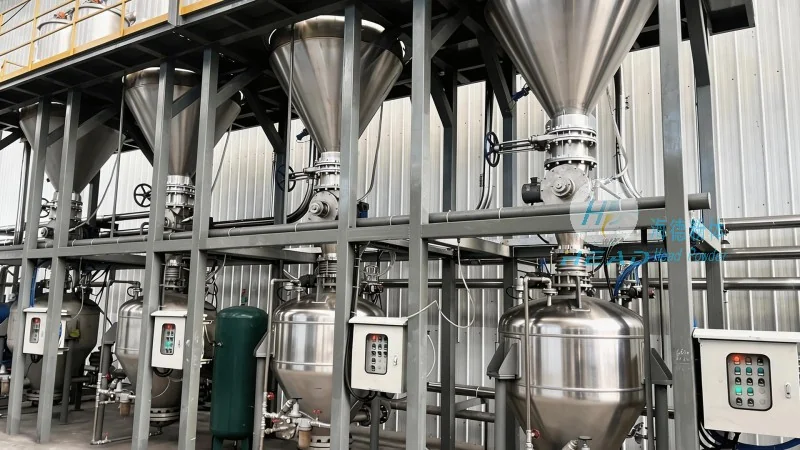
Working Principle of Soybean Pneumatic Conveying Lines
The working principle of soybean pneumatic conveying lines is based on the fundamental concept of fluidization and pneumatic transport. The system utilizes compressed air to create a moving medium that carries the soybeans through the pipeline. The air pressure generated by the blower creates a pressure differential between the inlet and outlet of the pipeline, which drives the material forward. The key components of the system, such as the air blower, feeder, and cyclone separator, work in concert to achieve this transport. The air blower provides the necessary energy to move the material, while the feeder ensures a consistent flow rate. The cyclone separator, positioned at the end of the pipeline, uses centrifugal force to separate the soybeans from the air, preventing product loss and maintaining air quality. The system's design, including the diameter and length of the pipeline, the type of air blower, and the feeder capacity, is carefully optimized to match the specific requirements of the soybean handling application, ensuring maximum efficiency and minimal energy consumption.