

Principles and Working Scene Characteristics of Aluminum Nitride Powder Pneumatic Conveying
Aluminum nitride (AlN) is a high-performance ceramic material widely utilized in semiconductor, electronics, and optical industries due to its exceptional thermal conductivity, electrical insulation properties, and chemical stability. The efficient handling of AlN powder is critical for preserving product quality and optimizing operational efficiency in manufacturing processes. Pneumatic conveying, as a core technology for powder transport, provides a solution that aligns with the unique characteristics of AlN powder. This article explores the fundamental principles of AlN powder pneumatic conveying and highlights the distinctive features of its application scenarios.
Understanding Pneumatic Conveying Systems for Aluminum Nitride Powder
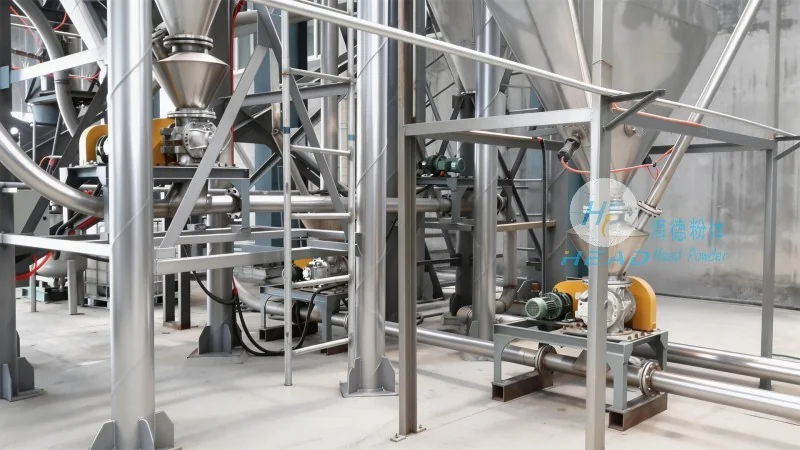
Pneumatic conveying systems employ air or other gases to transport particulate materials like AlN powder through a pipeline network. The core mechanism involves generating a pressure differential that propels the powder particles along the system. There are two primary types of pneumatic conveying: dilute-phase and dense-phase. Dilute-phase systems operate at higher velocities, typically with particle velocities exceeding the air velocity, ensuring efficient transport with minimal pressure drop. Dense-phase systems, conversely, operate at lower velocities, often using a venturi or pressure pulse to move the powder in a more controlled manner, reducing particle degradation and system wear. For AlN powder, which is often fine and abrasive, the choice of system type depends on factors such as the distance to be covered and the desired material handling speed.
Key Principles of Aluminum Nitride Powder Pneumatic Conveying
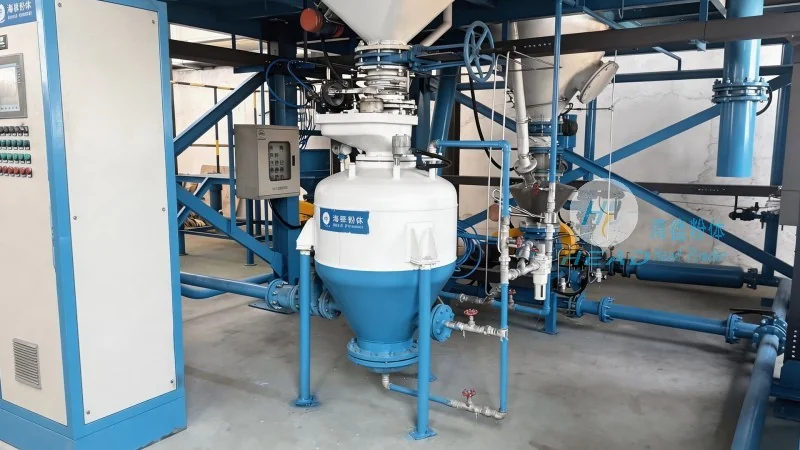
The effectiveness of AlN powder pneumatic conveying is governed by several key principles that ensure optimal performance. First, the particle size and shape of AlN powder significantly impact conveying efficiency. Fine particles, such as those with a diameter below 10 microns, tend to create higher drag forces and may require higher air velocities to maintain suspension. Conversely, larger particles can be conveyed more easily but may lead to increased system wear due to their abrasive nature. Second, the air velocity and pressure differential are critical parameters. Maintaining an appropriate air velocity ensures that the powder remains suspended and prevents clogging or deposition in the pipeline. The pressure drop across the system must be managed to avoid excessive energy consumption while ensuring sufficient force to move the powder. Third, the system design, including pipeline diameter, bends, and fittings, plays a vital role. Properly sized pipelines minimize pressure losses and reduce the risk of particle separation or agglomeration. Additionally, the use of smooth, corrosion-resistant materials, such as stainless steel or PTFE-lined components, is essential to withstand the abrasive properties of AlN powder and prevent material degradation over time.
Working Scene Characteristics of Aluminum Nitride Powder Pneumatic Conveying
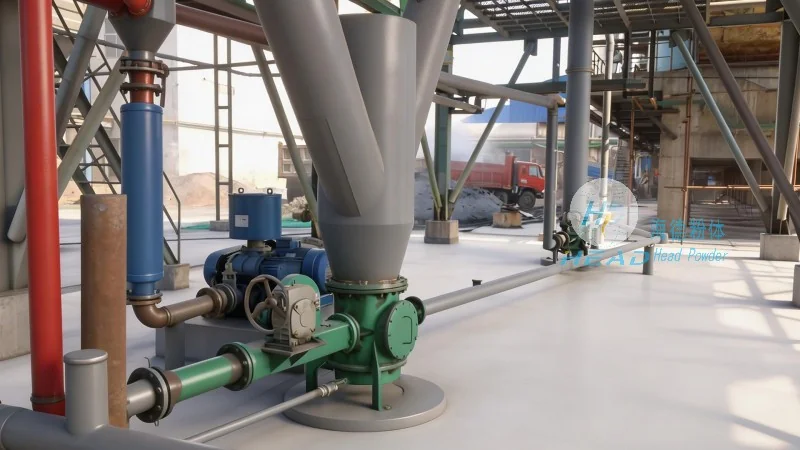
The application scenarios for AlN powder pneumatic conveying vary widely across different industries, each presenting unique challenges and requirements. In semiconductor manufacturing, for example, the need for ultra-clean environments and precise material handling is paramount. Pneumatic conveying systems are often integrated with dust collection and filtration systems to maintain particle cleanliness and prevent contamination. The systems may operate in a closed-loop configuration, ensuring that the AlN powder is handled without exposure to external contaminants. In the electronics industry, where AlN is used as a substrate or heat spreader, the conveying process must be gentle to avoid particle breakage or surface damage. This often requires the use of low-velocity, dense-phase conveying systems to minimize particle impact and preserve the material's integrity. Another key application is in the production of AlN-based ceramics, where the powder is transported from storage silos to mixing or sintering equipment. Here, the system must be capable of handling large volumes of powder over longer distances, often incorporating multiple transfer points and surge tanks to regulate flow and prevent system overload. The working scene characteristics also include the need for scalability and adaptability. As manufacturing processes evolve, the pneumatic conveying system must be able to accommodate changes in powder characteristics, such as varying particle sizes or moisture content, without significant modifications. This adaptability is crucial for maintaining operational efficiency and product quality in dynamic industrial environments.
Conclusion and Practical Considerations
AlN powder pneumatic conveying is a sophisticated technology that combines principles of fluid dynamics, material science, and engineering to achieve efficient and reliable powder transport. The success of such systems depends on a thorough understanding of the material's properties, the selection of appropriate system components, and the optimization of operational parameters. By adhering to the key principles outlined above and considering the specific characteristics of the working scene, manufacturers can ensure that AlN powder is handled safely, efficiently, and with minimal degradation. As the demand for high-performance AlN materials continues to grow, the importance of robust pneumatic conveying systems will only increase, making them an essential component of modern manufacturing processes. The expertise of companies like Shandong HeadPowder Engineering Co., Ltd., with their focus on tailored solutions for powder handling, plays a critical role in meeting these evolving industry needs.