

What is the Pneumatic Conveying of Inorganic Salt Crystal Materials? Understanding the Design Princi
When it comes to the efficient handling and transportation of inorganic salt crystal materials, pneumatic conveying systems have emerged as a reliable and effective solution. This technology involves the use of air or gas to transport solid materials like inorganic salts through a pipeline network. The process is crucial in various industrial applications, from chemical manufacturing to food processing, where the need for precise and safe material movement is paramount.
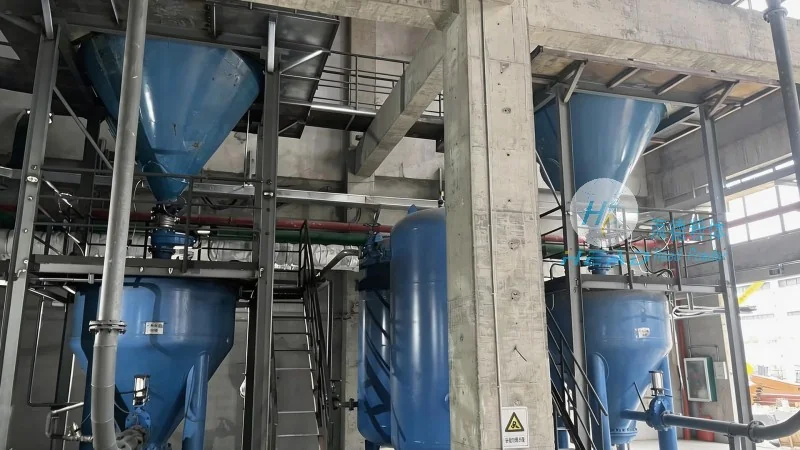
Introduction to Inorganic Salt Crystal Material Pneumatic Conveying
Pneumatic conveying of inorganic salt crystal materials refers to the method of transporting these materials using a pressurized or vacuum system. The core principle is to use air as the medium to move the solid particles through a pipeline. This approach offers several advantages over traditional methods like belt conveyors or bucket elevators, including reduced risk of contamination, lower maintenance costs, and the ability to handle materials in a closed system, which is essential for maintaining product purity and safety.
Key Components of Pneumatic Conveying Systems
At the heart of any pneumatic conveying system for inorganic salt crystals are several critical components that work in tandem to ensure smooth operation. These include the material feed system, which introduces the salt crystals into the pipeline; the conveying line itself, which can be either positive pressure or negative pressure; and the air or gas source, typically a blower or compressor. Additionally, the system may incorporate components such as cyclones for separation, filters to remove fine particles, and control valves to regulate the flow rate and pressure.
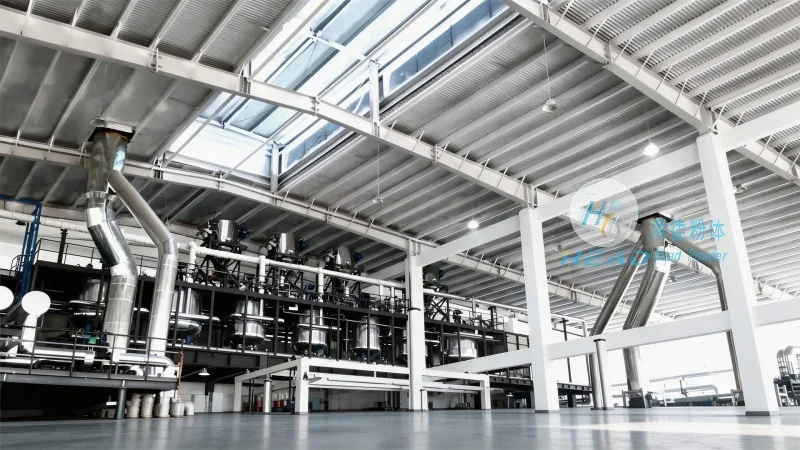
Design Principles for Inorganic Salt Crystal Material Pneumatic Conveying
The design of a pneumatic conveying system for inorganic salt crystals is a complex process that requires careful consideration of several factors. One of the primary design principles is the selection of the appropriate conveying velocity, which must be sufficient to prevent material settling or clogging but not so high as to cause excessive wear on the system components. The system's pressure drop is another critical factor, as it directly impacts energy consumption and the overall efficiency of the operation. Engineers must also consider the particle size distribution and density of the salt crystals, as these properties influence the required air flow rate and the type of conveying system (e.g., dilute phase or dense phase).
Advantages of Pneumatic Conveying for Inorganic Salt Crystals
Implementing a pneumatic conveying system for inorganic salt crystals offers numerous benefits that make it a preferred choice in many industries. One of the most significant advantages is the ability to maintain a closed system, which minimizes exposure to environmental contaminants and prevents product degradation. This is particularly important for sensitive salt products, such as those used in pharmaceutical or food applications. Additionally, pneumatic conveying systems are highly flexible, allowing for easy integration into existing production lines and the ability to transport materials over long distances without the need for multiple transfer points. The system also reduces labor costs by automating the material handling process and minimizing the risk of human error.
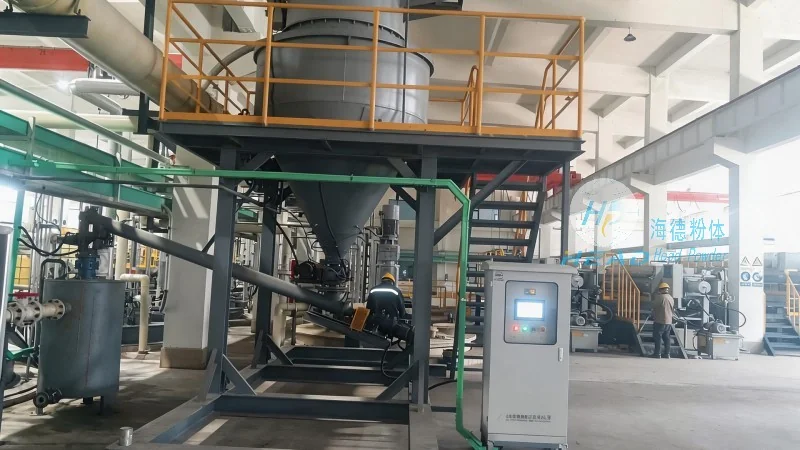
Applications and Industries
The use of pneumatic conveying for inorganic salt crystals is widespread across various sectors. In the chemical industry, these systems are used to transport raw materials like sodium chloride or potassium chloride to processing units. In the food industry, they are employed to handle salt used in food production, ensuring that the product remains free from contaminants and maintains its quality. Other applications include the handling of industrial salts used in water treatment or as de-icing agents, where the need for efficient and safe material movement is critical.
Conclusion
Pneumatic conveying of inorganic salt crystal materials is a sophisticated and efficient method of material handling that leverages the principles of fluid dynamics and engineering. By understanding the design principles and key components of such systems, industries can achieve optimal performance, cost savings, and product quality. Companies like Shandong HeadPowder Engineering Co., Ltd., based in China, specialize in designing and implementing these systems, providing tailored solutions that meet the specific needs of their clients in various sectors.