

Principle of Titanium Dioxide Pneumatic Conveying Equipment
For industrial applications involving the handling of fine powders like titanium dioxide, efficient and reliable material transport is crucial. Pneumatic conveying systems have emerged as a preferred solution due to their ability to transport powders over long distances with minimal product degradation. This article delves into the fundamental principles behind titanium dioxide pneumatic conveying equipment, highlighting the technical aspects, operational benefits, and practical considerations for effective material handling.
Introduction to Titanium Dioxide Pneumatic Conveying Equipment
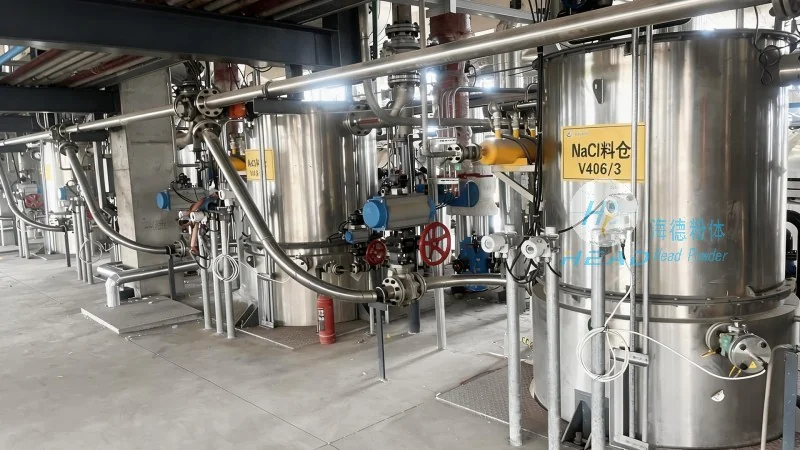
Titanium dioxide (TiO₂) is a widely used white pigment and photocatalyst in various industries, including paints, coatings, plastics, and cosmetics. Its fine particle size and high bulk density make traditional bulk handling methods, such as belt conveyors or screw conveyors, prone to issues like caking, segregation, and dust generation. Pneumatic conveying equipment offers a solution by using air or other gases to transport TiO₂ particles through a pipeline system. This method not only enhances safety by containing dust but also ensures consistent product quality and reduces maintenance costs compared to mechanical conveying systems.
Company Overview
HeadPowder, a leading provider of engineering solutions for powder handling, specializes in designing and manufacturing pneumatic conveying systems tailored to the needs of the titanium dioxide industry. With a focus on innovation and customer-centric design, the company has established itself as a trusted partner for businesses seeking efficient and reliable material transport solutions. HeadPowder's expertise lies in understanding the unique challenges of handling fine powders and developing customized systems that meet specific operational requirements.
Technical Principles of Pneumatic Conveying Systems
The core principle of pneumatic conveying is the use of differential pressure to move particles through a pipeline. There are two main types of pneumatic conveying systems: dilute-phase and dense-phase. Dilute-phase systems operate at low particle concentrations, typically 1-5% by volume, and are suitable for long-distance transport where high velocity air is used to suspend particles. Dense-phase systems, on the other hand, operate at higher particle concentrations (10-30% by volume) and use lower air velocities to push particles through the pipeline, reducing the risk of particle degradation and pipeline wear.
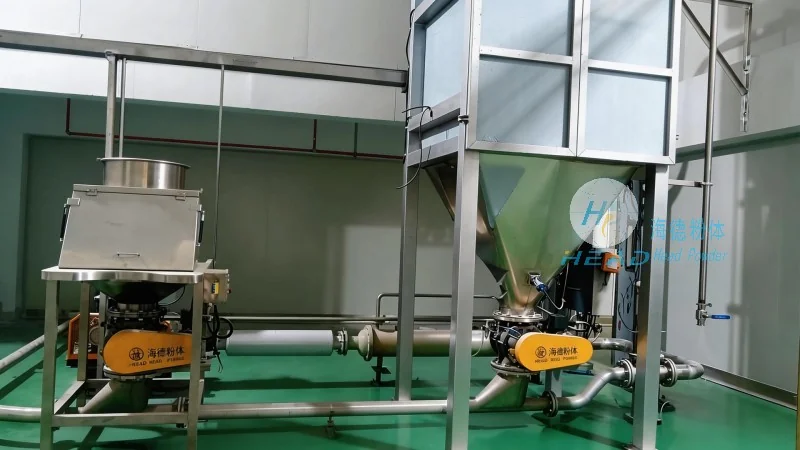
In the context of titanium dioxide, dilute-phase conveying is often preferred for its ability to handle high volumes of fine particles over extended distances. The system typically consists of a feed hopper, a rotary valve for controlled material discharge, a conveying line, and a receiver for the material. The air is introduced at the inlet of the conveying line, creating a flow that lifts and transports the TiO₂ particles. The velocity of the air is critical; it must be sufficient to keep the particles suspended but not so high as to cause excessive wear on the pipeline or components.
Key Components and Their Functions
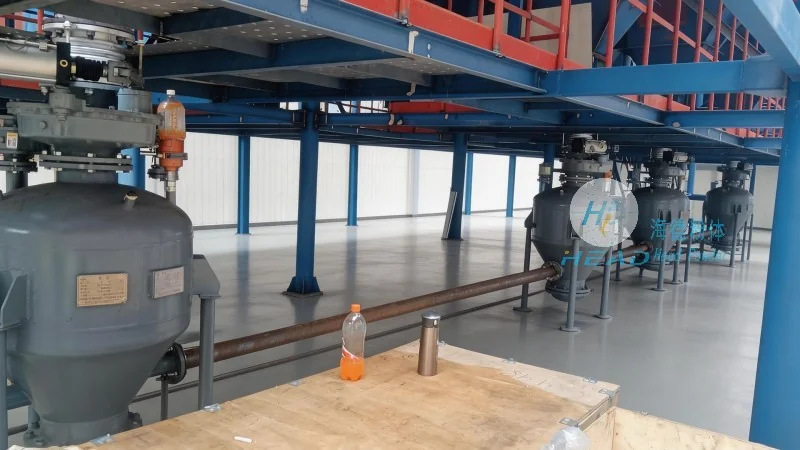
Several key components work together to ensure the efficient operation of a pneumatic conveying system for titanium dioxide. The feed hopper is designed to store and feed the powder into the system at a controlled rate. A rotary valve, often a star valve or slide valve, regulates the flow of TiO₂ from the hopper to the conveying line, preventing backflow and ensuring consistent material delivery. The conveying line itself is typically made of stainless steel or other corrosion-resistant materials to withstand the abrasive nature of fine powders. Air is supplied by a blower or compressor, which generates the necessary pressure and velocity to move the particles. The receiver, or discharge hopper, collects the transported TiO₂ and can be equipped with a dust collection system to maintain air quality and prevent product loss.
Advantages of Using Pneumatic Conveying for Titanium Dioxide
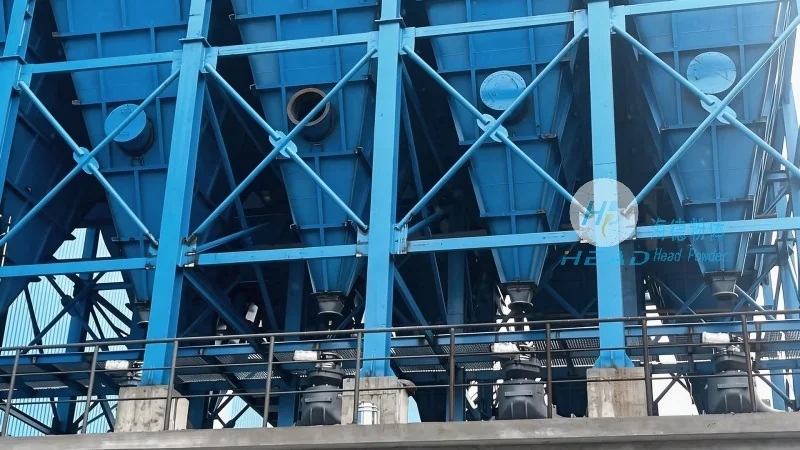
Adopting pneumatic conveying for titanium dioxide offers several advantages over traditional mechanical conveying methods. First, it provides a dust-free environment, which enhances workplace safety and reduces the risk of product contamination. Second, the system minimizes product degradation by avoiding mechanical friction and impact, which is critical for maintaining the optical and chemical properties of TiO₂. Third, pneumatic conveying allows for flexible and modular system designs, enabling easy expansion or integration with existing production lines. Additionally, the enclosed pipeline system reduces material loss and improves overall material recovery rates, leading to cost savings for the end-user.
Application Scenarios and Operational Considerations
Titanium dioxide pneumatic conveying systems are widely used in various industrial settings, including manufacturing plants, storage facilities, and processing lines. They are particularly suitable for applications where the material needs to be transported from a storage silo to a processing unit, or between different production stages. Operational considerations include the selection of the appropriate conveying type (dilute or dense-phase) based on the distance, particle size, and required flow rate. Proper maintenance of the system, such as regular cleaning of the pipeline and replacement of worn components, is essential to ensure long-term reliability and efficiency. Additionally, monitoring air pressure, flow rates, and particle concentration helps in optimizing the system performance and preventing operational issues.