

Types, Characteristics, and Applications of Guar Gum Powder Pneumatic Conveying
Guar gum powder, a critical industrial ingredient, is widely utilized across various sectors due to its unique rheological properties and functional benefits. The efficient handling and transportation of guar gum powder are essential for industrial processes, and pneumatic conveying systems have become a preferred method for this purpose. This article explores the types, characteristics, and application scope of guar gum powder pneumatic conveying, offering insights into the technology's advantages and practical implementations.
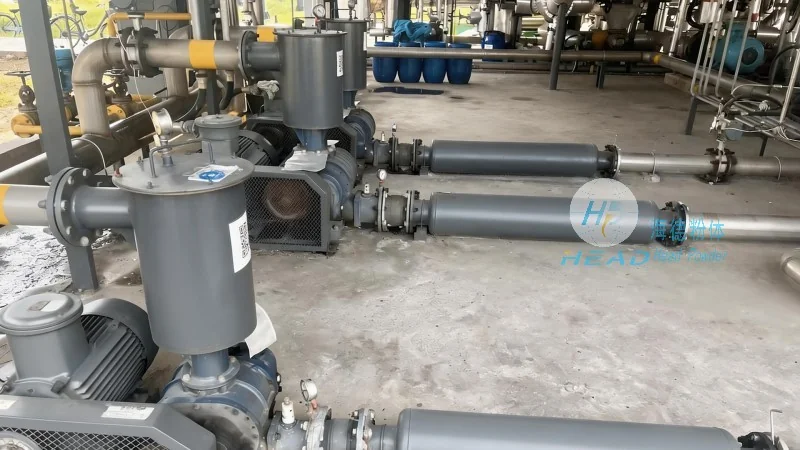
Overview of Guar Gum Powder Pneumatic Conveying Systems
Pneumatic conveying systems employ air or gas to transport bulk materials like guar gum powder through a pipeline network. These systems provide advantages over traditional mechanical conveying methods, including reduced equipment wear, lower maintenance requirements, and the ability to handle fine powders without segregation or degradation. The core components of a pneumatic conveying system typically include a material hopper, a conveyor line, a control valve, and a dust collection unit. The system operates by creating a pressure differential between the inlet and outlet, allowing the powder to be drawn or pushed through the pipeline using compressed air.
Types of Pneumatic Conveying for Guar Gum Powder
There are primarily two types of pneumatic conveying systems used for guar gum powder: suction (or aspirating) systems and pressure (or blow) systems. Each type has distinct characteristics and is suitable for different operational conditions and material handling requirements.
Suction Pneumatic Conveying Systems
Suction systems operate by creating a negative pressure at the material inlet, drawing the guar gum powder from the source into the pipeline. This type is ideal for applications where the material is stored in a hopper or silo and needs to be transported to a processing unit. The key advantages of suction systems include lower energy consumption compared to pressure systems, as they rely on the natural pressure drop in the pipeline. However, they have limitations in terms of vertical and horizontal distance coverage, typically up to 50 meters vertically and 100 meters horizontally, depending on system design and material properties.
Pressure Pneumatic Conveying Systems
Pressure systems use compressed air to push the guar gum powder through the pipeline. These systems are more versatile and can handle longer distances and higher material flow rates. They are suitable for transporting guar gum powder from a processing unit back to a storage hopper or for long-distance transportation. The primary advantage of pressure systems is their ability to cover greater distances and handle larger quantities of material. However, they generally consume more energy than suction systems due to the need for continuous compressed air supply.
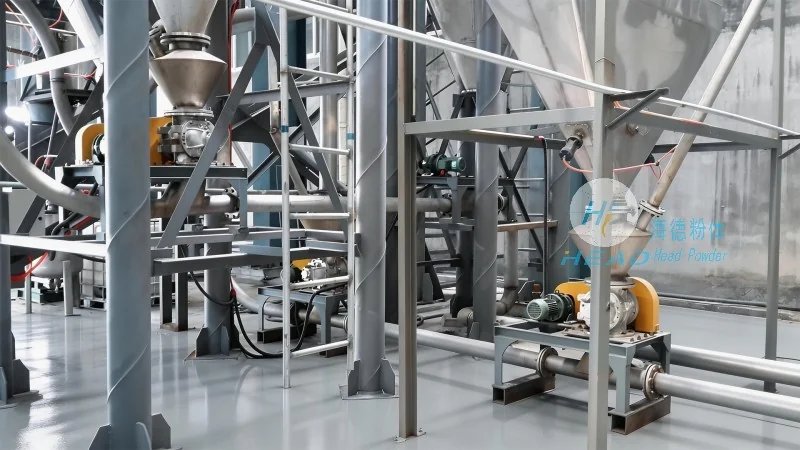
Key Characteristics of Guar Gum Powder Pneumatic Conveying
The effectiveness of pneumatic conveying for guar gum powder is influenced by several key characteristics of the system and the material itself. These include the particle size distribution, moisture content, and bulk density of the guar gum powder, as well as the design parameters of the conveying system such as pipeline diameter, air velocity, and pressure differentials.
Material Properties and System Design
Guar gum powder is a fine, hygroscopic material with a typical particle size ranging from 10 to 200 microns. Its low bulk density (approximately 0.5 to 0.7 g/cm³) and high flowability make it well-suited for pneumatic conveying. System design must consider these properties to ensure efficient transport. For example, the pipeline diameter is often selected based on the material's flow rate and air velocity to prevent excessive pressure drop and material degradation. The air velocity in the pipeline is typically maintained between 20 to 30 m/s to ensure the powder remains suspended and transported without clogging or deposition.
Advantages and Limitations
Pneumatic conveying systems offer several advantages for guar gum powder handling, including the ability to transport materials in a closed system, reducing dust emissions and contamination. They also provide flexibility in terms of layout and can be integrated with other processing equipment. However, limitations exist, such as the need for proper maintenance to prevent air leaks and material blockages, and the potential for material degradation if the system is not designed or operated correctly. Additionally, the cost of compressed air and the energy consumption of the system can be significant factors, especially for large-scale operations.
Application Scope of Guar Gum Powder Pneumatic Conveying
The application scope of pneumatic conveying for guar gum powder is broad and encompasses various industries where the material is used as a thickening, stabilizing, or emulsifying agent. Key applications include the food industry, pharmaceutical industry, cosmetics industry, and oil and gas industry.
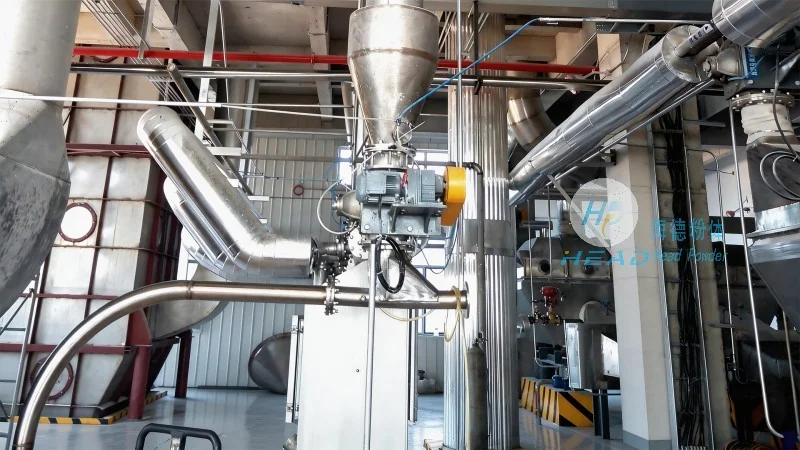
Food Industry Applications
In the food industry, guar gum is widely used to improve texture and stability in beverages, dairy products, and bakery items. Pneumatic conveying systems are employed to transport guar gum from storage silos to production lines, ensuring a consistent supply of the material. The systems help maintain the powder's quality by preventing exposure to moisture and air, which could affect its functional properties. For example, in fruit juice and dairy beverage production, guar gum is added to enhance viscosity and prevent sedimentation, with pneumatic conveying ensuring uniform and efficient addition.
Pharmaceutical and Cosmetic Industry Applications
In the pharmaceutical and cosmetic sectors, guar gum is used as a binder, emulsifier, and thickener in formulations. Pneumatic conveying systems are used to transport guar gum powder from raw material storage to manufacturing facilities, where it is incorporated into tablets, creams, and lotions. The closed system of pneumatic conveying helps maintain material purity and prevents contamination, crucial in these industries. The ability to handle fine powders without segregation ensures consistent quality and performance in final products.
Oil and Gas Industry Applications
In the oil and gas industry, guar gum is a key additive in drilling fluids to improve rheological properties. Pneumatic conveying systems are used to transport guar gum powder from storage to the drilling site or processing facilities. The systems must be designed to handle high temperatures and pressures associated with drilling operations. Efficient transport of guar gum ensures drilling fluids maintain desired viscosity and stability, critical for preventing wellbore instability and improving drilling efficiency.
About Shandong HeadPowder Engineering Co., Ltd.
Shandong HeadPowder Engineering Co., Ltd., operating under the brand name HeadPowder, is a leading manufacturer and supplier of industrial powder handling solutions, including pneumatic conveying systems for guar gum powder and other fine materials. With a focus on innovation and quality, the company provides customized solutions tailored to client needs. HeadPowder's expertise in material handling technology, combined with its commitment to customer satisfaction, has established it as a trusted partner in the industry. The company's facilities are located in Shandong, China, where it leverages advanced manufacturing processes and rigorous quality control measures to deliver reliable and efficient pneumatic conveying systems.