

Types and Practical Applications of Pneumatic Conveying Systems for Cement Aggregate Transport
In the cement production and construction industry, an efficient and reliable aggregate transport system is a key factor in ensuring smooth production processes. Pneumatic conveying technology, as an advanced material transport method, shows significant advantages in cement aggregate transport. This article will delve into the different types of pneumatic conveying systems and their practical applications in actual engineering, providing a reference for industry users.
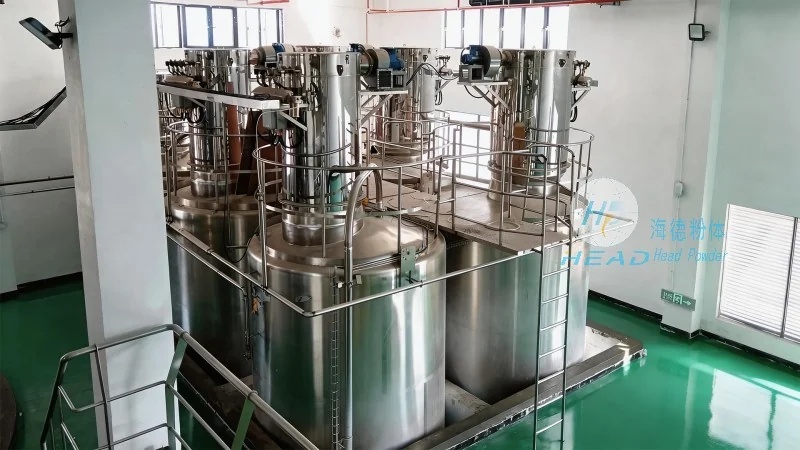
Core Types of Pneumatic Conveying Systems
Pneumatic conveying systems are mainly divided into positive pressure pneumatic conveying, negative pressure pneumatic conveying, and mixed-type pneumatic conveying. Positive pressure pneumatic conveying systems maintain a pressure higher than the ambient pressure inside the conveying pipeline, transporting materials from the feed point to the receiving point. This system is typically suitable for short-distance, high-volume transport scenarios, effectively avoiding material leakage and pollution during the transport process. Negative pressure pneumatic conveying systems form a negative pressure environment inside the pipeline, sucking materials from the receiving point and transporting them to the feed point. They are often used in cases where material cleanliness or dust leakage prevention is required. Mixed-type pneumatic conveying systems combine the characteristics of positive and negative pressure by switching pressure at specific positions to achieve more flexible material transport paths. Each type of system has its own advantages and disadvantages, and the selection of the appropriate system needs to be comprehensively considered based on factors such as specific production requirements, transport distance, material properties, and site environment.
Practical Applications of Positive Pressure Pneumatic Conveying Systems
Positive pressure pneumatic conveying systems are widely applied in cement aggregate transport, especially for short-distance transport tasks requiring high efficiency. For example, in cement plants, from the aggregate stockyard to the crushing and screening equipment, the positive pressure system can quickly transport large-grained aggregates to processing equipment, ensuring the continuous operation of production lines. Additionally, in concrete mixing stations, positive pressure pneumatic conveying systems are often used to transport aggregates from storage silos to mixers, reducing manual handling labor and improving production efficiency. The closed transport characteristics of the positive pressure system also effectively reduce dust pollution to the environment, meeting the environmental requirements of modern industry. In practical applications, positive pressure systems are usually equipped with frequency control devices, which can adjust the air volume in real time according to the transport volume to achieve energy-saving operation. At the same time, components such as filters and separators in the system can effectively separate the conveying medium from the material, ensuring the stability and cleanliness of the transport.
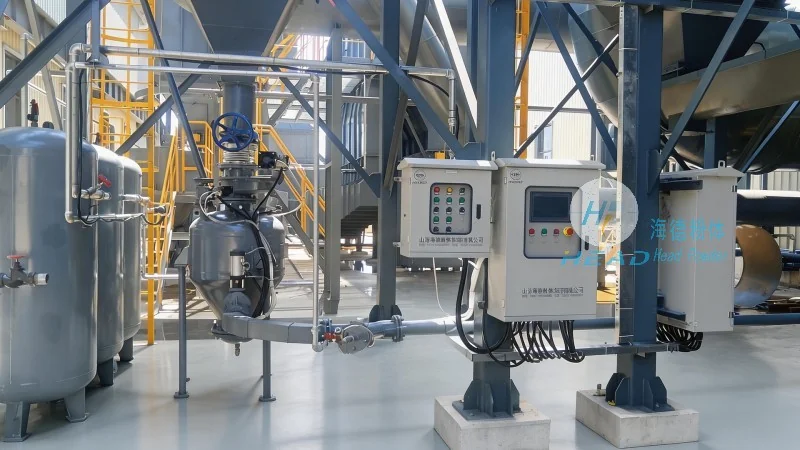
Practical Applications of Negative Pressure Pneumatic Conveying Systems
Negative pressure pneumatic conveying systems excel in scenarios where material cleanliness or dust leakage prevention is required, often used for transporting cement aggregates from processing equipment back to storage silos or to clean areas. For example, after aggregate crushing and screening, the negative pressure system can suck fine particles or dust from the equipment and transport them to the storage silo, avoiding material accumulation inside the equipment. This system is particularly suitable for industrial environments with strict dust control requirements, such as cement plants or concrete mixing stations in urban areas, effectively reducing dust concentration in the air and improving the working environment. The closed suction characteristics of the negative pressure system also prevent materials from contacting the external air, reducing the risk of material moisture absorption or contamination. In practical engineering, negative pressure systems typically use cyclone separators or bag filters for separation of material and gas, ensuring the purity of the transported material. In addition, the negative pressure system has a relatively short transport distance but a large transport capacity, suitable for scenarios requiring large amounts of aggregate transport, such as large-scale concrete projects.
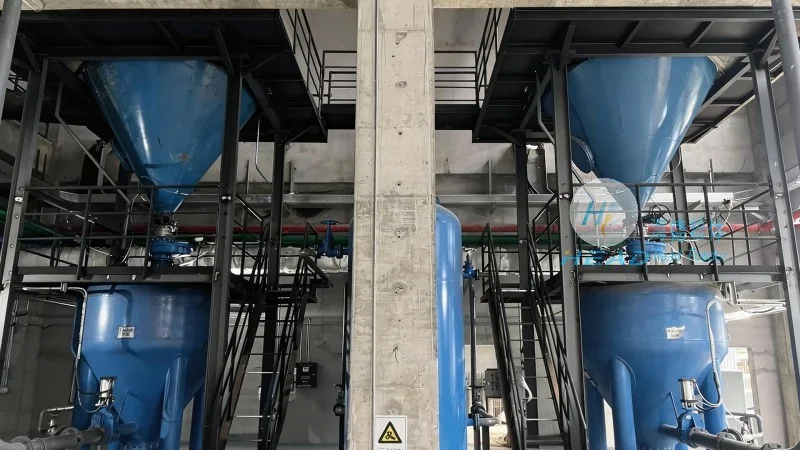
Practical Applications of Mixed-Type Pneumatic Conveying Systems
Mixed-type pneumatic conveying systems achieve more flexible material transport paths by switching between positive and negative pressure states during the transport process, suitable for complex working conditions in cement aggregate transport. For example, in long-distance, multi-station aggregate transport networks, mixed-type systems can use positive pressure transport at the start, negative pressure suction at intermediate stations, and positive pressure transport at the end, optimizing the entire transport process. This system is particularly suitable for large-scale cement production projects, such as cross-regional aggregate supply or complex layout factories. The flexible configuration of mixed-type systems can also adapt to the transport needs of different materials, such as transporting aggregates of different particle sizes or mixed aggregates. In practical applications, mixed-type systems are usually equipped with intelligent control systems, which can automatically adjust the transport mode according to material flow and pressure changes to ensure high system efficiency. In addition, multi-stage separation devices in the system can improve material recovery rates and reduce material loss, lowering production costs.
Advantages and Challenges of Pneumatic Conveying Systems
Compared with traditional mechanical transport methods, pneumatic conveying systems have many advantages in cement aggregate transport. First, the system is closed, effectively avoiding dust pollution and meeting environmental requirements. Second, the transport efficiency is high, allowing materials to be quickly transported from the feed point to the receiving point, improving the overall efficiency of production lines. In addition, the system structure is simple and maintenance costs are low, reducing the impact of equipment failures on production. However, pneumatic conveying systems also have some challenges, such as the high adaptability requirements to material characteristics, as some sticky or easily caking aggregates may affect the transport effect. At the same time, the system has relatively high energy consumption, and it is necessary to reasonably design air volume and pressure to achieve energy-saving operation. In practical applications, the material's physical properties (such as particle size, density, moisture) need to be considered when selecting the appropriate transport system, and system parameters need to be optimized to fully exert the advantages of pneumatic transport and overcome its limitations.