

Design of Diatomite Powder Pneumatic Conveying Equipment
HeadPowder, a leading engineering firm based in Shandong, China, specializes in the design and implementation of advanced pneumatic conveying systems for diatomite powder. This article provides a detailed overview of the engineering principles, key components, and practical applications of such systems, highlighting the company's expertise in optimizing material handling processes for industrial clients.
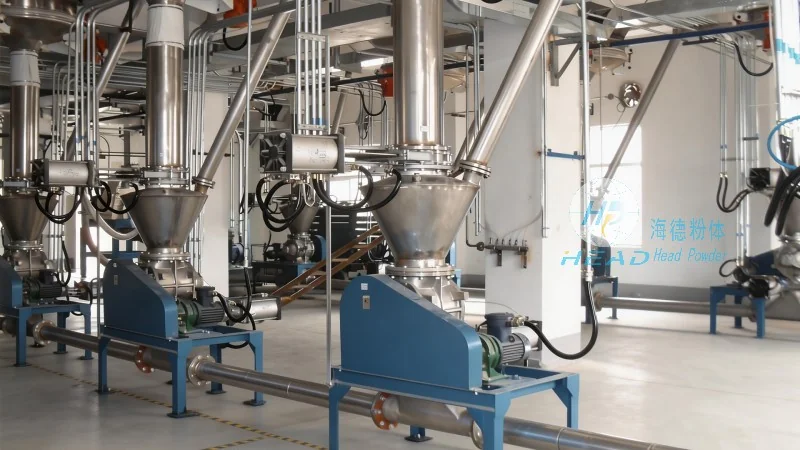
Introduction to Pneumatic Conveying Systems for Diatomite Powder
Pneumatic conveying systems are widely used in the processing and transportation of fine powders like diatomite, which is known for its lightweight, porous structure and high surface area. These systems utilize air or gas to transport the material from one location to another, offering advantages such as dust control, reduced maintenance compared to mechanical conveyors, and the ability to handle materials in enclosed environments. The design of an effective diatomite powder pneumatic conveying system requires careful consideration of material properties, flow rates, and system configuration to ensure efficiency and reliability.
Key Design Considerations for Diatomite Powder Conveying
When designing a pneumatic conveying system for diatomite powder, several critical factors must be addressed to achieve optimal performance. First, the material's particle size distribution and density are crucial, as they directly impact the air velocity required for stable transport. Diatomite particles typically range from 1 to 100 microns, with a bulk density of around 0.2 to 0.5 g/cm³, which necessitates higher air velocities compared to heavier powders. Second, the system's pressure and flow rate must be carefully calibrated to prevent particle segregation or blockages, especially in horizontal or inclined sections. HeadPowder engineers employ computational fluid dynamics (CFD) simulations and empirical data to model flow behavior and optimize system parameters.
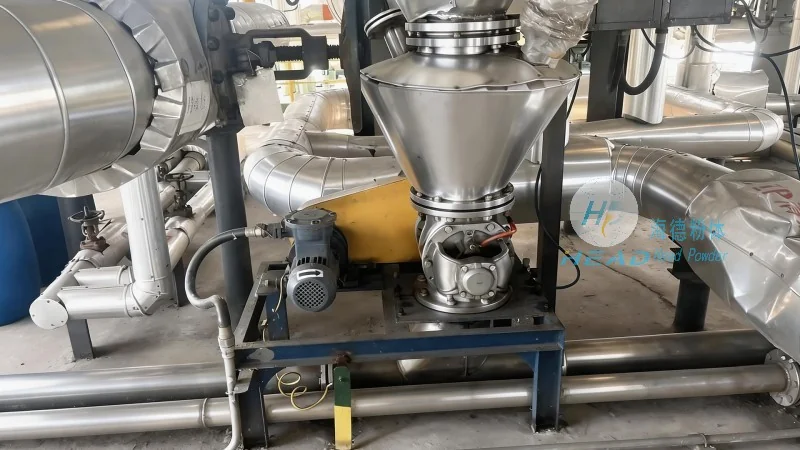
Core Components of the Pneumatic Conveying System
The diatomite powder pneumatic conveying system designed by HeadPowder typically consists of several key components, each playing a vital role in the overall operation. The system begins with a material feed hopper, which stores and feeds the diatomite powder into the conveying line. The hopper is equipped with a rotary valve or feeder to control the flow rate, ensuring a consistent supply of material. Next, the material enters the conveying line, which may be either positive pressure or negative pressure (vacuum) depending on the application. Positive pressure systems use blowers to push air and material through the line, while negative pressure systems use vacuum pumps to pull material. For diatomite powder, positive pressure systems are often preferred due to their ability to handle larger particle sizes and prevent dust emissions.
Material Handling and Process Integration
The pneumatic conveying system is integrated into the overall diatomite processing workflow, connecting the raw material storage, processing units, and final product packaging. The system's design ensures seamless material transfer between stages, minimizing downtime and improving operational efficiency. For example, the conveying line may connect a grinding mill to a filtration unit, or from a storage silo to a packaging machine. HeadPowder's engineers work closely with clients to understand their specific process requirements, ensuring that the conveying system aligns with existing infrastructure and production schedules.
Advantages of the Diatomite Powder Pneumatic Conveying System
Implementing a pneumatic conveying system for diatomite powder offers numerous benefits for industrial operations. Firstly, it significantly reduces dust exposure, enhancing workplace safety and compliance with environmental regulations. Unlike mechanical conveyors, which can generate high levels of dust, pneumatic systems operate in enclosed or sealed environments, containing the material throughout the conveying process. Secondly, the system minimizes material degradation, as the fine diatomite particles are less likely to be broken or agglomerated during transport. This is particularly important for diatomite, which is often used in applications where particle size and surface area are critical, such as filtration media or catalysts. Thirdly, the system provides flexibility in layout, allowing for horizontal, vertical, or inclined transport paths, which can optimize plant space utilization.
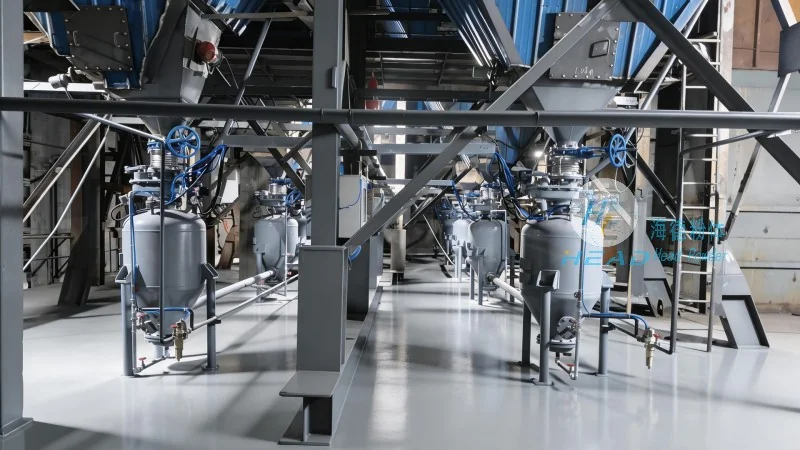
Case Study: Application in a Diatomite Processing Plant
HeadPowder recently completed a project for a diatomite processing plant in Shandong, China, where the company designed and installed a positive pressure pneumatic conveying system to transport diatomite powder from a storage silo to a filtration unit. The system was engineered to handle a flow rate of 10 tons per hour, with a particle size range of 5 to 50 microns. The design included a rotary valve feeder, a 100 mm diameter stainless steel conveying line, and a blower with a capacity of 15,000 m³/h. The system was successfully commissioned, achieving a conveying efficiency of over 95% and reducing dust emissions by 80% compared to the previous mechanical conveyor system. The client reported improved operational stability and reduced maintenance costs, validating the effectiveness of the pneumatic conveying solution.
Conclusion and Future Developments
HeadPowder Engineering Co., Ltd. continues to innovate in the design of diatomite powder pneumatic conveying systems, leveraging advanced engineering techniques and material science knowledge to meet the evolving needs of the industry. The company's commitment to precision, efficiency, and safety ensures that its systems deliver reliable performance and contribute to the sustainable processing of diatomite powder. As industrial demands for high-quality, low-dust material handling solutions grow, HeadPowder remains at the forefront of developing cutting-edge pneumatic conveying technologies that enhance productivity and environmental compliance.