
With over a decade of experience in the pneumatic conveying industry, our company specializes in a full range of pneumatic conveying system equipment.
您的当前位置:首页 >> News >> Technical FAQ

News

Rich project cases across industries, showing real implementation and proven technical strength.

Rice husk pneumatic conveying system equipment selection

2026-07-20

Rice husk, as a byproduct of rice milling, presents both a challenge and an opportunity for industries ranging from biomass energy to agricultural material processing. With global rice production consistently exceeding 500 million tons annually, the corresponding generation of rice husk has pushed industrial facilities to seek efficient, safe, and cost-effective material handling solutions. Pneumatic conveying has emerged as the preferred method for transporting rice husk due to its enclosed nature, flexibility in routing, and low maintenance requirements. However, the success of such a system hinges entirely on proper equipment selection. Choosing the wrong blower, pipeline diameter, or separation device can lead to frequent blockages, excessive energy consumption, and premature wear. This article provides a comprehensive framework for selecting rice husk pneumatic conveying system equipment, drawing on industry best practices, technical standards, and real-world operational data. By the end, you will understand how to match system components to material characteristics, throughput requirements, and site constraints, ensuring a reliable and cost-efficient installation.

The selection process for rice husk pneumatic conveying equipment demands a thorough understanding of the material's physical properties. Rice husk is notoriously difficult to handle: it has a bulk density ranging from 100 to 150 kg/m³, a high angle of repose typically between 35 and 45 degrees, and an irregular, fibrous shape that promotes interlocking. These characteristics mean that rice husk does not flow freely like granular materials. It is prone to bridging in hoppers, settling in horizontal pipelines, and generating static electricity during transport. Additionally, its abrasive silica content—often exceeding 18% by weight—accelerates wear in bends, elbows, and fan blades. Any equipment selection must account for these factors from the outset. Ignoring the material's abrasiveness, for instance, can reduce component lifespan by 60% or more, leading to unplanned downtime and increased operating costs. Therefore, the first step in any rice husk pneumatic conveying project is to conduct a detailed material analysis, including particle size distribution, moisture content, and angle of slump. This data directly influences every downstream decision, from conveying velocity to dust collection requirements.

Understanding Pneumatic Conveying System Types for Rice Husk

Pneumatic conveying systems generally fall into two categories: dilute phase and dense phase. For rice husk, dilute phase conveying is the most widely adopted approach, and for good reason. In dilute phase systems, the material is suspended in the air stream at relatively high velocities—typically between 18 and 25 m/s for rice husk. This ensures that the husk remains airborne and does not settle out in the pipeline. The lower capital cost and simpler design of dilute phase systems make them attractive for most rice husk applications, especially when conveying distances are under 200 meters. However, the high velocity does accelerate wear, so component material selection becomes critical. Dense phase conveying, by contrast, moves material at much lower velocities, typically 4 to 8 m/s, using compressed air to push slugs of material through the line. While this reduces wear and energy consumption, it requires higher air pressure, more robust pipe supports, and careful control of material feed rates. For rice husk, dense phase is generally reserved for specialized applications where degradation must be minimized or where very long distances—over 500 meters—are involved. Most industrial rice husk handling operations, such as those in biomass power plants or medium-sized rice mills, find dilute phase conveying to be the optimal balance of cost, reliability, and performance.

Rice husk pneumatic conveying system equipment selection

Core Parameters Driving Equipment Selection

Equipment selection for a rice husk pneumatic conveying system begins with five core parameters: conveying capacity, pipeline length and routing, available space for equipment layout, material properties, and system pressure requirements. Conveying capacity, typically expressed in tons per hour, determines the scale of the entire system. A small rice mill might require only 2 to 5 tons per hour, while a large biomass facility could need 15 tons per hour or more. The required capacity directly influences the choice of blower, rotary airlock, and pipeline diameter. Pipeline routing is equally important. A system with multiple bends, vertical lifts, or long horizontal runs will require higher air velocity and pressure to maintain stable material flow. Every 90-degree bend in a rice husk system can add the equivalent of 10 to 15 meters of straight pipe in terms of pressure drop. Space constraints affect the layout of the receiving hopper, the blower location, and the dust collection unit. Material properties, particularly bulk density and angle of repose, dictate the hopper design and the type of feeding device. Finally, system pressure—usually between 0.5 and 1.5 bar for dilute phase—determines the blower type and power requirement. All these parameters must be evaluated together; optimizing one in isolation often leads to suboptimal overall performance.

Rice husk pneumatic conveying system equipment selection

Blower Selection for Rice Husk Conveying

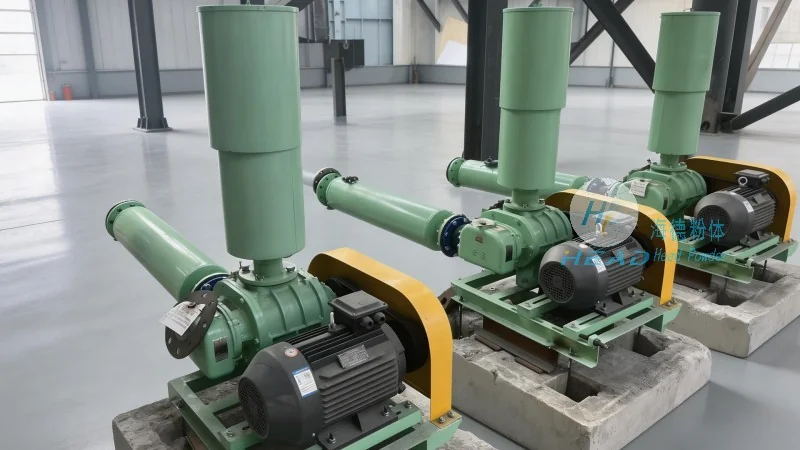
The blower is the heart of any pneumatic conveying system, and for rice husk, the choice typically narrows down to positive displacement blowers or centrifugal fans. Positive displacement blowers deliver a constant volume of air regardless of system pressure, making them ideal for applications where material feed rate varies or where pressure fluctuations are expected. They are particularly well-suited for dilute phase conveying of rice husk over medium to long distances. Centrifugal fans, on the other hand, are more efficient at lower pressures and are often used in short-distance conveying or as boosters within a larger system. For most rice husk applications, a positive displacement blower paired with a variable frequency drive offers the best combination of reliability, energy efficiency, and operational flexibility. The blower must be sized to deliver the required air volume at the system's design pressure, with a safety margin of 10% to 15% to account for filter loading and minor leakage. Headpowder has extensive experience in sizing blowers for rice husk systems, ensuring that the selected unit matches both the conveying capacity and the specific pressure drop profile of the pipeline network. A properly sized blower reduces energy consumption by as much as 25% compared to an oversized unit, while also minimizing noise and vibration levels.

Pipeline Design and Material Considerations

Pipeline design for rice husk conveying must address both flow dynamics and wear resistance. The inner diameter of the pipe is calculated based on the required air velocity and material loading ratio. For rice husk, a loading ratio between 5 and 15 kg of material per kg of air is typical for dilute phase systems. Higher loading ratios reduce air consumption but increase the risk of line blockage. The recommended conveying velocity at the pickup point is 18 to 20 m/s, gradually increasing along the line as air expands due to pressure drop. Pipe material selection is equally important. Standard carbon steel pipes suffer from rapid abrasive wear when conveying rice husk, particularly at bends and elbows. Wearing elbows with a radius of at least 10 times the pipe diameter, or using ceramic-lined bends, can extend component life by three to five times. For straight sections, schedule 40 or schedule 80 carbon steel pipes provide adequate service life if properly maintained. Headpowder recommends conducting a wear analysis for any rice husk conveying system handling more than 10,000 tons per year, as this data directly informs the selection of pipe thickness and bend geometry. Galvanized or stainless steel pipes offer superior corrosion resistance but come at a higher cost, so their use is generally limited to systems conveying rice husk for food-grade applications.

Feeding Devices and Air Intake Configuration

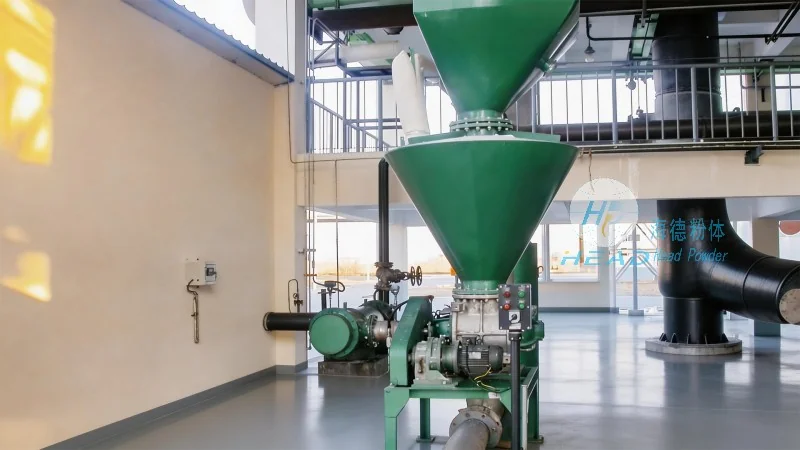
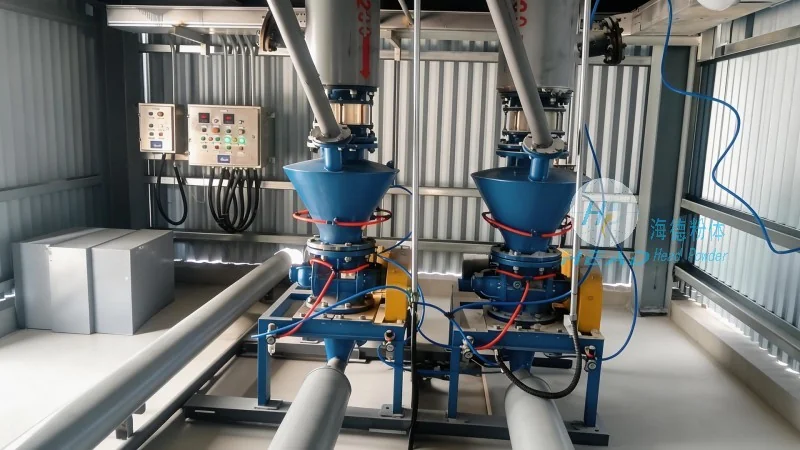
The feeding device is one of the most critical components in a rice husk pneumatic conveying system. Rotary airlocks are the standard choice, serving both to meter material into the conveying line and to maintain system pressure. For rice husk, a drop-through rotary airlock with a closed-end rotor and adjustable tips offers the best sealing performance. The rotor speed must be carefully matched to the conveying capacity; over-speeding leads to air leakage, while under-speeding causes material build-up and bridging. Headpowder recommends using a rotary airlock with a tapered housing to reduce pinching of the husk material. The intake configuration also matters greatly. A properly designed intake hood or venturi feeder ensures smooth material entry into the air stream, minimizing turbulence and preventing blockages at the pickup point. For systems handling particularly fluffy or irregular rice husk, a live-bottom hopper with a mechanical agitator may be necessary to maintain consistent feed. The hopper angle must be steeper than the material's angle of repose—typically 60 degrees or more—to ensure reliable gravity flow. Many operators underestimate the importance of the feeding section, yet it is here that most conveying problems originate. A well-designed feeding station can reduce system downtime by 30% or more compared to a poorly configured one.

Separation and Filtration Equipment

At the discharge end of a rice husk pneumatic conveying system, the material must be separated from the air stream efficiently. Cyclone separators are the most common primary separation device, capable of capturing 95% to 99% of rice husk particles depending on the particle size distribution. For rice husk, a high-efficiency cyclone with a tangential inlet and a cone angle of 20 to 30 degrees provides optimal separation performance. The cyclone must be sized based on the conveying air volume and the desired cut point. Following the cyclone, a secondary dust collection system—typically a baghouse filter or cartridge collector—captures the fine dust that escapes the cyclone. Rice husk dust is classified as a combustible dust hazard, so the dust collector must comply with applicable safety standards, including the use of explosion venting or suppression systems. Filter media selection should consider both dust loading and moisture content. Headpowder has supplied complete separation and filtration packages for rice husk systems at multiple biomass facilities, demonstrating the importance of matching cyclone diameter, cone length, and air-to-cloth ratio to the specific material characteristics. Proper filtration not only ensures compliance with emission limits but also protects downstream equipment from abrasive dust damage.

System Control and Automation

Modern rice husk pneumatic conveying systems rely on automation to maintain consistent performance, optimize energy use, and provide predictive maintenance alerts. A programmable logic controller (PLC) with a human-machine interface (HMI) is standard for systems handling more than 5 tons per hour. Key sensors include pressure transmitters at the blower discharge and at multiple points along the pipeline, air flowmeters, material flow indicators, and rotary airlock speed feedback. The control strategy typically maintains a target conveying velocity by adjusting the blower speed or throttling the air intake. For multi-point conveying systems, automated valve switching allows material to be routed to different silos or process equipment without operator intervention. Headpowder integrates control systems that monitor pressure drop trends, alerting operators to developing blockages or filter loading before they cause downtime. Data logging capabilities also support continuous improvement, enabling operators to correlate system performance with changes in material properties or operating conditions. A well-automated rice husk conveying system can achieve availability rates above 98%, even under challenging material conditions.

Industry Applications and Case-Based Insights

Rice husk pneumatic conveying systems find application across several industries. In biomass power plants, the system delivers fuel from storage to the boiler feed point, often spanning distances of 50 to 150 meters. In rice mills, pneumatic conveying moves husk from the debusking section to storage or to a briquetting press. In the animal feed industry, rice husk is conveyed to grinding and mixing stations. Each application places different demands on the equipment. For example, biomass plants prioritize reliability and energy efficiency because conveying is continuous during operating hours. Rice mills may prioritize flexibility to handle varying throughput rates. Headpowder has provided equipment for a 12-ton-per-hour rice husk system at a Southeast Asian biomass facility, where the solution included a positive displacement blower with VFD, ceramic-lined wear elbows, and a PLC-controlled filter system. The system has operated for over 18 months with less than 3% downtime attributed to conveying equipment. Another example involves a rice mill complex where headpowder redesigned the feeding hopper and rotary airlock configuration, eliminating a recurring blockage problem that had caused weekly shutdowns. After the upgrade, the system ran continuously for six months without a single plugging incident, increasing overall milling throughput by 8%.

Cost Considerations and Return on Investment

Equipment selection for a rice husk pneumatic conveying system involves balancing initial capital expenditure with long-term operating costs. A dilute phase system handling 10 tons per hour over 100 meters typically requires a capital investment in the range of USD 150,000 to 300,000, depending on the level of automation and component quality. Operating costs include electricity for the blower, periodic replacement of wear parts, and maintenance labor. Energy consumption is often the largest operating cost, and a correctly sized blower with VFD control can reduce electricity use by 20% to 30% compared to a fixed-speed unit. Wear part replacement—particularly elbows and rotary airlock tips—should be budgeted at approximately 3% to 5% of the initial system cost per year for a system operating 4,000 hours annually. The return on investment for a well-designed system is compelling: reduced labor costs, elimination of material spillage, lower maintenance downtime, and improved workplace safety typically yield a payback period of 18 to 30 months. Facilities that invest in higher-quality components and proper system engineering see significantly lower total cost of ownership over a 10-year operating horizon compared to those that optimize only for initial purchase price.

Future Trends Shaping Equipment Selection

Looking ahead to 2026 and beyond, several trends are influencing rice husk pneumatic conveying system design. The push for greater energy efficiency is driving adoption of low-velocity conveying technologies and intelligent control algorithms that optimize air consumption in real time. Environmental regulations are tightening, particularly regarding dust emissions and noise levels, which is accelerating the use of high-efficiency filtration and sound-attenuated blower enclosures. The growing availability of sensor data and cloud-based analytics is enabling predictive maintenance strategies that reduce unplanned downtime. Additionally, the expanding biomass energy sector in regions such as Southeast Asia, South America, and Africa is creating demand for standardized, scalable conveying systems that can be deployed quickly and maintained locally. Headpowder is actively developing modular rice husk conveying solutions that incorporate these trends, offering pre-engineered packages for common capacity ranges that reduce engineering lead time while maintaining design flexibility. The company's technical team continuously monitors industry developments to ensure that equipment selection recommendations reflect the latest material science, component technology, and regulatory requirements.

Selecting the right equipment for a rice husk pneumatic conveying system is a multi-faceted decision that demands expertise in material science, fluid dynamics, and mechanical design. A thorough understanding of rice husk's unique properties—its low bulk density, high angle of repose, abrasiveness, and tendency to bridge—must guide every choice, from blower type and pipeline material to feeding device configuration and dust collection method. By focusing on core parameters such as conveying capacity, pressure profile, and routing complexity, and by investing in quality components and automation, operators can achieve systems that deliver high availability, low operating costs, and safe operation. Headpowder brings decades of application experience to each project, offering not just equipment but comprehensive engineering support that helps clients avoid costly mistakes and achieve optimal system performance. Whether you are planning a new installation or upgrading an existing system, engaging with a knowledgeable partner early in the selection process makes a measurable difference in outcomes. (咨询热线:156-6277-7102) For a detailed system evaluation or to discuss your specific rice husk conveying requirements, contacting headpowder directly provides access to application engineers who understand the full complexity of pneumatic conveying system equipment selection.

相关推荐

Shandong headpowder Engineering Co., Ltd. All rights reserved.

回到顶部