

Operation Process and Working Principle of Powdered Denitrifier Pneumatic Conveying
This article provides an overview of the operation process and working principle of pneumatic conveying systems designed for powdered denitrifiers. These systems are crucial in industrial applications where efficient and reliable transport of denitrifier powders is essential for maintaining optimal performance in pollution control equipment. The following sections will detail the key components, operational steps, and underlying principles that govern the effective functioning of such systems, presented by Shandong HeadPowder Engineering Co., Ltd., a leading provider of specialized engineering solutions for powder handling and material transport, located in Shandong, China.
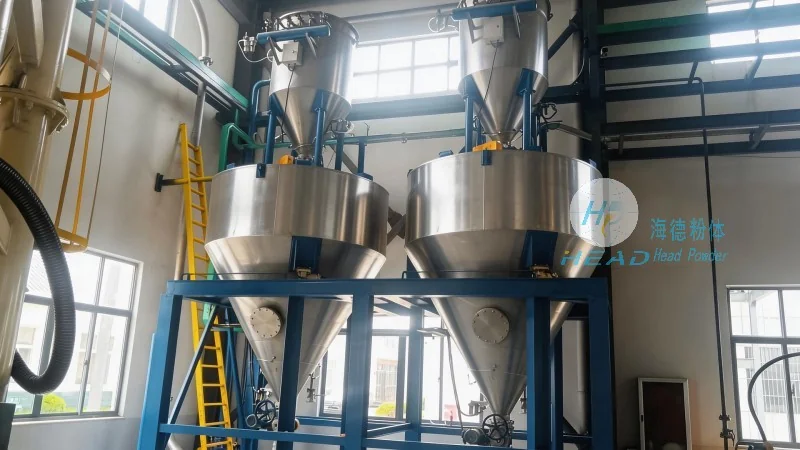
Key Components of Pneumatic Conveying Systems for Denitrifier Powders
The pneumatic conveying system for denitrifier powders typically consists of several core components that work in tandem to ensure smooth material transport. These components include a hopper for material storage, a rotary valve or feeder to control the flow of powder, a conveying pipeline, a compressor or air source to generate the necessary air pressure, and a receiver or discharge unit to collect the material at the destination. Each component plays a vital role in the overall system performance, and their proper integration is critical for achieving consistent and efficient conveying. The hopper is designed to hold a sufficient quantity of denitrifier powder, ensuring a continuous feed to the system. The rotary valve or feeder regulates the flow rate of the powder into the conveying pipeline, preventing overloading and maintaining a stable flow. The conveying pipeline is made of materials resistant to corrosion and abrasion, such as stainless steel or plastic, to withstand the wear and tear from the powder particles. The compressor provides the necessary air pressure to create the pressure differential required for conveying. The receiver collects the denitrifier powder and separates it from the air, typically using a cyclone or filter system.
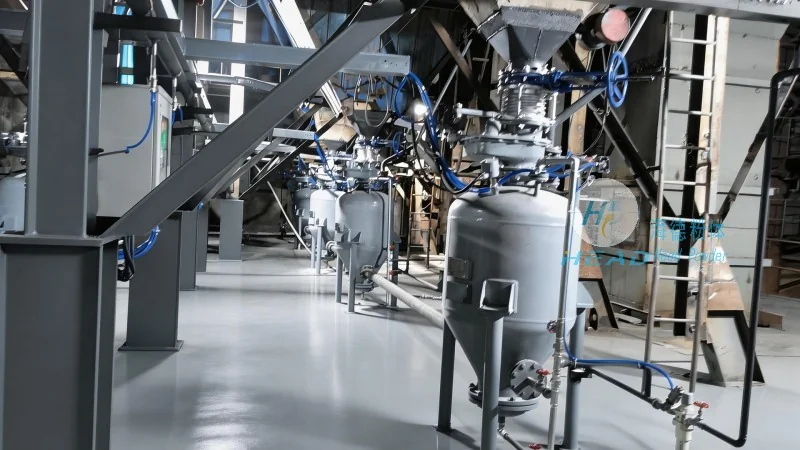
Working Principle of Pneumatic Conveying
The fundamental principle behind pneumatic conveying is the use of air or gas to transport solid particles through a pipeline. In the case of denitrifier powders, the system operates by creating a pressure differential between the inlet and outlet of the conveying line. The compressor supplies high-pressure air, which is introduced into the pipeline at the hopper end. As the air flows through the pipeline, it entrains the denitrifier powder particles, forming a dense or dilute phase flow depending on the system design and operating conditions. The powder-air mixture is then transported to the receiver, where the air is separated from the powder, typically through a cyclone or filter, and the powder is collected for further use. The choice between dense and dilute phase conveying depends on factors such as the powder characteristics, pipeline length, and desired flow rate. Dense phase conveying involves a higher air-to-powder ratio, resulting in a slower but more stable flow, while dilute phase conveying uses a lower air-to-powder ratio, leading to a faster but more turbulent flow.
Operation Process of the System
The operation process of a pneumatic conveying system for denitrifier powders involves several sequential steps that ensure the system runs efficiently and safely. The process begins with the loading of the denitrifier powder into the hopper. The rotary valve or feeder then regulates the flow rate of the powder into the conveying pipeline, ensuring a consistent feed rate. The compressor then starts, generating the required air pressure to initiate the conveying process. As the air flows through the pipeline, it pulls the powder particles along, creating a continuous flow of the powder-air mixture. The mixture travels through the pipeline to the receiver, where the air is separated from the powder. The separated air is typically recirculated back to the compressor to improve energy efficiency. The denitrifier powder is collected in the receiver and can be discharged as needed for downstream processes, such as feeding into a denitrification reactor or storage for future use. The system is designed to operate continuously, with regular monitoring of pressure, flow rate, and powder level to ensure optimal performance.
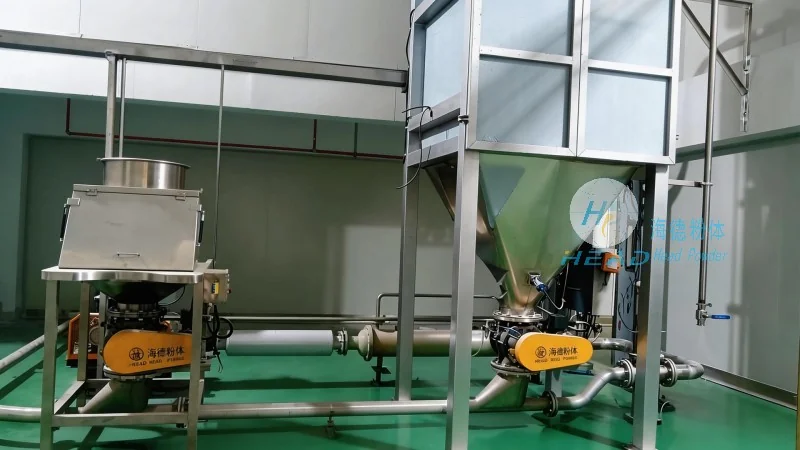
Advantages of Pneumatic Conveying for Denitrifier Powders
Pneumatic conveying systems offer several advantages when used for transporting denitrifier powders. These include the ability to handle fine powders without the need for mechanical conveying equipment, which can cause clogging or degradation of the powder. The system also provides a dust-free and enclosed transport environment, reducing the risk of dust exposure and environmental contamination. Additionally, pneumatic conveying can be designed to operate in both dense and dilute phase modes, allowing for flexibility in system design and energy consumption. The enclosed system also helps maintain the quality and integrity of the denitrifier powder, ensuring it remains free from contamination and moisture. Such advanced solutions are provided by Shandong HeadPowder Engineering Co., Ltd., which specializes in customizing pneumatic conveying systems to meet the specific needs of industrial clients, including power plants, chemical manufacturers, and environmental treatment facilities.