

Operation Process and Working Principle of Ammonium Sulfate Pneumatic Conveying
Ammonium sulfate, a widely used chemical fertilizer and industrial raw material, often requires efficient and reliable transportation methods for safe and effective handling. Pneumatic conveying systems have emerged as a preferred solution for moving bulk materials like ammonium sulfate, offering advantages such as reduced dust, improved safety, and enhanced operational flexibility. This article provides an in-depth exploration of the operation process and working principle of pneumatic conveying for ammonium sulfate, highlighting key components, system configurations, and practical applications.
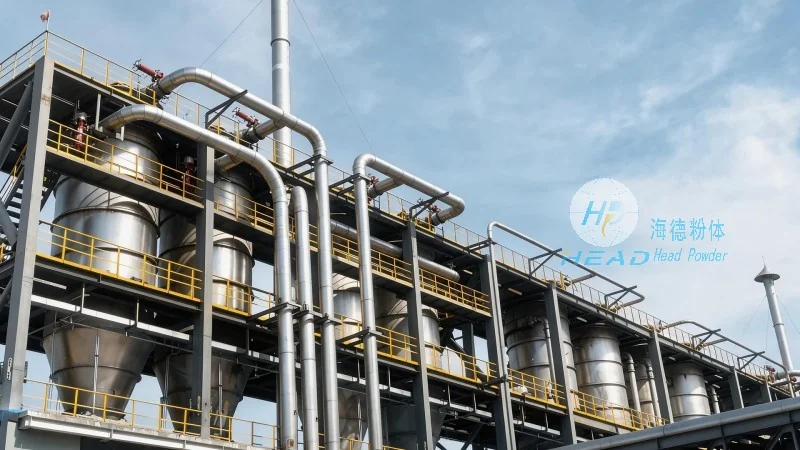
HeadPowder Engineering Co., Ltd., a leading provider of material handling solutions, specializes in designing and manufacturing advanced pneumatic conveying systems tailored to the unique requirements of the chemical industry. With years of experience in the field, the company has developed robust solutions that ensure optimal performance, durability, and compliance with industry standards. The following sections delve into the technical aspects of ammonium sulfate pneumatic conveying, emphasizing the operational workflow and underlying principles.
Working Principle of Pneumatic Conveying for Ammonium Sulfate
The core principle of pneumatic conveying involves transporting bulk materials through a pipeline using a gas stream, typically air or a combination of air and other gases. In the case of ammonium sulfate, the system operates by creating a pressure differential or utilizing vacuum to move the material from the source to the destination. There are two primary types of pneumatic conveying systems: pressure and vacuum systems, each with distinct characteristics and applications.
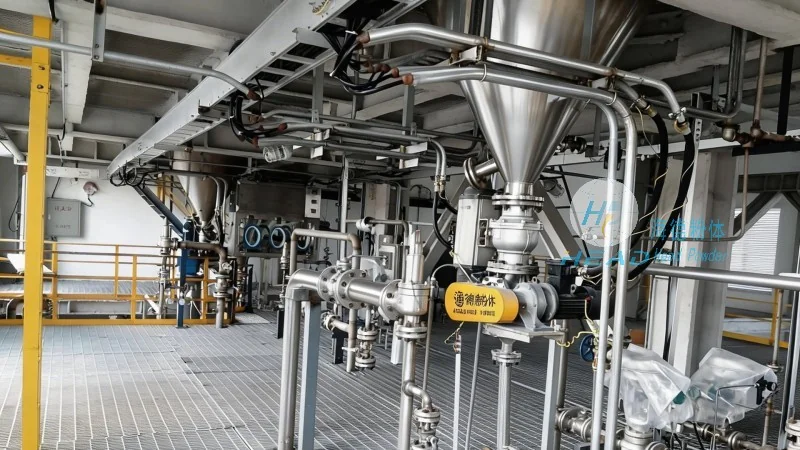
Pressure systems use compressed air to push the material through the pipeline. The material is first introduced into a hopper or feeder, where it is mixed with the air stream. The air pressure is maintained at a level sufficient to overcome the resistance of the pipeline and the material's friction, ensuring continuous flow. This method is particularly effective for short to medium distance conveying and when the material is non-abrasive or has low dust generation.
Vacuum systems, on the other hand, use a vacuum pump to draw the material into the pipeline. The material is fed into the system, and the vacuum creates a suction force that pulls the material along with the air stream. Vacuum systems are ideal for longer distances, as they can maintain a consistent flow over greater distances without the need for high-pressure air. They are also suitable for materials that are sensitive to pressure or require gentle handling.
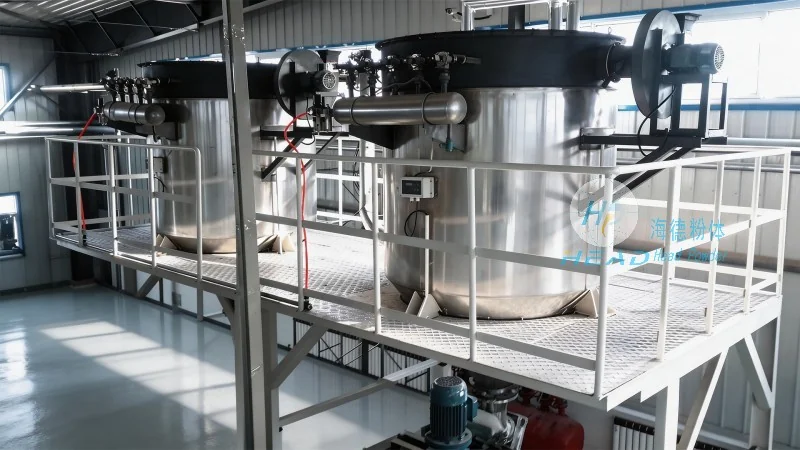
Operation Process of Ammonium Sulfate Pneumatic Conveying
The operation process of an ammonium sulfate pneumatic conveying system involves several key steps, each designed to ensure efficient and safe material transport. The process begins with the loading of the material into a storage silo or hopper. The material is then fed into the conveying line through a feeder, which controls the flow rate and consistency. The feeder may be a rotary valve, a screw feeder, or a vibratory feeder, depending on the system design and material characteristics.
Once the material is introduced into the pipeline, the air stream is activated. In pressure systems, the compressed air is introduced at the inlet, creating a high-pressure environment that propels the material forward. In vacuum systems, the vacuum pump is engaged, creating a low-pressure zone that draws the material into the pipeline. The air and material mixture travels through the pipeline, passing through any necessary components such as filters, cyclones, or expansion joints.
At the destination, the material is separated from the air stream. This is typically achieved using a cyclone separator or a filter, which captures the solid material and returns it to a storage bin or processing unit. The air, now clean of dust and particles, is either vented to the atmosphere or recirculated back into the system to improve efficiency. The separation process is critical to maintaining the purity of the material and preventing contamination in downstream processes.
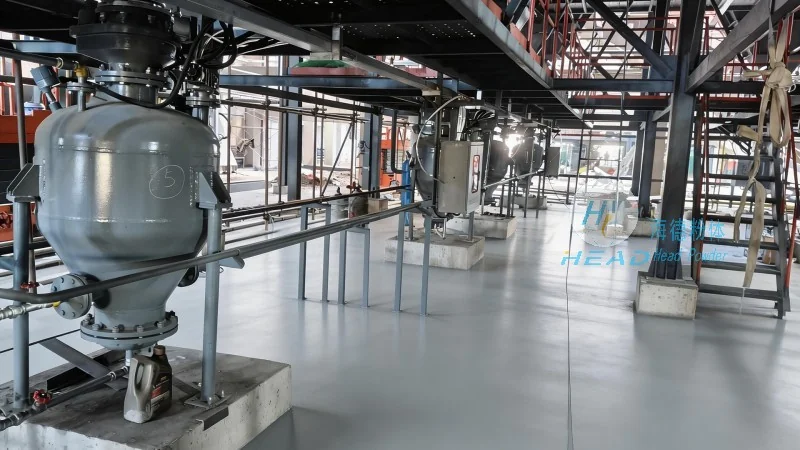
Key Components and System Configurations
Several critical components are integral to the successful operation of an ammonium sulfate pneumatic conveying system. These components work in concert to ensure smooth material transport and system reliability. The main components include:
1. Feeder: The feeder is responsible for controlling the flow rate of the ammonium sulfate into the conveying line. It ensures a consistent and uniform feed, preventing blockages or uneven flow that could disrupt the system. Common feeder types include rotary valves, screw feeders, and vibratory feeders, each chosen based on the material's properties and system requirements.