

Principle and Working Scene Characteristics of Pneumatic Conveying Lines for Fine Materials
HeadPowder, or Shandong HeadPowder Engineering Co., Ltd., is a leading manufacturer based in Shandong, China. The company specializes in the design, development, and production of advanced pneumatic conveying systems, particularly tailored for handling fine materials. With a strong focus on innovation and customer satisfaction, HeadPowder has established itself as a trusted partner in the industry, providing reliable solutions that meet the diverse needs of various sectors.
Principle and Working Mechanism of Pneumatic Conveying Lines for Fine Materials
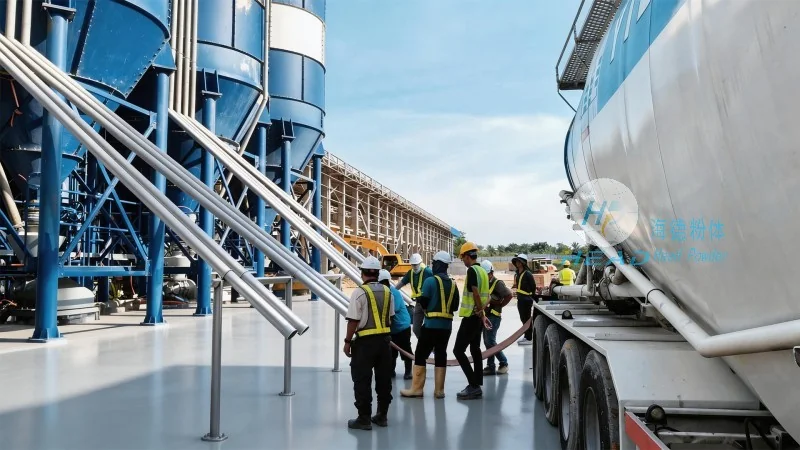
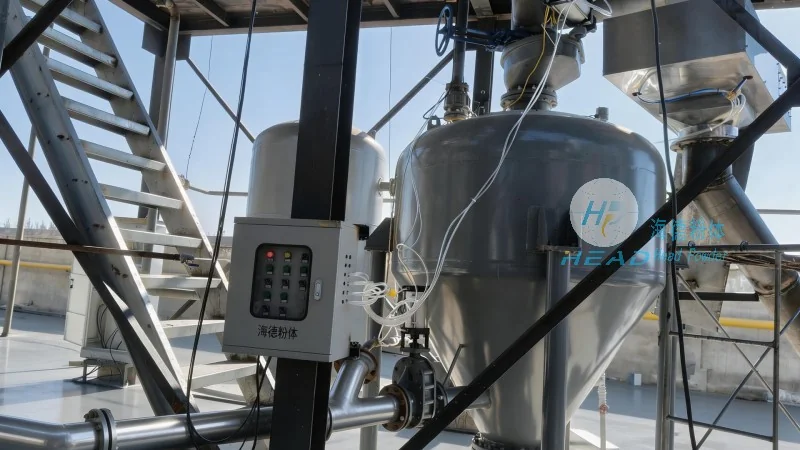
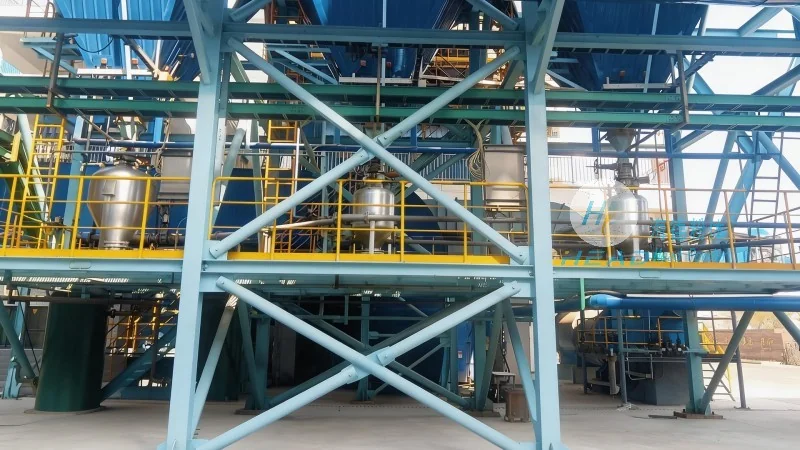
Pneumatic conveying lines for fine materials operate on the fundamental principle of using air or gas to transport particulate materials. The system typically consists of a hopper, a conveyor line, and a receiver. The process begins with the material being fed into the hopper, where it is then drawn into the conveyor line by a vacuum or pressure source. The air flow creates a flow of material through the pipeline, ensuring efficient and continuous transport. This method is particularly effective for fine powders and granules, as it minimizes product degradation and contamination compared to traditional methods like belt conveyors or bucket elevators. Pneumatic conveying lines can be categorized into two main types: vacuum (suction) systems and pressure (blow) systems. Vacuum systems use a vacuum pump to create a negative pressure that draws material from the hopper into the pipeline, making them suitable for short to medium distances and for materials sensitive to pressure changes. Pressure systems, on the other hand, utilize a blower or compressor to generate positive pressure, pushing material through the pipeline and are ideal for longer distances and for materials requiring higher velocity to maintain flow. The core of the system is the air flow, which suspends the particles in the air stream, allowing for efficient and clean transport without the need for mechanical components that can cause wear or contamination.
Key Working Scene Characteristics and Advantages
When applied in various working scenarios, pneumatic conveying lines for fine materials exhibit several distinct characteristics that make them ideal for specific applications. One of the primary advantages is the ability to handle materials in a closed system, which significantly reduces dust emissions and improves workplace safety. This is crucial in industries such as food processing, pharmaceuticals, and chemical manufacturing, where product purity and environmental compliance are paramount. Additionally, these systems offer high flexibility in terms of layout and integration with existing production lines, allowing for easy adaptation to different facility configurations. The efficiency of material transport is another notable characteristic, as the system can move materials over long distances with minimal energy consumption and operational downtime. Furthermore, the design of these lines allows for easy cleaning and maintenance, ensuring consistent performance and reducing the risk of product cross-contamination. The closed-loop operation also helps maintain material quality by preventing exposure to air, moisture, or other contaminants, which is essential for sensitive products like pharmaceuticals or food ingredients.