

Principle and Working Scene Characteristics of Plaster Powder Material Conveying Lines
Shandong HeadPowder Engineering Co., Ltd., a professional manufacturer based in Shandong, China, specializes in the design, development, and production of advanced material conveying systems. The company focuses on providing efficient and reliable solutions for the transportation of bulk materials, including plaster powder, in various industrial applications.
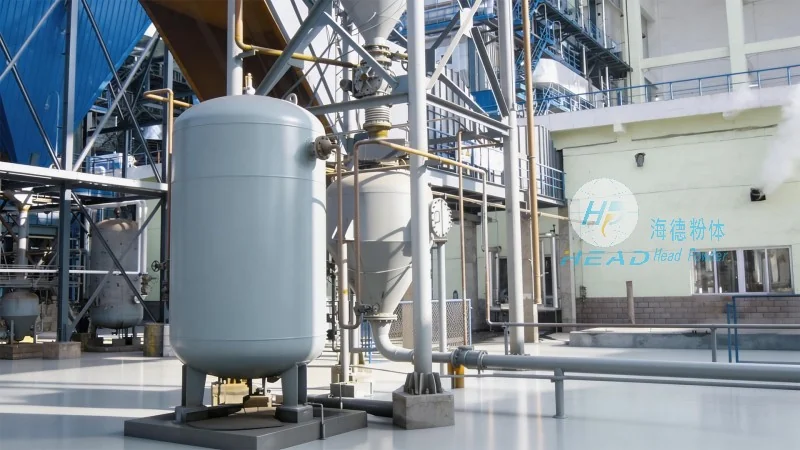
The Principle of Plaster Powder Material Conveying Lines
Plaster powder material conveying lines operate on the principle of mechanical transportation, utilizing various components such as hoppers, conveyors, and control systems to move bulk materials from storage to processing or packaging areas. The system typically starts with a hopper that stores the plaster powder, which is then fed into a conveyor (e.g., screw conveyor, belt conveyor, or pneumatic conveyor) through a feeder mechanism. The conveyor transports the powder along a designated path, ensuring consistent and controlled flow. Control systems, including sensors and automation devices, monitor the flow rate, pressure, and other parameters to maintain optimal performance and prevent blockages or overloading. This integrated approach ensures that the conveying process is efficient, safe, and adaptable to different production requirements.
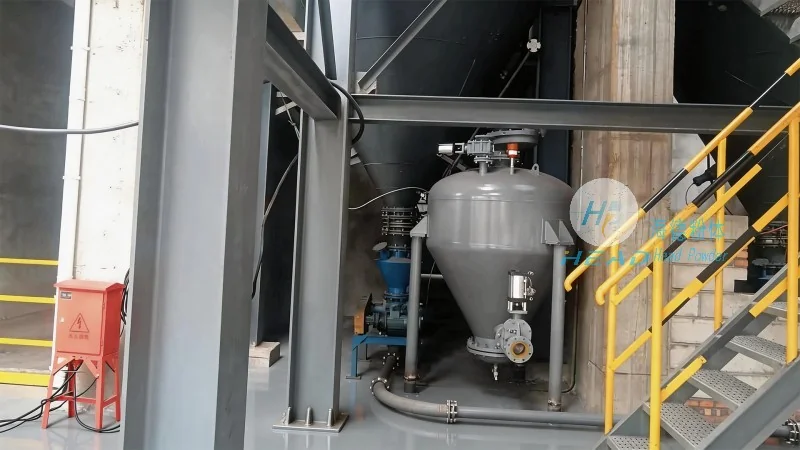
Working Scene Characteristics of Plaster Powder Conveying Lines
The working scene characteristics of plaster powder material conveying lines are tailored to meet the specific demands of plaster production and processing environments. These systems are designed to handle the unique properties of plaster powder, such as its fine particle size, low bulk density, and potential for dust generation. Key characteristics include:
- Efficient Material Handling: The conveying lines are engineered to handle large volumes of plaster powder with minimal downtime, ensuring smooth production workflows.
- Low Dust Emission: Advanced sealing and filtration systems are integrated into the design to minimize dust exposure, enhancing workplace safety and compliance with environmental regulations.
- Adaptability to Production Processes: The systems can be customized to fit different production stages, from raw material input to finished product packaging, providing flexibility in industrial settings.
- Reliability and Durability: Constructed with high-quality materials and robust components, the conveying lines are built to withstand the abrasive nature of plaster powder and operate reliably over extended periods.
Application Scenarios
Plaster powder material conveying lines are widely used in various industrial settings, including plaster manufacturing plants, construction material production facilities, and industrial processing centers. In these environments, the systems play a critical role in ensuring the efficient movement of raw materials and finished products. For example, in a plaster production plant, the conveying line may transport raw plaster powder from storage silos to mixing and grinding equipment, while in a construction material factory, it may move finished plaster products to packaging lines. The adaptability of these systems allows them to integrate seamlessly with existing production lines, enhancing overall operational efficiency.
Conclusion
Shandong HeadPowder Engineering Co., Ltd. offers advanced plaster powder material conveying lines that combine efficient design, reliable performance, and tailored solutions for industrial applications. By leveraging the company's expertise in material handling technology, these systems provide businesses with a cost-effective and sustainable way to manage plaster powder transportation. The working scene characteristics and operational principles of these conveying lines make them an essential component in modern plaster production and processing environments, contributing to improved productivity and safety.