

Working Principle and Features of the Mica Sand Pneumatic Conveying System
Shandong HeadPowder Engineering Co., Ltd., a professional manufacturer based in China, specializes in the design, production, and supply of advanced mica sand pneumatic conveying systems. This article aims to provide a detailed explanation of the working principle and key features of such systems, highlighting their efficiency and reliability in handling mica sand materials.
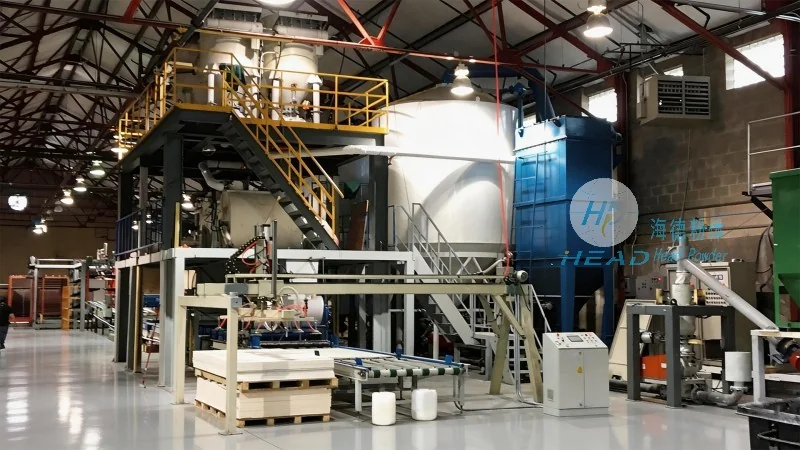
Introduction to Mica Sand Pneumatic Conveying Systems
Mica sand, a widely used industrial material, often requires efficient and dust-free transportation methods to maintain its quality and ensure safe handling. Pneumatic conveying systems offer an excellent solution by utilizing air pressure to transport mica sand particles through pipelines. The systems are designed to handle various particle sizes and flow rates, making them suitable for different industrial applications.
Working Principle of the Mica Sand Pneumatic Conveying System
The core of a mica sand pneumatic conveying system is the air-driven mechanism that moves the material. The system typically consists of a blower, a hopper for material storage, a conveying pipeline, and a receiver for the discharged material. The process begins when mica sand is fed into the hopper. The blower then generates a high-pressure airflow, which draws the sand particles into the pipeline. As the air flows through the pipeline, it carries the sand particles along, ensuring a continuous and controlled transport. The system may include components like cyclones or filters to separate the sand from the air at the receiving end, ensuring the material is delivered in a clean and dry state.

Key Features of the Mica Sand Pneumatic Conveying System
Several notable features make mica sand pneumatic conveying systems highly effective for industrial use. Firstly, the system offers a dust-free operation, which is crucial for maintaining the purity of mica sand and ensuring a safe working environment. Secondly, it provides a high degree of flexibility in terms of pipeline layout, allowing for complex and customized transport routes. Thirdly, the system is capable of handling a wide range of particle sizes and flow rates, making it adaptable to different production requirements. Additionally, the equipment is designed for low maintenance, with components that are easy to replace and service, reducing downtime and operational costs. The system also ensures minimal material loss and high transfer efficiency, which contributes to overall cost savings in material handling processes.
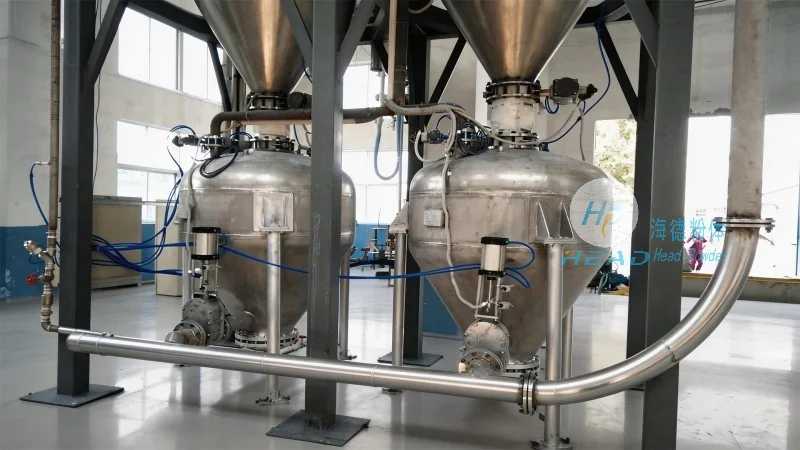
Application and Advantages in Industrial Settings
Mica sand pneumatic conveying systems are widely used in various industries, including construction, ceramics, and chemical processing. The advantages of these systems, such as dust control, flexibility, and efficiency, make them ideal for applications where traditional methods like bucket elevators or belt conveyors may not be suitable. By using air as the conveying medium, the system eliminates the need for mechanical parts in contact with the material, reducing wear and tear and extending the lifespan of the equipment. This also minimizes the risk of material contamination, which is critical for high-purity applications like mica sand used in the production of insulation materials or decorative products.
Conclusion
In summary, the mica sand pneumatic conveying system from Shandong HeadPowder Engineering Co., Ltd. combines advanced technology with robust design to provide an efficient and reliable solution for mica sand transportation. Its working principle, based on air pressure and controlled airflow, ensures smooth and continuous operation, while its key features, including dust-free handling and high transfer efficiency, make it a preferred choice in industrial settings. The system's adaptability and low maintenance requirements further enhance its value, making it a cost-effective investment for businesses dealing with mica sand materials.