

Operation Process and Working Principle of Desulfurization Fly Ash Powder Pneumatic Conveying Equipm
Desulfurization fly ash, a byproduct of flue gas desulfurization in thermal power plants, demands efficient handling and transportation. The pneumatic conveying equipment developed by Shandong HeadPowder Engineering Co., Ltd. provides a reliable solution for transporting this fine powder. Designed to address the unique properties of desulfurization fly ash—including its fine particle size, potential moisture content, and abrasive nature—the system ensures safe, effective material movement from source to destination.
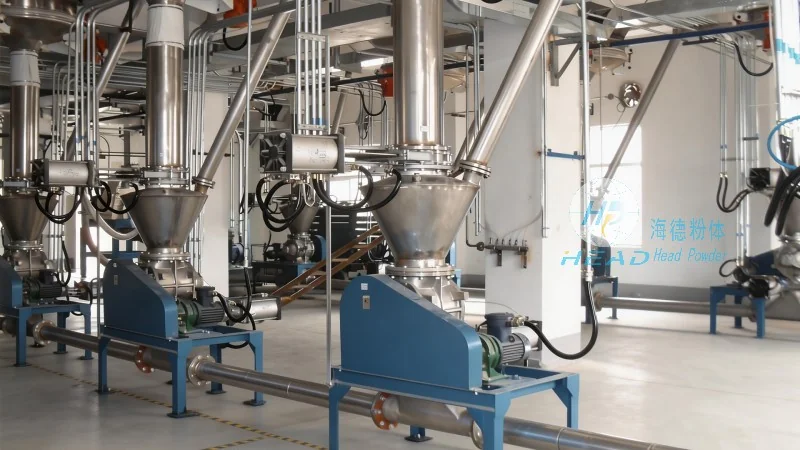
Key Components and System Structure
The pneumatic conveying system consists of several critical components optimized for fly ash handling. These include a storage hopper, a rotary valve for controlled material discharge, a conveying pipeline network, a blower/compressor to generate air flow, and a dust collector/filter system. Each component is engineered to withstand the abrasive and potentially caking characteristics of fly ash, minimizing wear and ensuring long-term operational reliability. The pipeline design incorporates bends, elbows, and expansion joints to reduce pressure losses and maintain optimal air velocity for effective conveying.
Operation Process Overview
The operation begins with fly ash loading into the storage hopper. The rotary valve regulates material flow into the conveying pipeline, ensuring a consistent feed rate. The blower or compressor creates a high-pressure air stream that propels the fly ash particles through the pipeline. As the material travels, it remains suspended in the air stream, transported to the target location (e.g., storage silo or processing facility). Real-time monitoring via pressure sensors and flow meters allows for adjustments to maintain optimal performance. The automated system reduces manual intervention, enhancing efficiency and safety by minimizing human exposure to the material.
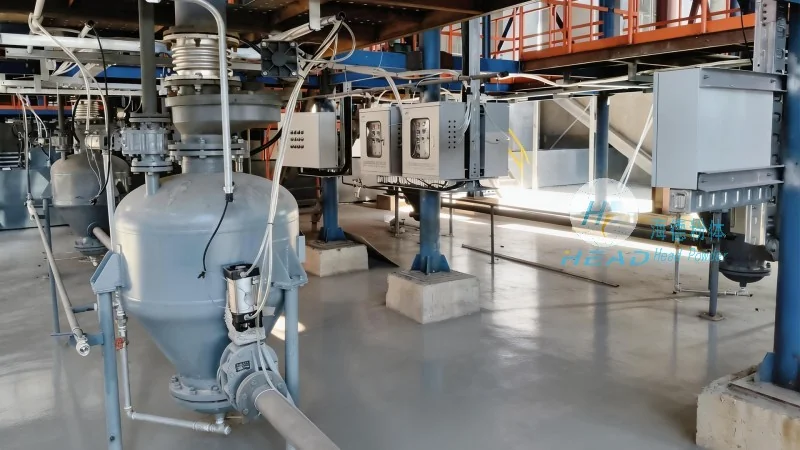
Working Principle Explained
The system operates on the principle of pneumatic transport, using air as the conveying medium. The blower generates a pressure differential between the pipeline inlet and outlet, creating a flow that suspends and moves the fly ash particles. The air velocity is critical—sufficient to keep particles airborne and prevent clogging or settling. The design employs both positive and negative pressure zones to achieve efficient transport over varying distances. This mechanism ensures consistent material delivery while maintaining air quality compliance through integrated filtration.
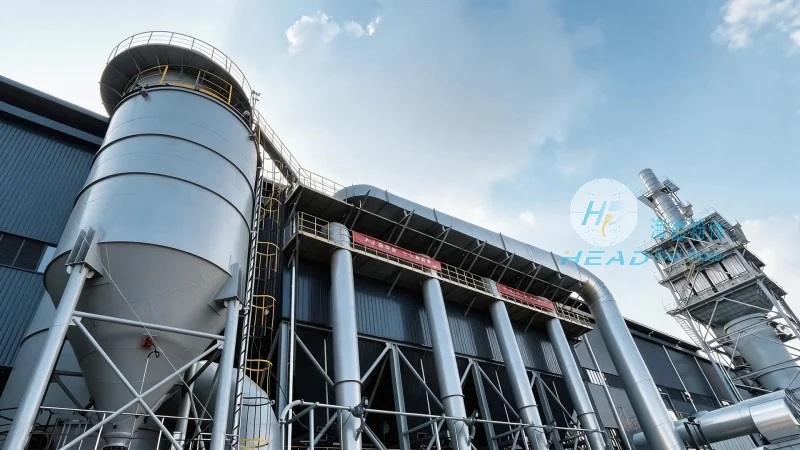
Advantages and Benefits
Compared to traditional methods like belt conveyors or bucket elevators, this equipment offers several advantages. It enables long-distance transport without intermediate transfer points, reducing material loss and contamination risks. The automated operation enhances safety by minimizing human contact with fly ash, which can be harmful if inhaled. Additionally, the system’s ability to handle abrasive materials extends component lifespan and lowers maintenance costs. Integration with other processing equipment (e.g., grinding, mixing units) creates a seamless workflow, improving overall facility efficiency.
Application Scenarios and Industry Impact
Primarily used in thermal power plants and industrial facilities generating fly ash, this equipment is vital for transporting material to central storage or processing units. Its high-throughput capability supports continuous industrial operations, while controlled handling reduces environmental contamination risks. The system’s reliability ensures consistent performance in demanding conditions, contributing to sustainable material management practices. By optimizing fly ash handling, the equipment supports the efficient operation of power generation and related industrial processes.