

Operation Process and Working Principle of Aluminum Nitride Pneumatic Conveying
Aluminum nitride (AlN) is a critical material in modern industrial applications, widely used in electronics, ceramics, and advanced manufacturing due to its excellent thermal conductivity and dielectric properties. The efficient handling of AlN powder is essential for maintaining product quality and operational efficiency. Pneumatic conveying systems offer a reliable solution for transporting AlN powder, combining precision, safety, and adaptability. This article explores the operation process and working principles of aluminum nitride pneumatic conveying, highlighting key components, operational steps, and the technical advantages that make such systems effective for AlN material handling.
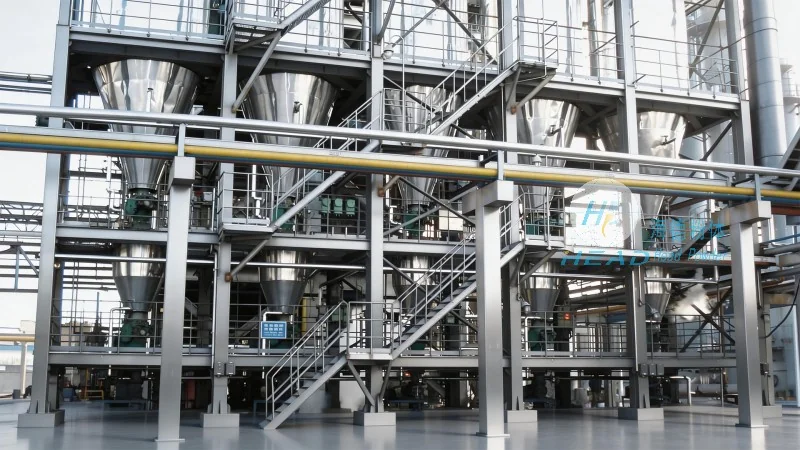
Key Components of Aluminum Nitride Pneumatic Conveying Systems
The aluminum nitride pneumatic conveying system consists of several core components that work in tandem to transport the material. The primary components include a material hopper or feeder, a conveying line (typically made of stainless steel or specialized materials to prevent contamination), a blower or air compressor, and a receiver or discharge unit. The material hopper is designed to store and feed the AlN powder at a controlled rate, ensuring a consistent flow into the conveying line. The conveying line is often equipped with bends, elbows, or expansion joints to navigate the system layout while maintaining minimal pressure drop. The blower or air compressor provides the necessary air pressure and volume to move the powder particles through the system. Finally, the receiver or discharge unit collects the conveyed AlN powder and may include a dust collection system to ensure environmental compliance and product purity.
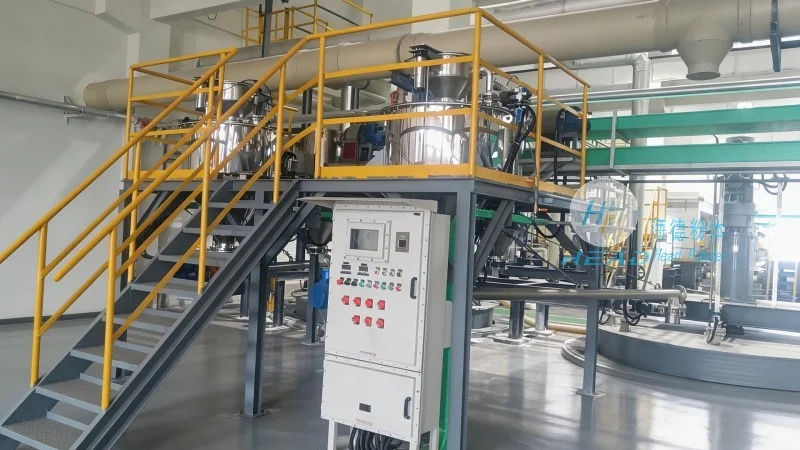
Working Principle of Aluminum Nitride Pneumatic Conveying
The working principle of aluminum nitride pneumatic conveying relies on the interaction between the powder particles and the air stream. There are two main types of pneumatic conveying systems: dilute-phase and dense-phase. Dilute-phase systems operate at higher air velocities, typically 20-30 meters per second, where the powder is suspended in the air stream as individual particles. This method is suitable for short to medium distances and low to medium material loads. Dense-phase systems, on the other hand, operate at lower air velocities (5-15 meters per second) and higher material concentrations, where the powder forms a plug or slurry within the conveying line. Dense-phase systems are preferred for transporting AlN powder over longer distances or when high material integrity is required, as they minimize particle attrition and degradation.
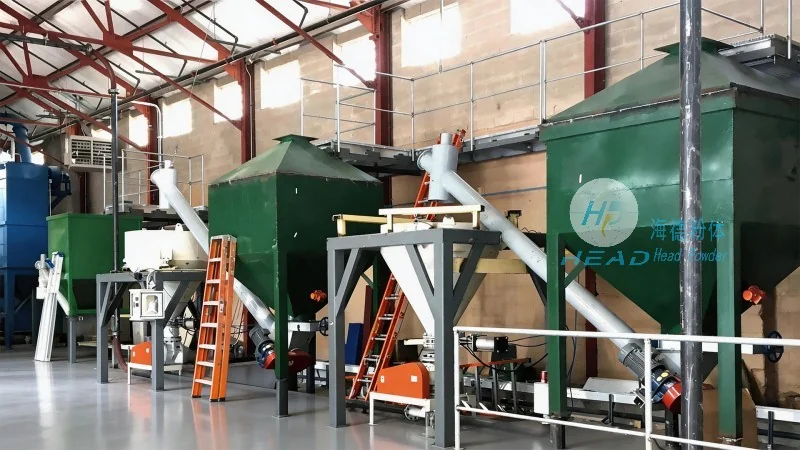
Operation Process of Aluminum Nitride Pneumatic Conveying
The operation process of an aluminum nitride pneumatic conveying system involves several sequential steps to ensure smooth and efficient material transport. First, the AlN powder is loaded into the material hopper. The hopper is equipped with a feeder mechanism, such as a rotary valve or screw feeder, which controls the discharge rate of the powder into the conveying line. The feeder is calibrated to match the required production rate, ensuring a steady flow of material. Next, the blower or air compressor is activated, generating the necessary air pressure to move the powder. The air is introduced into the conveying line at the inlet, where it meets the powder from the hopper. The air stream then lifts and suspends the AlN particles, carrying them through the system. The conveying line may include pressure regulators and flow meters to monitor and adjust the air flow and material transport rate. As the powder travels through the system, it passes through any bends or changes in direction, with the system design ensuring minimal pressure loss and particle separation. Finally, the powder is discharged into the receiver or discharge unit, where it is collected and prepared for the next processing step. The system may also include a dust collection system to capture any fine particles that may escape, ensuring environmental safety and product purity.
Technical Advantages of Aluminum Nitride Pneumatic Conveying
Aluminum nitride pneumatic conveying systems offer several technical advantages that make them ideal for handling AlN powder. One key advantage is the ability to maintain product purity and integrity. The enclosed system design prevents contamination from external sources, and the use of stainless steel or specialized materials in the conveying line minimizes material interaction with the powder. This is crucial for AlN, which is sensitive to moisture and contaminants that can affect its properties. Another advantage is the high efficiency in material transport. Pneumatic systems can move large volumes of AlN powder over long distances with minimal energy consumption compared to traditional methods like belt conveyors or manual handling. The system also provides flexibility in layout, allowing for complex system designs to accommodate existing facility constraints. Additionally, pneumatic conveying reduces labor costs and improves workplace safety by eliminating manual handling of powders, which can be hazardous due to dust inhalation risks. The controlled flow rates and pressure regulation also help prevent overloading or system damage, ensuring reliable operation.
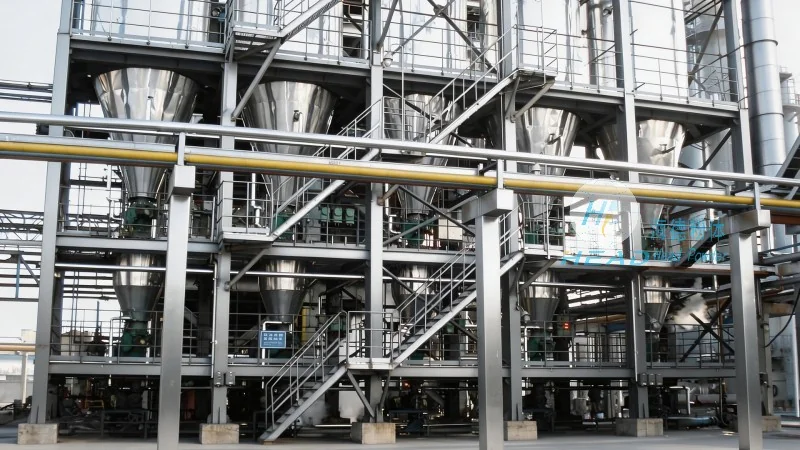
Application Considerations for Aluminum Nitride Pneumatic Conveying
When implementing an aluminum nitride pneumatic conveying system, several application considerations must be taken into account to ensure optimal performance. The first consideration is the material characteristics of AlN powder. AlN is a fine powder with a specific density and particle size distribution, which affects the conveying air velocity and system design. For example, finer particles may require higher air velocities to maintain suspension, while larger particles may need denser-phase operation to prevent settling. The system must be designed to handle the specific particle size and density of the AlN material to avoid blockages or inefficient transport. Another consideration is the system layout and distance. The length and complexity of the conveying line impact the pressure drop and required air pressure. Longer or more complex systems may require additional blower capacity or intermediate receivers to maintain system efficiency. Environmental regulations and safety standards are also critical. The system must include dust collection and filtration to comply with local air quality regulations and protect workers from dust exposure. Additionally, the system should be designed for easy maintenance and cleaning to prevent material buildup and ensure long-term reliability. Regular maintenance, such as checking blower performance, cleaning the conveying line, and inspecting the feeder mechanism, is essential to maintain system efficiency and product quality.