

The Operation Process and Working Principle of Rubber Powder Pneumatic Conveying
Rubber powder, a critical material in various industrial applications, requires efficient and reliable handling methods to ensure smooth production processes. Pneumatic conveying systems have emerged as a preferred solution for transporting rubber powder due to their ability to handle fine powders with minimal dust generation and high operational efficiency. This article, presented by Shandong HeadPowder Engineering Co., Ltd. (headpowder), delves into the operation process and working principle of rubber powder pneumatic conveying, highlighting the key components, mechanisms, and benefits of such systems.
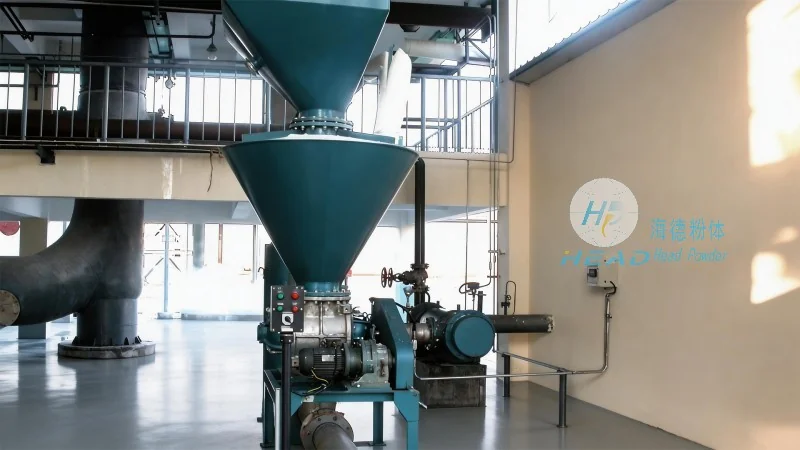
Key Components of Rubber Powder Pneumatic Conveying Systems
The effectiveness of rubber powder pneumatic conveying systems relies on several essential components that work in tandem to facilitate material transport. These components include the hopper, which serves as the storage and feeding unit for the rubber powder; the air compressor or blower, responsible for generating the necessary air pressure to move the material; the conveying line, typically made of flexible or rigid tubing, that transports the powder-air mixture; and the receiver or discharge unit, where the rubber powder is collected after transport. Additionally, accessories such as check valves, filters, and pressure regulators are integrated to enhance system performance and ensure safe operation.
The Working Principle of Rubber Powder Pneumatic Conveying
The working principle of rubber powder pneumatic conveying involves the use of compressed air to create a flow that carries the rubber powder particles through the conveying line. There are two primary types of pneumatic conveying systems: dilute-phase and dense-phase. Dilute-phase systems operate at higher air velocities, typically moving the powder in a dispersed state, while dense-phase systems use lower air velocities and higher material concentrations to transport the powder in a slurry-like state. The choice between these systems depends on factors such as the particle size, moisture content, and required distance of transport. In the dilute-phase system, the rubber powder is introduced into the conveying line at the hopper, where it is mixed with the compressed air from the blower. The air velocity is maintained above the minimum fluidization velocity to keep the powder particles suspended and move through the line. The mixture then travels to the receiver, where the air is separated from the powder, often using a cyclone or bag filter, and the rubber powder is collected. In dense-phase systems, the air is introduced at a lower rate, causing the powder to form a plug or slurry within the line, which is then transported to the destination. This method is particularly suitable for handling abrasive or sensitive materials like rubber powder, as it reduces particle degradation and equipment wear.
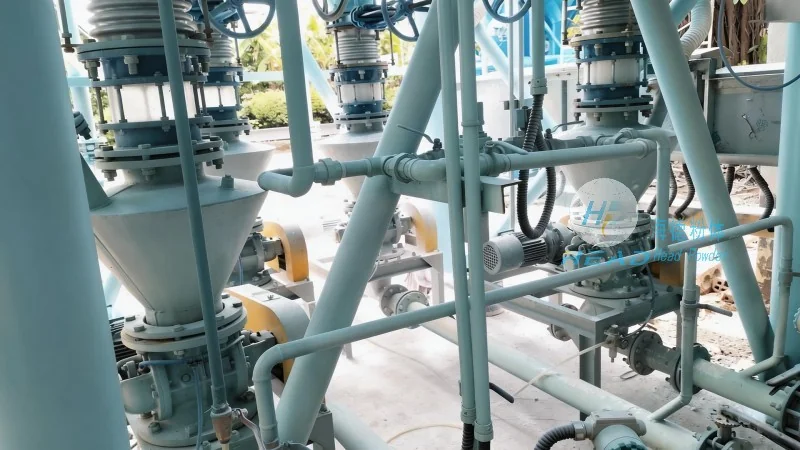
Operation Process of Rubber Powder Pneumatic Conveying
The operation process of rubber powder pneumatic conveying involves several sequential steps that ensure efficient material transport. First, the rubber powder is loaded into the hopper, which is equipped with a feeding mechanism such as a rotary valve or screw feeder to control the flow rate. The hopper is designed to minimize dust accumulation and ensure consistent material supply. Next, the air compressor or blower is activated, generating the required air pressure to start the conveying process. The compressed air is then introduced into the conveying line, creating a flow that draws the rubber powder from the hopper. The mixture of rubber powder and air travels through the line, with the air velocity maintained at an optimal level to prevent particle settling or blockage. At the receiving end, the air is separated from the rubber powder using a separator, such as a cyclone or filter, and the powder is collected in the receiver. The air, now filtered, is either vented to the atmosphere or recycled back to the system to improve energy efficiency. The entire process is monitored by sensors and control systems that adjust the air pressure, flow rate, and feeding speed based on real-time conditions, ensuring stable and continuous operation. Regular maintenance of the system components, including the hopper, blower, and conveying line, is essential to prevent downtime and maintain performance.
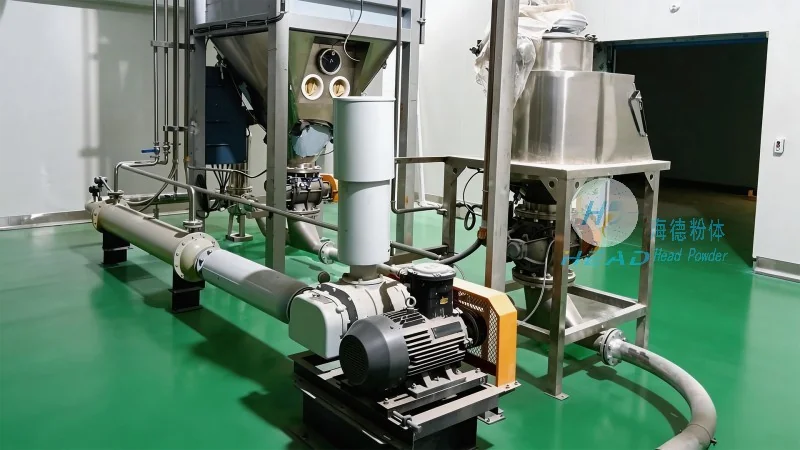
Benefits and Applications of Rubber Powder Pneumatic Conveying
Rubber powder pneumatic conveying systems offer several advantages over traditional methods like belt conveyors or manual handling. These benefits include reduced dust generation, which improves workplace safety and compliance with environmental regulations; increased operational efficiency, as the system can transport rubber powder over long distances with minimal labor; and improved material quality, as the process minimizes particle degradation and contamination. The systems are widely used in various industries, including rubber manufacturing, where rubber powder is used as a filler in tire production; plastics processing, where it is added to enhance material properties; and construction, where it is used in rubber-based products. The flexibility of pneumatic conveying systems allows them to be adapted to different production scales and environments, making them a versatile solution for rubber powder handling.
Conclusion
Rubber powder pneumatic conveying systems represent a sophisticated and efficient method for handling fine rubber powders in industrial settings. By understanding the key components, working principles, and operation process, industries can optimize their material transport processes, enhance productivity, and ensure compliance with safety and environmental standards. As technology advances, these systems continue to evolve, offering improved performance and adaptability to meet the growing demands of the rubber and related industries. The integration of advanced control systems and maintenance practices further enhances the reliability and longevity of pneumatic conveying systems, making them a valuable investment for companies handling rubber powder.