

Principle and Working Scene Characteristics of Pneumatic Conveying for Gypsum Powder and Fly Ash Mat
Understanding the pneumatic conveying of gypsum powder and fly ash materials is crucial for optimizing material handling in industrial settings. This article delves into the fundamental principles behind this technology and highlights the key characteristics of its application scenarios, providing insights for professionals in the field, with a focus on solutions offered by Shandong HeadPowder Engineering Co., Ltd., a leading provider of material handling systems in China.
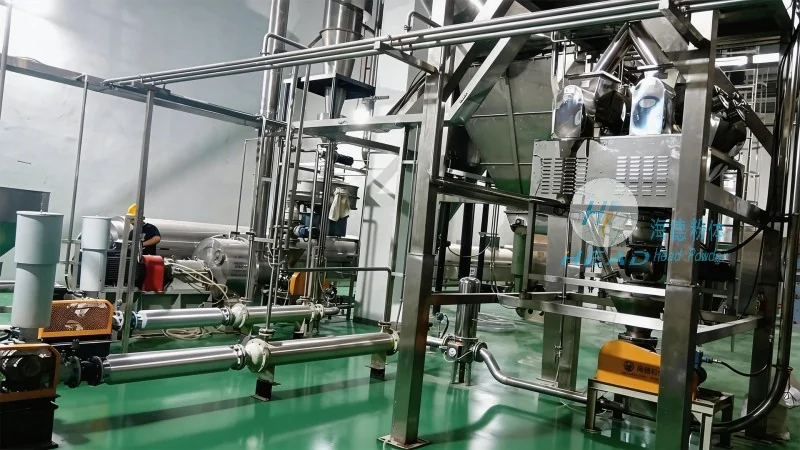
Introduction to Pneumatic Conveying for Gypsum and Fly Ash
Pneumatic conveying is a method of transporting bulk materials through a pipeline using a gas stream, typically air. For gypsum powder and fly ash, which are fine, dusty materials, this technology offers a reliable and efficient solution compared to traditional mechanical conveying systems. The process involves creating a pressure differential within the pipeline to move the material from the source to the destination. Two primary types of pneumatic conveying systems are commonly used: positive pressure and negative pressure systems. Positive pressure systems blow air into the pipeline, pushing the material forward, while negative pressure systems create a vacuum that draws the material into the pipeline.
Principle of Pneumatic Conveying for Gypsum Powder and Fly Ash
The core principle of pneumatic conveying for these materials revolves around the interaction between the gas flow and the solid particles. The key factors influencing the conveying process include the particle size, density, and moisture content of the material, as well as the air velocity and pressure within the system. For gypsum powder, which is typically fine and light, the air velocity must be carefully controlled to prevent particle segregation and ensure uniform flow. Fly ash, often with a similar particle size distribution, requires similar considerations to maintain stable conveying conditions. The design of the conveying system, including the type of ductwork, airlocks, and separation equipment, is critical to achieving efficient and reliable material transport.
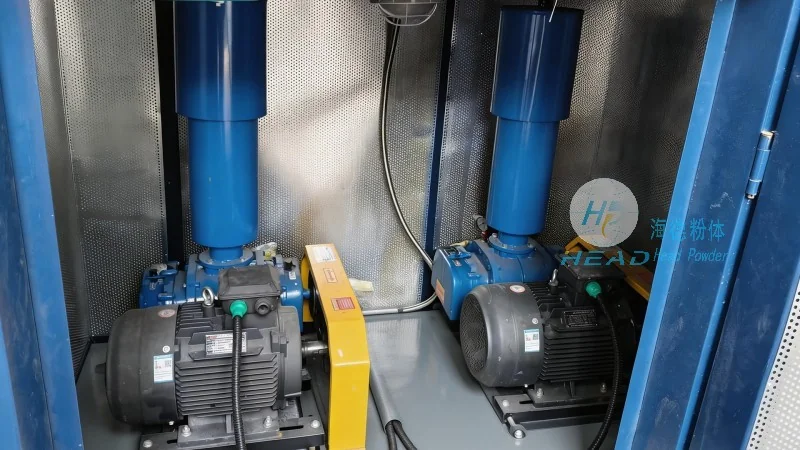
Working Scene Characteristics of Pneumatic Conveying Applications
The application scenarios for pneumatic conveying of gypsum powder and fly ash vary across different industrial sectors, each presenting unique challenges and requirements. In cement manufacturing plants, for example, gypsum is used as a set retarder, and its efficient transport from storage to the clinker grinding system is essential for maintaining production efficiency. Fly ash, a byproduct of coal combustion, is often used as a supplementary cementitious material, and its pneumatic conveying from power plants to cement plants ensures consistent quality and reduces transportation costs.
Key Advantages in Industrial Work Scenarios
Implementing pneumatic conveying for gypsum and fly ash offers several advantages in industrial work scenarios. Firstly, it eliminates the need for traditional bulk handling equipment such as conveyors, elevators, and trucks, reducing the risk of material spillage and contamination. Secondly, the enclosed system minimizes dust emissions, improving workplace safety and environmental compliance. Thirdly, the flexibility of pneumatic conveying allows for the integration of multiple material sources and destinations within a single system, enhancing operational efficiency. Additionally, the system can be easily scaled to accommodate varying production volumes, making it suitable for both small-scale and large-scale industrial applications.
Technical Considerations for Effective Conveying
Several technical aspects must be considered to ensure the effective operation of pneumatic conveying systems for gypsum powder and fly ash. The selection of the appropriate air velocity is critical to prevent particle deposition and ensure smooth flow. For gypsum powder, typical conveying velocities range from 20 to 30 m/s, depending on the particle size and system configuration. Fly ash, with similar characteristics, may require slightly different velocity settings to maintain stability. The use of airlocks and cyclone separators is essential to prevent material buildup and ensure the system operates continuously. Regular maintenance of the ductwork and air filtration systems is also necessary to prevent clogging and maintain system performance.
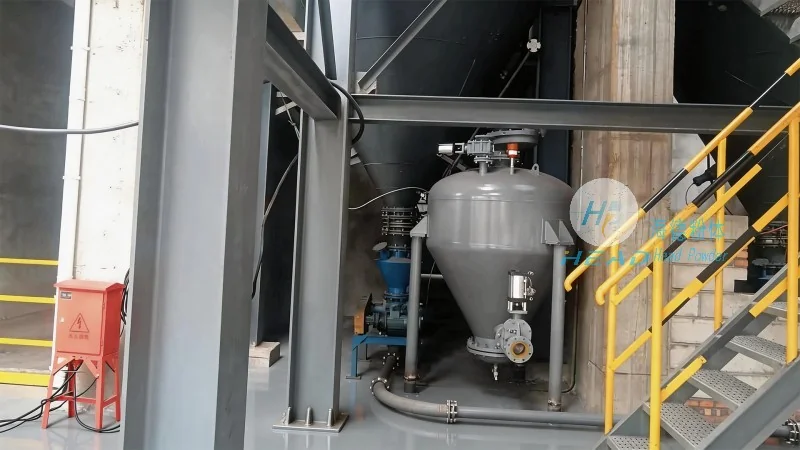
Case Studies and Real-World Applications
Real-world applications of pneumatic conveying for gypsum and fly ash provide valuable insights into its effectiveness. In a large cement plant in Shandong, China, the implementation of a positive pressure pneumatic conveying system for gypsum reduced material handling time by 30% and improved overall production efficiency. Similarly, a power plant in the region successfully used a negative pressure system to transport fly ash to a nearby cement plant, achieving a 25% reduction in transportation costs and minimizing environmental impact. These case studies highlight the practical benefits of pneumatic conveying in real industrial settings.
Conclusion and Future Outlook
Pneumatic conveying of gypsum powder and fly ash materials is a proven technology that offers significant advantages in industrial material handling. By understanding the fundamental principles and working scene characteristics, companies can optimize their material transport processes, improve efficiency, and reduce operational costs. As industrial demands for efficient and sustainable material handling continue to grow, the application of pneumatic conveying technology is likely to expand, with ongoing advancements in system design and control technology.