

What is an Organic Salt Powder Conveying Line? What Are Its Design Principles?
Organic salt powder conveying lines are specialized systems engineered to handle the transportation of organic salt powders efficiently and safely. These systems are crucial in various industrial applications where organic salts are processed, such as in chemical manufacturing, food processing, and pharmaceutical industries. The design of these lines is tailored to address the unique challenges posed by organic salt powders, including their flow characteristics, moisture sensitivity, and potential for dust generation.
Key Components of a Typical Organic Salt Powder Conveying Line
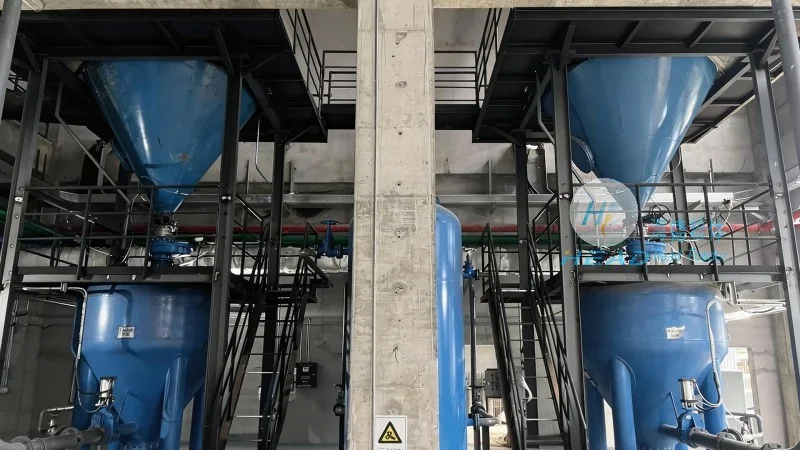
At the core of an organic salt powder conveying line are several essential components that work in tandem to ensure smooth operation. The primary components include a hopper for material storage, a feeder to control the flow rate, a conveyor system (often a screw conveyor or pneumatic conveyor) for transporting the powder, and a dust collection system to maintain air quality and prevent contamination. Each component is selected based on the specific properties of the organic salt being handled, such as particle size, bulk density, and hygroscopicity.
Design Principles for Optimal Performance
The design principles for organic salt powder conveying lines focus on maximizing efficiency, minimizing material loss, and ensuring operational safety. One critical principle is the use of appropriate equipment that minimizes friction and prevents material degradation. For instance, materials like stainless steel or corrosion-resistant alloys are often used for components that come into direct contact with the organic salt to avoid contamination and ensure longevity. Another key principle is the incorporation of a well-designed hopper with a conical or wedge-shaped bottom to facilitate uniform material flow and prevent bridging or caking, which can impede the conveying process.
Feeder Systems and Flow Control
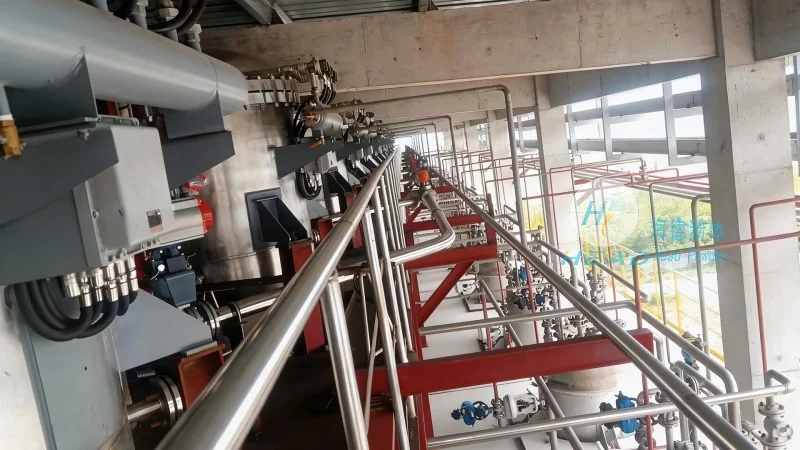
Feeder systems play a pivotal role in regulating the flow of organic salt powders into the conveyor. Common types include rotary valves, vibratory feeders, and screw feeders. The choice of feeder depends on the material's flowability and the required flow rate. For organic salts that are prone to sticking or bridging, a vibratory feeder may be preferred as it provides consistent, low-pressure feeding. The feeder is typically integrated with a control system that adjusts the flow rate based on real-time demand, ensuring that the conveyor operates at optimal capacity without overloading or underutilizing the system.
Conveyor Types and Their Applications
The selection of the conveyor type is a critical design decision that impacts the overall performance of the organic salt powder conveying line. Two common types are screw conveyors and pneumatic conveyors. Screw conveyors are ideal for horizontal or slight incline applications, as they use a rotating screw to push the powder forward. They are particularly effective for materials with moderate flowability and are relatively simple to install and maintain. Pneumatic conveyors, on the other hand, use air pressure to transport the powder through a pipeline. This method is suitable for fine powders or materials that require airtight containment, as it prevents dust dispersion and contamination. The choice between screw and pneumatic conveyors often depends on factors such as the material's particle size, the distance to be conveyed, and the need for dust control.

Dust Collection and Environmental Considerations
Organic salt powders can generate significant dust during handling, which poses health and environmental risks. Therefore, dust collection systems are an integral part of the conveying line design. These systems typically include cyclones, baghouses, or wet scrubbers that capture and filter the airborne particles before releasing the air back into the environment. The design of the dust collection system is tailored to the specific characteristics of the organic salt, such as its dust generation rate and particle size distribution. Proper maintenance of the dust collection equipment is essential to ensure effective filtration and prevent system downtime.
Control Systems and Automation
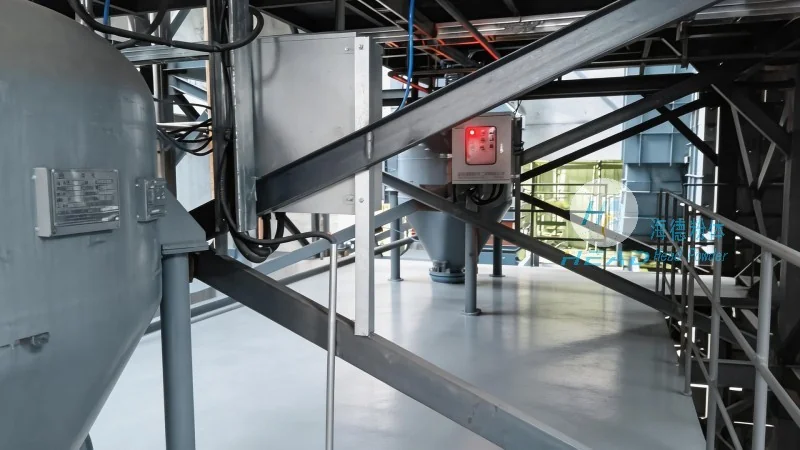
Modern organic salt powder conveying lines are often equipped with advanced control systems that enhance operational efficiency and safety. These systems may include sensors to monitor flow rates, pressure, and temperature, as well as programmable logic controllers (PLCs) that automate the entire conveying process. The control system can be integrated with a human-machine interface (HMI) that allows operators to monitor the system status, adjust parameters, and receive alerts in case of anomalies. Automation not only improves the consistency of the conveying process but also reduces the risk of human error and ensures compliance with safety regulations.
Installation and Maintenance Considerations
The successful operation of an organic salt powder conveying line requires careful installation and regular maintenance. During installation, it is essential to ensure that all components are properly aligned and secured to prevent vibrations and leaks. The system should also be tested for proper functionality before commissioning. Maintenance activities typically include regular cleaning of the hopper and conveyor to prevent material buildup, inspection of wear parts (such as bearings and seals), and replacement of components as needed. A well-maintained system not only extends its operational life but also ensures consistent performance and reduces the risk of downtime.