

Operation Process and Working Principle of White Clay Material Pneumatic Conveying Equipment
Shandong HeadPowder Engineering Co., Ltd., a professional manufacturer based in Shandong, China, specializes in the design, production, and supply of advanced pneumatic conveying systems. Our company, often referred to as HeadPowder, focuses on providing efficient and reliable solutions for material handling, particularly in the processing of white clay materials. This article delves into the operation process and working principle of our white clay material pneumatic conveying equipment, highlighting its key features and practical applications.

Introduction to White Clay Material Pneumatic Conveying Equipment
White clay, a crucial raw material in various industries such as ceramics, paper, and chemical manufacturing, requires efficient and clean material transport methods. Traditional methods like belt conveyors or bucket elevators may face challenges like material degradation, contamination, or high energy consumption. Our pneumatic conveying system offers a solution by utilizing air as the conveying medium, enabling dust-free, low-maintenance, and flexible material transport. The equipment is engineered to handle white clay with precision, ensuring minimal loss and optimal performance in industrial settings.
Key Components of the Pneumatic Conveying System
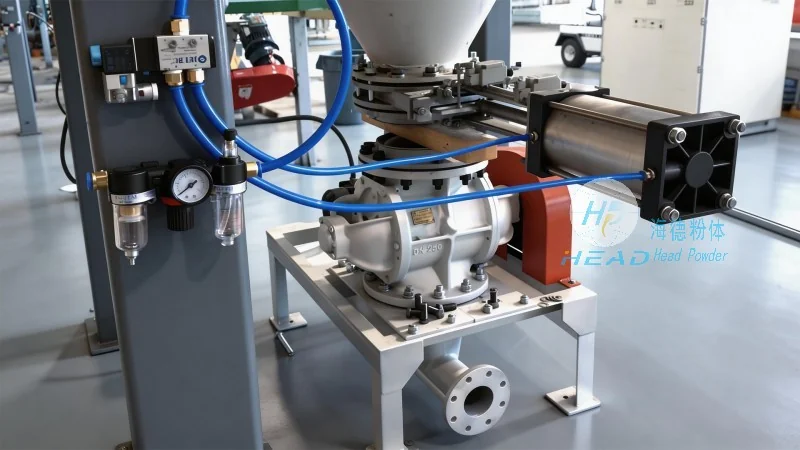
The white clay material pneumatic conveying machine consists of several critical components that work in tandem to achieve effective material transport. The primary components include a high-efficiency blower or fan to generate the necessary air pressure, a hopper or feeder for material storage and controlled discharge, a pipeline system for air and material flow, a separation unit (like a cyclone or filter) to separate the conveyed material from the air, and a discharge valve or outlet for material delivery. Each component is designed to withstand the specific characteristics of white clay, such as its fine particle size and potential for dust generation, ensuring durability and long-term operation.
Operation Process of the Pneumatic Conveying Equipment
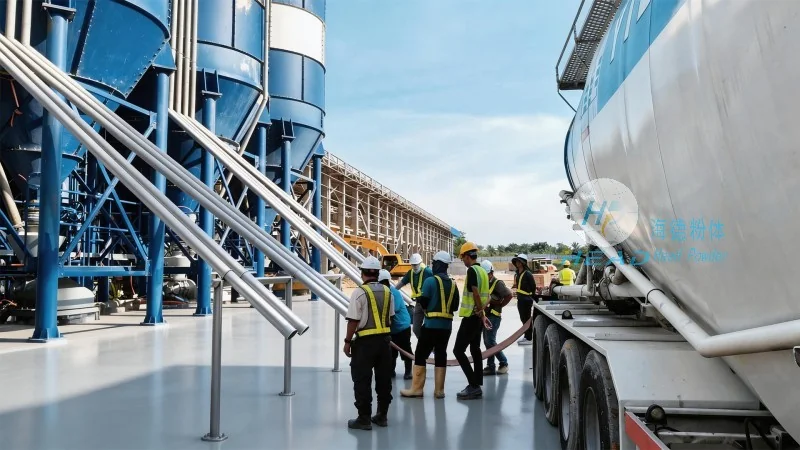
The operation process of the white clay material pneumatic conveying system involves several sequential steps that ensure smooth and continuous material transport. Initially, white clay is stored in the hopper, where it is fed into the system via a feeder. The feeder controls the flow rate, preventing overloading and maintaining consistent material supply. Simultaneously, the blower starts and generates a high-pressure airflow through the pipeline. The material is then introduced into the pipeline, where it is carried by the air stream in a suspended state. As the material travels through the pipeline, it reaches the separation unit, where the air and material are separated. The separated white clay is collected in a storage bin or directly delivered to the processing unit, while the air is either filtered or recirculated back into the system. The entire process is automated, with sensors and controls monitoring pressure, flow rate, and material level to ensure optimal performance and safety.
Working Principle of the Pneumatic Conveying System
The working principle of the white clay material pneumatic conveying equipment is based on the fundamental concept of fluidization and suspension. The system operates by creating a high-velocity air flow that lifts and transports the white clay particles through the pipeline. The air pressure generated by the blower is sufficient to overcome the gravitational force acting on the material particles, allowing them to remain suspended in the air stream. The pipeline design, including bends and fittings, is optimized to minimize pressure loss and maintain consistent airflow. The separation unit, typically a cyclone separator, uses centrifugal force to separate the material from the air. The cyclone's design ensures that the white clay particles are collected efficiently, while the air is directed back to the blower or to a filtration system. This closed-loop system reduces energy consumption and environmental impact, making it an environmentally friendly solution for white clay transport.
Advantages and Applications
Our white clay material pneumatic conveying equipment offers several advantages over traditional material handling methods. The primary benefits include dust-free operation, which improves workplace safety and reduces environmental contamination. The system also provides flexibility in material transport, allowing for horizontal, vertical, or mixed-direction conveying based on the layout of the industrial facility. Additionally, the equipment is low-maintenance, with fewer moving parts compared to mechanical conveyors, reducing downtime and operational costs. The system is widely used in industries that handle white clay, including ceramic manufacturing, where it is used to transport raw materials to kilns and processing units. In the paper industry, it is employed to convey white clay for coating and filler applications. The chemical industry also benefits from this equipment for transporting white clay-based additives and pigments.
Conclusion
Shandong HeadPowder Engineering Co., Ltd. provides high-quality white clay material pneumatic conveying equipment that combines advanced technology with reliable performance. The operation process and working principle of this equipment ensure efficient, clean, and cost-effective material transport for white clay in various industrial applications. By leveraging the power of air as the conveying medium, our system addresses the challenges associated with traditional material handling methods, offering a sustainable and efficient solution for industries relying on white clay as a key raw material. With our expertise and commitment to quality, HeadPowder continues to be a trusted partner in providing innovative material handling solutions.