

Operation Process and Working Principle of Ammonium Chloride Powder Conveying Line
At Shandong HeadPowder Engineering Co., Ltd., we specialize in the design, manufacturing, and installation of advanced powder conveying systems tailored for industrial applications. Our focus is on providing efficient and reliable solutions for handling bulk materials like ammonium chloride, ensuring optimal performance and safety in various production environments. The following sections detail the operational workflow and underlying principles of our ammonium chloride powder conveying line, highlighting key components and their functions.
Key Components and System Architecture
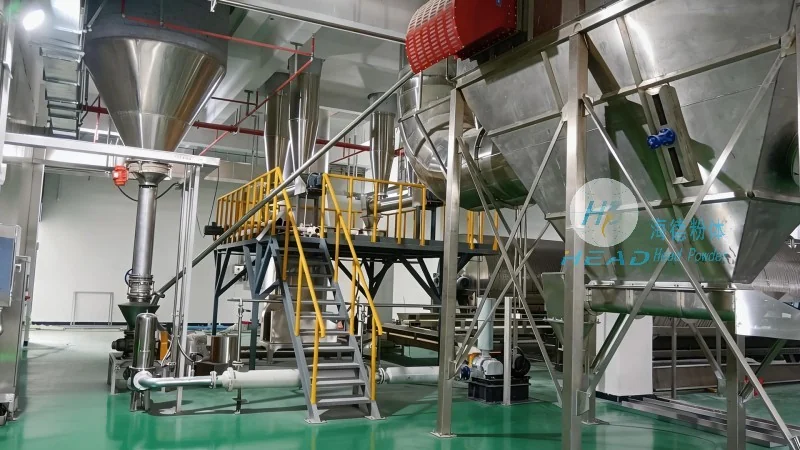
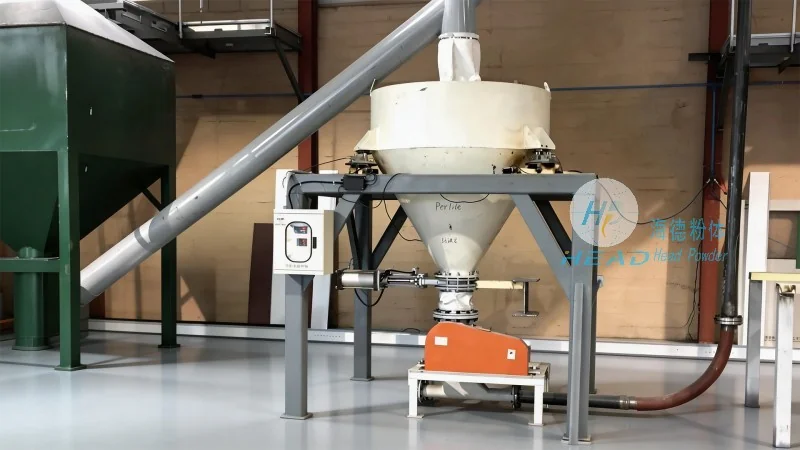
The ammonium chloride powder conveying line typically consists of several critical components that work in tandem to ensure smooth material transfer. The system begins with a hopper or storage silo, which serves as the primary container for the bulk ammonium chloride. This hopper is equipped with a discharge valve or gate mechanism to control the flow of material into the conveying system. A feeder, often a rotary valve or a screw feeder, is installed at the outlet of the hopper to regulate the feed rate, preventing overloading or underfeeding of the downstream equipment. The feeder ensures a consistent and controlled supply of powder to the conveying mechanism.
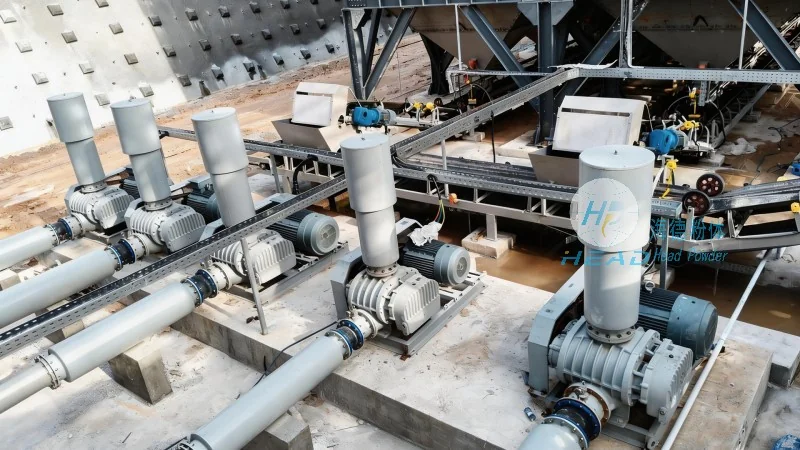
Following the feeder, the material is transferred to the conveying section. For ammonium chloride, which is a free-flowing but fine powder, a combination of mechanical and pneumatic conveying methods may be employed. A common approach is the use of a screw conveyor or auger, which uses rotating screws to move the powder along a closed tube. This mechanical method is effective for short to medium distance transfers and provides good control over the material flow. In some cases, a pneumatic conveying system, such as a positive displacement blower or a venturi system, is used to transport the powder through a pipeline using compressed air. This method is particularly suitable for longer distances or when the material needs to be transported through vertical or horizontal sections with varying elevations.
Working Principle of the Conveying Process
The core working principle of the ammonium chloride powder conveying line revolves around the transfer of material from the storage hopper to the discharge point, while maintaining the integrity and quality of the powder. The process begins with the material being discharged from the hopper into the feeder. The feeder then regulates the flow rate, ensuring a steady stream of powder enters the conveying mechanism. In a screw conveyor system, the rotating screws create a helical path that propels the powder forward. The pitch and speed of the screws are carefully designed to match the material's characteristics, such as its bulk density and flowability, to achieve efficient transport without causing excessive pressure or particle degradation. For pneumatic conveying, the compressed air is introduced into the pipeline, creating a flow that entrains the powder particles and carries them to the destination. The pressure and flow rate of the air are controlled to maintain a stable conveying velocity, preventing material deposition or blockages in the pipeline.
Control and Monitoring Systems
To ensure the reliable operation of the ammonium chloride powder conveying line, advanced control and monitoring systems are integrated into the design. These systems include sensors and controllers that monitor key parameters such as material flow rate, pressure, temperature, and air velocity. Flow meters are installed at critical points to measure the quantity of material being conveyed, providing real-time data for process optimization. Pressure sensors in the pipeline detect any blockages or pressure drops, triggering alarms or automatic shutdowns to prevent system damage. Temperature sensors may be used to monitor the material temperature, especially if the conveying process involves high-temperature conditions or if the material is sensitive to heat. The control system, often a programmable logic controller (PLC), coordinates the operation of all components, adjusting feeder speeds, conveyor speeds, and air pressure as needed to maintain optimal performance. This closed-loop control ensures that the system operates efficiently and safely, minimizing downtime and maximizing productivity.
Safety and Maintenance Considerations
Handling ammonium chloride powder requires adherence to strict safety protocols to protect personnel and equipment. The conveying line is designed with safety features such as explosion-proof motors, dust collection systems, and emergency stop buttons. The material is non-combustible but can create dust clouds that may pose a respiratory hazard, so proper ventilation and dust suppression measures are implemented. Regular maintenance is essential to keep the system in optimal condition. This includes cleaning the hopper and feeder to prevent material buildup, lubricating moving parts, inspecting the conveyor screws or pipeline for wear and tear, and checking the performance of the control system. Routine maintenance schedules are recommended to prevent unexpected failures and ensure the longevity of the equipment. By following these safety and maintenance guidelines, the ammonium chloride powder conveying line can operate reliably and efficiently over extended periods.
Application and Industry Relevance
The ammonium chloride powder conveying line is widely used in various industrial sectors, including chemical manufacturing, food processing, and agricultural applications. In chemical plants, it is used to transport ammonium chloride from storage to processing units, such as reactors or crystallizers. In food processing facilities, it may be used to move ammonium chloride for use as a food additive or in the production of other food products. In agricultural settings, it can be used to transport ammonium chloride as a fertilizer, ensuring efficient distribution to fields. The versatility of the conveying line makes it suitable for a wide range of applications, providing a reliable solution for handling bulk powders in different industrial environments.
Conclusion
Shandong HeadPowder Engineering Co., Ltd. offers advanced ammonium chloride powder conveying lines that combine efficient design with robust performance. The system's operation is based on a combination of mechanical and pneumatic conveying principles, supported by sophisticated control and monitoring systems. By adhering to strict safety and maintenance protocols, the conveying line ensures reliable and safe material transfer, meeting the demands of various industrial applications. Our commitment to quality and innovation ensures that our customers receive durable and efficient solutions tailored to their specific needs, enhancing productivity and operational efficiency in the handling of ammonium chloride powder.