

Principle and Working Scene Characteristics of Inorganic Salt Pneumatic Conveying Systems
HeadPowder, a leading engineering company based in Shandong, China, specializes in the design and implementation of advanced pneumatic conveying systems for inorganic salts. These systems are engineered to efficiently transport bulk materials like salts, powders, and granules, offering a reliable solution for industries requiring precise material handling. The following content explores the fundamental principles behind these systems and highlights the key working scene characteristics that make them indispensable in various industrial applications.
The Core Principle of Pneumatic Conveying for Inorganic Salts
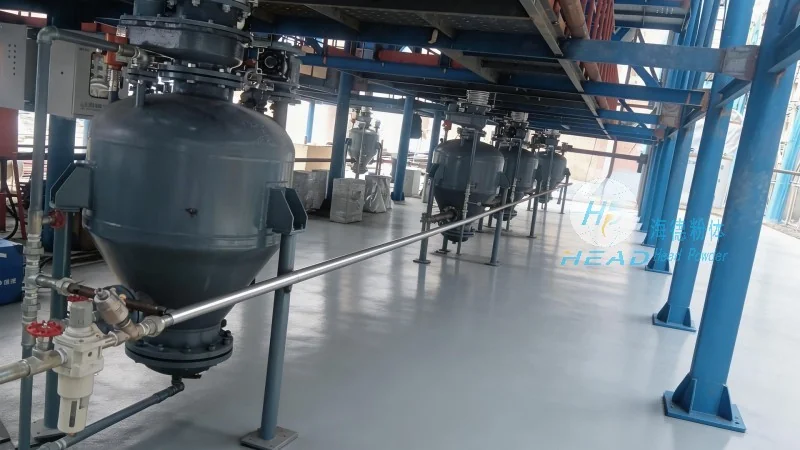
The pneumatic conveying system operates on the principle of using air or gas to transport solid materials through a pipeline. For inorganic salts, such as sodium chloride, potassium chloride, or other mineral salts, the system typically employs either suction (or vacuum) or pressure (or positive) methods. In the suction method, a vacuum is created at the material source to draw the salt into the pipeline, while the pressure method uses compressed air to push the material forward. The choice between these methods depends on factors like the material's properties, the distance of transport, and the required flow rate. The system consists of key components including a hopper for material storage, a feeder to control the flow rate, a conveying line, and a receiver for the discharged material. The air flow is managed by a blower or compressor, ensuring consistent pressure and flow to maintain the material's movement without clogging or degradation.
Working Scene Characteristics and Application Scenarios
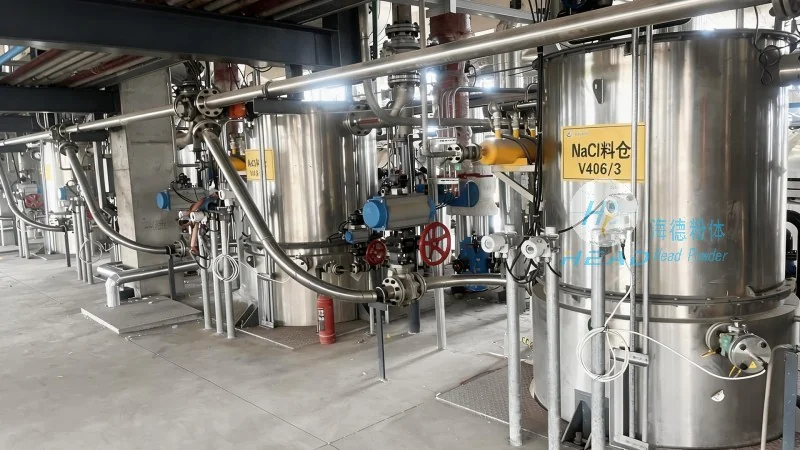
Inorganic salt pneumatic conveying systems are widely utilized across multiple industries due to their adaptability and efficiency. In the chemical industry, these systems are crucial for transporting raw materials to production lines, ensuring a continuous supply of salts for chemical synthesis. The food and beverage sector also benefits from such systems, particularly in processing facilities where hygiene and contamination control are paramount. For example, in salt processing plants, the system can handle fine salt powders with minimal dust generation, maintaining product quality and safety standards. In the pharmaceutical industry, the systems are designed to meet stringent regulatory requirements, with features like dust-free operation and easy cleaning to prevent cross-contamination. Additionally, in the mining and mineral processing industries, the systems are used to transport mined salts from storage to processing units, optimizing material handling and reducing labor costs.
Key Advantages in Practical Working Scenarios
One of the primary advantages of inorganic salt pneumatic conveying systems is their ability to handle a wide range of material types and particle sizes. Unlike mechanical conveyors, which may struggle with fine powders or sticky materials, pneumatic systems can efficiently transport these substances without blockages. This is particularly beneficial in salt processing, where fine granules are common. Another advantage is the system's flexibility in terms of layout and distance. Whether the material needs to be transported over short distances within a facility or long distances between buildings, the pneumatic system can be configured to meet these requirements. The systems also offer environmental benefits, as they minimize dust emissions compared to traditional belt or bucket conveyors, contributing to a cleaner working environment. Furthermore, the automated nature of these systems reduces the need for manual labor, enhancing safety and operational efficiency. In industrial settings, this translates to lower labor costs and improved productivity, making the investment in such systems highly cost-effective in the long run.
Customization and Integration in Real-World Applications
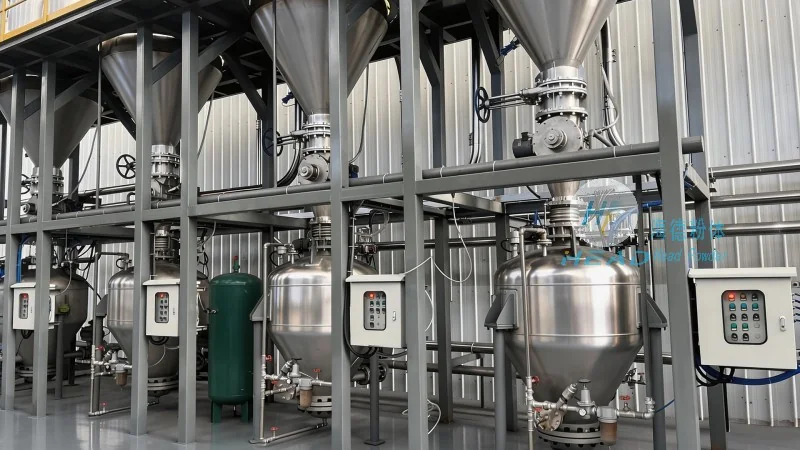
HeadPowder understands that each industrial application has unique requirements, and thus offers customized pneumatic conveying solutions tailored to specific needs. The company's engineers work closely with clients to assess the material characteristics, transport distance, and operational conditions to design a system that maximizes efficiency and reliability. For instance, in a chemical plant, the system might be integrated with existing production equipment to ensure seamless material flow. In a food processing facility, the system could be equipped with sanitary components to meet food safety regulations. The customization also extends to the control systems, where advanced automation technologies can be incorporated to monitor and adjust the conveying process in real-time. This level of integration ensures that the system operates optimally under varying conditions, providing consistent performance and minimizing downtime.